
Washington and Tehran are exchanging direct nuclear proposals for the first time even as both sides prepare for a new round of military strikes that threatens to close two of the world's most critical oil chokepoints.
Washington and Tehran are exchanging direct nuclear proposals for the first time even as both sides prepare for a new round of military strikes that threatens to close two of the world's most critical oil chokepoints.
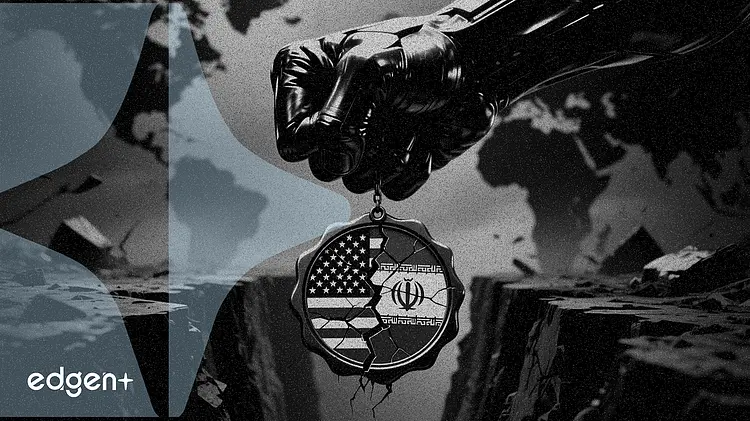
The US and Iran have exchanged direct "formulas" on the future of Tehran's nuclear program for the first time, a sign of progress that has been overshadowed by preparations for a decisive US military strike as President Donald Trump grows frustrated with the slow pace of talks.
"I sense that Iran and the United States are steadily moving toward an initial understanding," Ahmad Bakhshayesh Ardestani, a member of Iran's parliamentary National Security and Foreign Policy Commission, told Euronews, even as he warned of a severe military response to any new attack.
Hopes for a diplomatic breakthrough, which briefly sent oil prices lower, have faded. Oil rose to $107 a barrel after reports that Iran's Supreme Leader ordered the country's highly enriched uranium not be sent abroad, according to Reuters. The benchmark is up 45 percent since the conflict began, while the US Treasury has frozen nearly $500 million in Iranian crypto assets under its "Operation Economic Fury."
The diplomatic endgame comes as a fragile ceasefire in place since April 8 is fraying. A collapse in talks could trigger Iran's threatened "Combat 3.0," a plan that reportedly includes blockading the Bab el-Mandeb strait, cutting submarine internet cables, and launching missile attacks on Gulf energy infrastructure, which would have a devastating impact on the global economy.
President Trump is seriously considering a final, large-scale military operation against Iran, canceling a weekend trip and his son's wedding plans to meet with his national security team on May 22. The move signals a growing impatience with the current diplomatic track, which has been mediated by Pakistan. While Trump told reporters the US was in the "final stages" of diplomacy, he also warned he may resume attacks, saying, "We'll either have a deal or we're going to do some things that are a little bit nasty."
The pressure from Washington is multifaceted, extending into the digital realm. The US Treasury's "Operation Economic Fury" has intensified, freezing nearly $500 million in regime-linked digital assets, with one recent seizure netting $344 million in USDT on the Tron network. Iran is estimated to hold a total of $7.7 billion in digital assets as it increasingly uses Bitcoin to bypass the traditional banking system, including for a new state-backed maritime insurance platform.
Adding to the tension, the US and Israeli militaries have reportedly extended their coordination in preparation for renewed fighting, according to a report from Walla.
In response to the heightened threat, Iran has warned it will unleash "version 3.0" of its military strategy if attacked. Tehran has temporarily closed most of its western airspace to commercial flights until May 25.
According to sources cited by The Hormuz Letter, this new phase of conflict would involve devastating economic counter-measures. The plan includes an attempt to "fire-blockade" the Bab el-Mandeb Strait, a critical chokepoint for maritime trade, and severing seven submarine internet cables in the Strait of Hormuz. Furthermore, the plan outlines daily attacks with "next-generation missiles and drones" targeting energy infrastructure in the Gulf. An Iranian parliamentarian warned that if US strikes hit energy or nuclear sites, Iran would deploy "every asymmetric measure it has withheld up to this point," including direct attacks on regional oil wells.
Despite the military posturing, diplomatic channels remain open, however narrow. For the first time, the two sides have exchanged "formulas" regarding the nuclear program, a development interpreted by the US and Israel as a sign of Iranian weakness under pressure. The latest US proposal has "narrowed the gaps to some extent," according to Iran's foreign ministry, but key sticking points remain.
Tehran is demanding an end to fighting on all fronts, including in Lebanon, and the unfreezing of sanctioned assets. A major obstacle is the fate of Iran's stockpile of highly-processed uranium. The US demands it be handed over, while Iran's Supreme Leader Mojtaba Khamenei has reportedly issued a directive that the near-weapons-grade material must not leave the country.
This article is for informational purposes only and does not constitute investment advice.
