
Washington's strike on Iranian mine-launch sites marks the first exchange in a month, exposing the fragile balance of power in the world's most critical oil chokepoint.
Washington's strike on Iranian mine-launch sites marks the first exchange in a month, exposing the fragile balance of power in the world's most critical oil chokepoint.
Washington's strike on Iranian mine-launch sites marks the first exchange in a month, exposing the fragile balance of power in the world's most critical oil chokepoint.
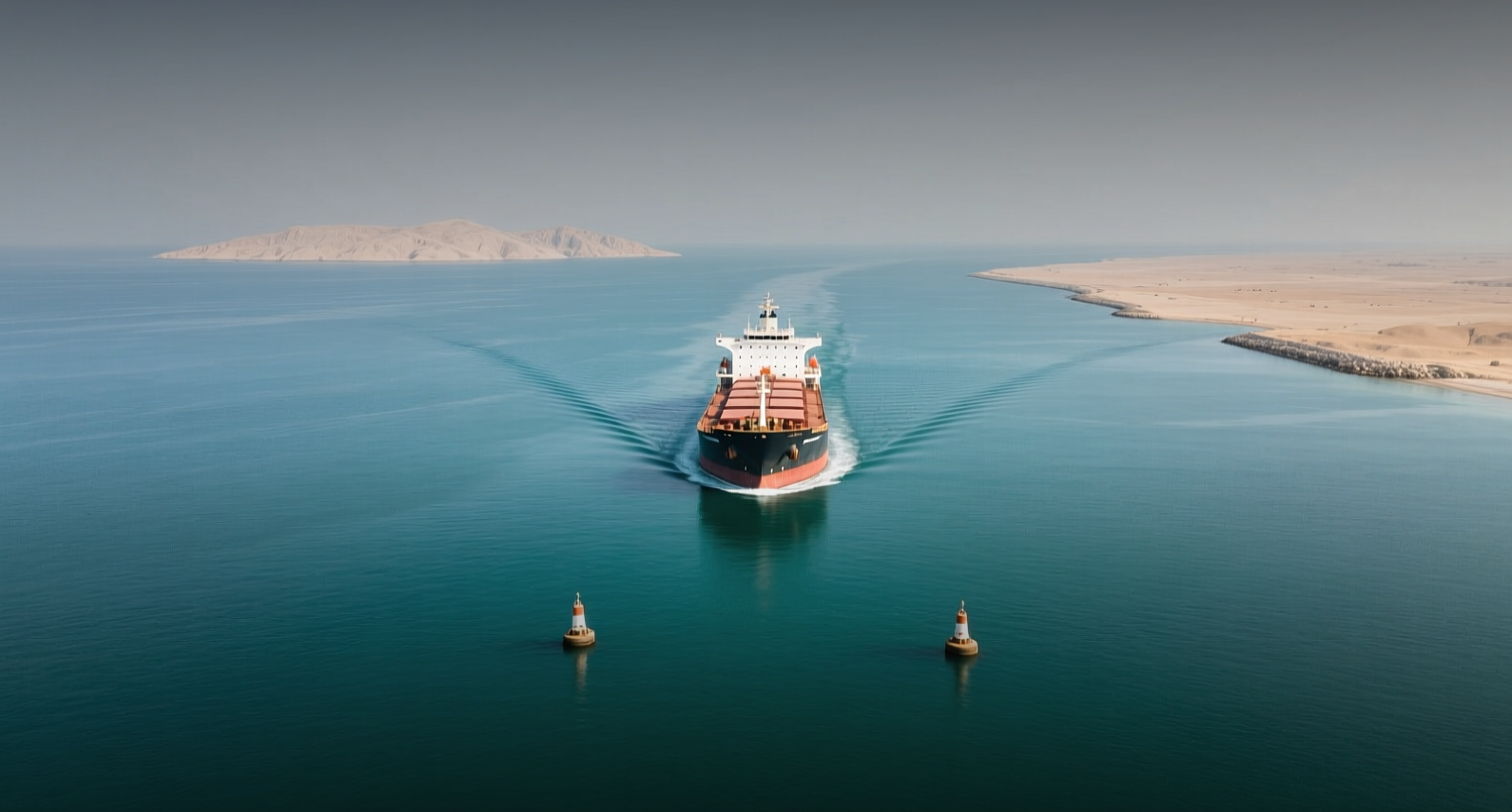
U.S. forces struck two Iranian rocket launchers on Larak Island Sunday, the first American attack in a month, as Washington suppresses Tehran's re-mining of the Strait of Hormuz with Brent crude above $91.
"So long as there is a track record of the strait being mined and of Iranians possessing large amounts of mines, it means shipowners will consider it too risky," said Alessio Patalano, professor of war and strategy at King's College London.
Iran responded to the strikes with a salvo of missiles at Jordan, all intercepted, while the UAE said it intercepted an Iranian drone over its territorial waters. The escalation pushed Brent crude for November delivery above $91 a barrel and West Texas Intermediate past $86, while average oil exports through Hormuz fell to about 3.8 million barrels per day over the past week, down more than 60 percent from roughly 9.8 million barrels per day earlier in the conflict, according to TankerTrackers data.
The Strait of Hormuz carries roughly 20 to 25 percent of global oil and liquefied natural gas flows, making the waterway's security a direct determinant of global energy prices. With U.S. gasoline averaging $4.10 a gallon in late August, up from $3.21 a year earlier, and Treasury Secretary Scott Bessent announcing new secondary sanctions on Iran on a weekly basis, the stakes extend well beyond the battlefield.
The Sunday strike came days after President Donald Trump declared the U.S. Navy had cleared all mines from the strait's international shipping lanes and warned that any vessel laying new ones would be destroyed. U.S. Central Command said American forces had cleared Iranian mines using Navy divers, Navy SEALs and air power, assisting nearly 1,500 vessels and establishing swept channels known as Q-routes through which commercial traffic can now transit.
Iran's attempt to re-mine the strait indicates its frustration that the U.S. blockade has tilted the balance in the waterway, said Eliot Cohen, a scholar at the Center for Strategic and International Studies. Trump reimposed a naval blockade in mid-July, barring Iranian oil and other goods from entering or leaving its ports, and the Navy has been steadily shepherding tankers through the strait.
Iran doesn't need to sink ships to achieve its objective. It only needs to persuade shipowners, captains and insurers that the risk of encountering a mine is too high to make the trip. For the U.S., the mission is harder: it must disable or remove every mine.
Iran has exploited its geography, using dispersed, low-profile weapons to seed mines and keep shipping at risk. The Revolutionary Guard demonstrated a system in 2025 using a Fajr-5 rocket to deploy a sea mine at distance, a method that allows Tehran to seed waters quickly without exposing a mine-laying vessel to U.S. forces. Thomas Shugart, a naval consultant and former U.S. Navy officer, said the size of the rockets suggests any mines fired would be relatively small and simple, but the U.S. military took them seriously enough to warrant destruction.
The geography of the strait magnifies the weapon's impact. Commercial ships are concentrated into narrow lanes that constrict their ability to dodge mines and make them easier to target. Specialized naval vessels sweep wires through the water to cut the cables anchoring mines to the seabed, but that is dangerous in contested waters. Alternatively, specially-equipped vessels, drones or aircraft mimic the magnetic fields, pressure or noise of a passing ship to detonate mines before they can cause harm.
The 1988 Tanker War provides a stark precedent. When the USS Samuel B. Roberts struck an Iranian mine on April 14 of that year, the U.S. Navy launched Operation Praying Mantis four days later, destroying two Iranian oil platforms, sinking a frigate and a missile boat, and crippling a second frigate in the largest surface naval battle since World War II.
"Mine warfare is a game of unknowns," said Scott Savitz, senior engineer at Rand and specialist in naval operations. "It's never possible to say with complete certainty that all mines have been eliminated, only that the risk has been reduced to acceptable levels."
Patalano said Iran's proximity to the strait and its ability to disperse small boats, mines and other weapons along its coast make it difficult to eliminate the threat entirely. "When you say it's all demined, that's only until the next time someone manages to slip through whatever measures that you put in place to control it and mine it again," he said.
Shipping data shows the toll: the number of vessels observed transiting the strait fell to around five ships per day at the beginning of the week, although the actual number may be higher because some vessels have stopped operating their automatic identification systems. CENTCOM has rerouted 83 commercial vessels and disabled three others as part of the blockade.
The renewed fighting follows weeks of relative military calm and comes as Iranian President Masoud Pezeshkian reaffirmed Tehran's commitment to seeking a negotiated solution. But with both sides trading strikes and the strait's shipping lanes still severely disrupted, the path to de-escalation remains uncertain.
This article is for informational purposes only and does not constitute investment advice.
