
The cost of war is now hitting American wallets directly at the gas pump, pushing consumer price inflation to its highest level in two years and eroding wages.
The cost of war is now hitting American wallets directly at the gas pump, pushing consumer price inflation to its highest level in two years and eroding wages.
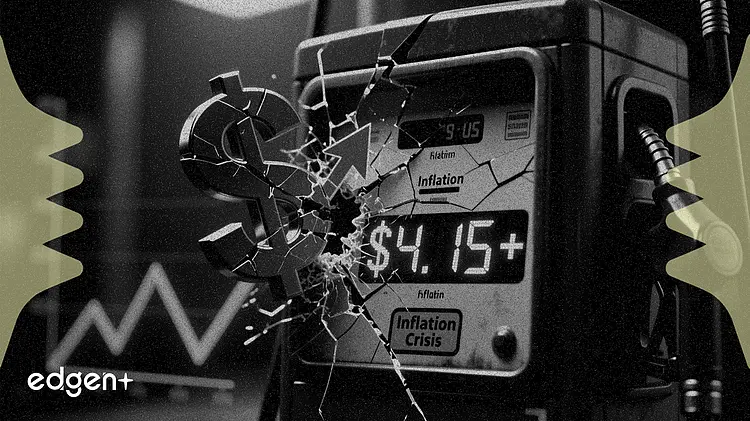
U.S. consumer prices surged in March at the fastest annual pace in two years, driven by gasoline prices climbing above $4 a gallon after the start of the war in Iran, severely eroding household wages.
"America’s small businesses, workers, and families are really feeling pain at the pump—all thanks to Trump’s illegal war on Iran," Senator Ed Markey said in a statement introducing a new analysis on the war's economic impact.
The analysis from Markey's office estimates the average American motorist will pay an additional $1,096 in 2026 if gasoline prices remain at their current $4.14 per gallon average. This represents a $1.16 per gallon increase since the conflict began in February.
The accelerating inflation presents a significant challenge for the U.S. economy, reducing real household income and threatening consumer spending. This could pressure the Federal Reserve to reconsider its monetary policy stance while corporate profits, especially in consumer and transport sectors, face headwinds.
A recent Pew Research Center survey shows the public's primary concern is economic, with 69 percent of Americans worried about higher fuel costs resulting from the war. This compares to 61 percent concerned about a potential ground invasion and 59 percent worried about high U.S. troop casualties.
The analysis from Senator Markey, the ranking member of the Senate Small Business and Entrepreneurship Committee, noted the price increase estimates are likely conservative. "Many analysts predict gasoline prices will rise higher without a permanent end to the war," the report stated.
As consumers face higher costs, energy firms have seen profits climb. During President Trump’s first year in office, the five largest oil companies—ExxonMobil, Chevron, ConocoPhillips, Shell, and BP—made more than $75 billion in profits. The fossil fuel industry also spent $445 million to help elect Trump and other Republicans in the 2024 election cycle, according to public records.
Industry executives have also reportedly sold $1.4 billion in shares during the conflict, capitalizing on the volatility caused by the war. This comes as some oil executives are reportedly displeased with a ceasefire agreement that includes Iranian control over the Strait of Hormuz, a critical channel for global oil trade.
The conflict's economic impact extends to federal spending and taxpayer costs. A report from the National Priorities Project at the Institute for Policy Studies, published on the same day as Markey's analysis, estimated the average American taxpayer contributed $4,000 to "militarism and its support systems" last year.
That cost is set to increase if Congress approves President Trump's request for a record $1.5 trillion U.S. military budget for the upcoming fiscal year. Markey has been a vocal critic of the spending priorities, noting last month his request for the Bureau of Labor Statistics to publish a comprehensive analysis of the war's likely consumer price impacts over the next 6-12 months.
This article is for informational purposes only and does not constitute investment advice.

