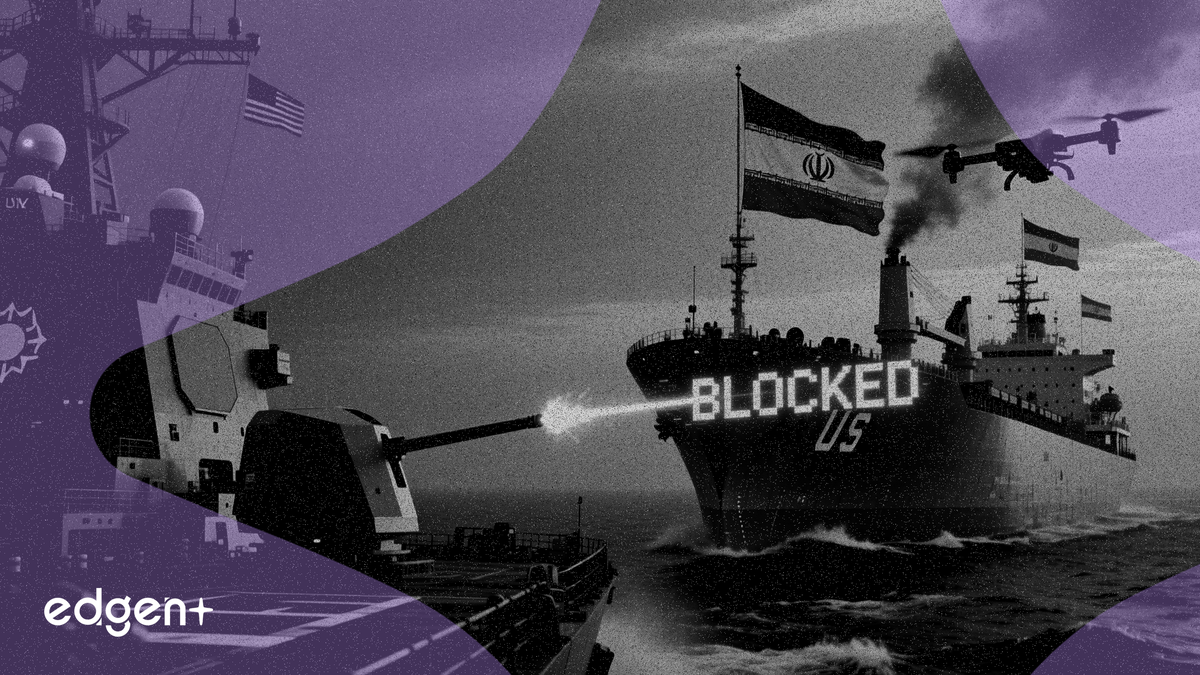
The US military fired a Hellfire missile into an oil tanker's engine room on Tuesday, the sixth vessel disabled since Washington imposed a naval blockade of Iranian ports in April.
US Central Command disabled a Botswana-flagged oil tanker heading toward Iran's Kharg Island on Tuesday, firing a Hellfire missile into the vessel's engine room after the crew ignored repeated warnings over 24 hours.
"The ship's crew failed to comply with directions from US forces multiple times," Central Command said in a statement, adding that the tanker was unladen at the time of the strike.
The strike on the M/T Lexie brings to six the number of commercial vessels disabled since the blockade began April 13, with 122 others redirected. The action comes as the Strait of Hormuz remains effectively closed for a third month, with only 36 ships transiting the waterway in the week through May 30, compared with an average of more than 130 per day before the conflict, according to Lloyd's List Intelligence.
The blockade has choked off roughly a fifth of the world's traded oil and natural gas that normally passes through the strait, driving up global energy prices. Talks between Washington and Tehran to reopen the waterway appeared close to a tentative deal over the weekend but have since faltered, according to officials familiar with the discussions.
Blockade Escalates as Diplomatic Window Narrows
President Donald Trump on Tuesday reiterated pressure on Tehran, posting on Truth Social that "It's time, one way or another, for you to make a Deal. You've been doing this for 47 years, and it cannot be allowed to go on any longer." The US also conducted strikes against Iranian drone and missile sites last week, and on Friday disabled a Gambia-flagged vessel using the same Hellfire missile tactic.
The latest escalation underscores the fragility of ceasefire talks that have dragged on since the US and Israel launched strikes on Iran on Feb. 28. Iranian Foreign Ministry spokesperson Esmail Baghaei on Monday accused the US of "constantly" changing its positions, telling reporters in Tehran: "We are negotiating in an atmosphere of mistrust."
Oil Markets Face Prolonged Supply Disruption
The closure of the Strait of Hormuz has removed millions of barrels of daily crude supply from global markets, with the Gulf region also accounting for 30 percent of globally traded chemical fertilizers, raising concerns about food supply chains. WTI crude and Brent crude benchmarks have remained elevated as traders price in a prolonged disruption, though the exact price impact depends on how long the blockade persists.
The last time a major chokepoint faced a comparable disruption was during the 2019 attacks on Saudi Aramco's Abqaiq and Khurais facilities, which temporarily removed 5.7 million barrels a day of production. The current blockade has a broader and more sustained impact, affecting not just crude but also liquefied natural gas and petrochemical feedstocks.
This article is for informational purposes only and does not constitute investment advice.