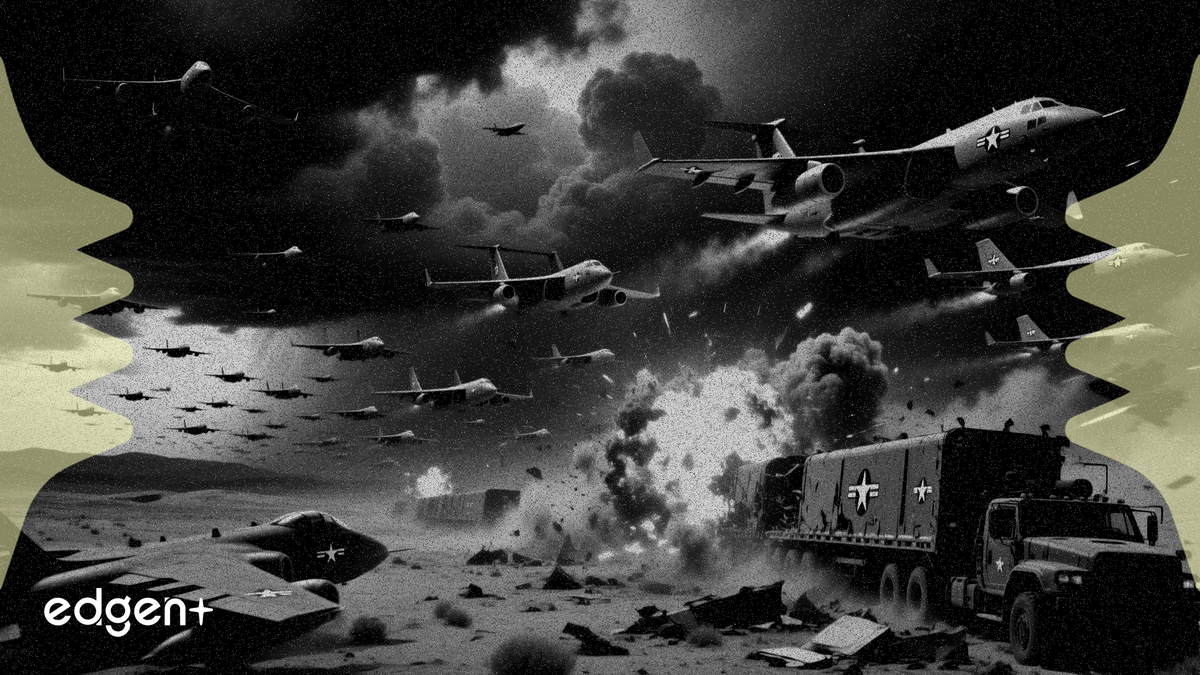
US President Donald Trump said the military deployed 155 aircraft to rescue the second pilot of an F-15E fighter jet shot down over Iran, a massive operation that he claimed also involved destroying two American transport planes that had become stuck. The mission concludes a high-stakes, two-day search for the crew inside Iranian territory.
"Over the past several hours, the United States Military pulled off one of the most daring search and rescue operations in US history," Trump said in a social media post shortly after midnight EST, confirming the crew member was injured but would recover. He later added at a White House press conference that the operation involved four bombers, 64 fighter jets, and 48 aerial refueling tankers, according to reports from Xinhua News Agency and CCTV.
The rescue follows the recovery of the first crew member on April 4, an event the US military had not previously confirmed. The downing of a sophisticated F-15E Strike Eagle, the first US aircraft lost to enemy fire since the 2003 Iraq war, and a subsequent A-10 crash, highlights the risks for US air operations over Iran. The events contributed to a spike in market anxiety, with defense-related stocks seeing a potential surge while broader equity markets face pressure from heightened geopolitical uncertainty.
The operation signals a significant escalation in the five-week-long conflict and raises questions for markets about the potential for further disruptions. The scale of the US mission inside Iranian airspace, which reportedly included intense fighting, suggests a high tolerance for risk to recover personnel. This direct military action could trigger a flight-to-safety rally in assets like gold and the US dollar, while oil prices may see a significant spike on fears of supply disruptions from the Middle East.
Escalating Conflict
The F-15E, widely identified as belonging to the 494th Fighter Squadron based at RAF Lakenheath, was shot down on April 3. Iranian media quickly released images of the wreckage and a used ejector seat, prompting a large-scale search by both Iranian and US forces.
US forces utilized a fleet of aircraft for the combat search and rescue (CSAR) mission, including specialist HC-130J transports and HH-60G/W Pave Hawk helicopters, which were seen flying low over the Iranian countryside. According to reports, at least one Pave Hawk sustained damage from ground fire during the initial rescue but returned to base. The complexity and intensity of the operation were underscored by Trump's disclosure that two US transport aircraft had to be destroyed after getting bogged down in sand during the mission.
Market Implications
The downing of a highly survivable aircraft like the F-15E suggests a more capable Iranian air defense than previously assessed by some analysts. This could force US and Israeli aircraft to alter tactics, potentially relying more on longer-range standoff munitions rather than direct attacks.
For investors, the key takeaway is the increased probability of a wider conflict. President Trump has maintained pressure on Tehran, issuing a 48-hour deadline for Iran to "MAKE A DEAL or OPEN UP THE HORMUZ STRAIT," a critical chokepoint for global oil shipments. The explicit threat of "all Hell" breaking loose adds to a volatile mix that could see crude oil prices break out of their recent range. The last major disruption in the strait saw oil prices jump more than 10 percent in a single week.
This article is for informational purposes only and does not constitute investment advice.