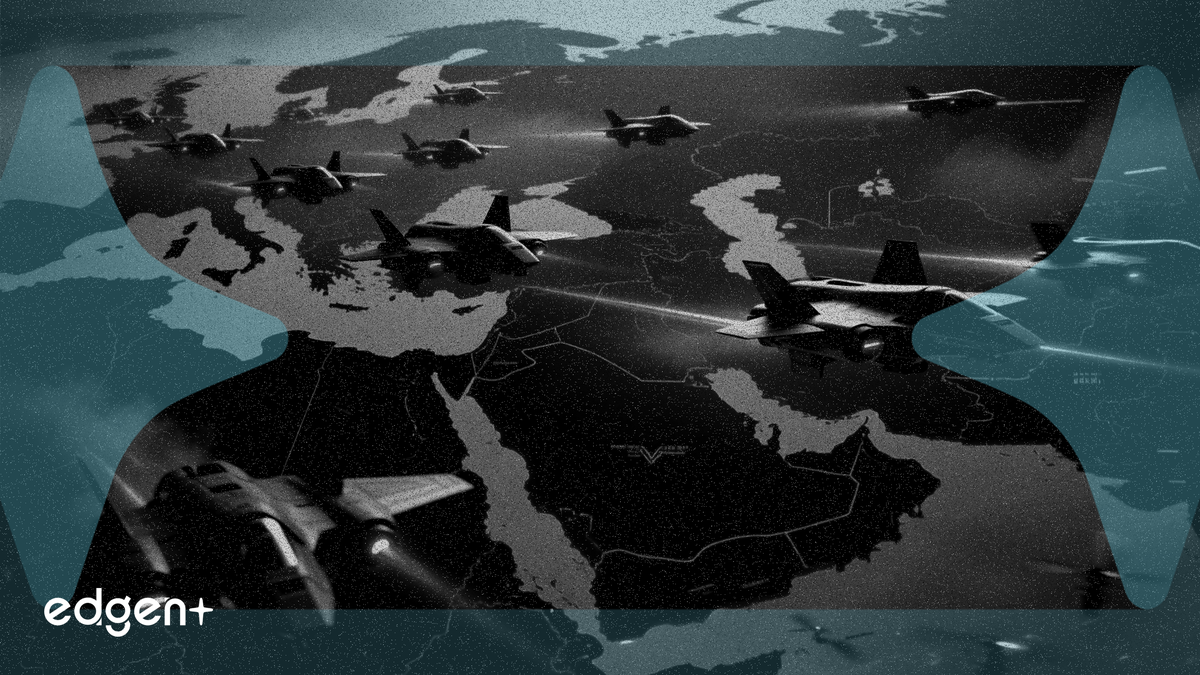
The United States has deployed thousands of troops and 1,000 drone interceptors to the Middle East, a significant escalation of its regional defensive posture aimed at countering Iranian unmanned aerial vehicles that could heighten market volatility and pressure oil prices.
"The mission marks the Army's largest-ever counter-drone training deployment," a US defense official told Business Insider, speaking on the condition of anonymity to discuss sensitive military operations.
The deployment includes over 150 personnel operating roughly 30 Merops counter-drone complexes across two countries in the region. The Merops system, which uses a $15,000 interceptor, provides a cost-effective solution against Iranian Shahed drones, estimated to cost as little as $20,000, compared to multi-million-dollar surface-to-air missiles.
This deployment signals a strategic shift to address the growing threat of low-cost drones that have proliferated in modern conflicts. For markets, the heightened military presence, while defensive, increases geopolitical risk premiums, potentially leading to a spike in oil prices from fears of supply disruption and a broader flight-to-safety impacting equity markets.
Battle-Tested Technology
The system at the center of the deployment is the US-made Merops, developed by Project Eagle. It is designed specifically to intercept one-way attack drones like the Iranian Shaheds that have seen widespread use by Russia in Ukraine. The system's "Surveyor" interceptor, a propeller-driven drone a few feet long, can fly at over 175 mph and destroys targets by colliding with them or exploding in proximity.
According to the defense official, the Army has sent 1,000 armed and unarmed interceptors to the two locations. The system is notably flexible; launchers can be fitted in the bed of a pickup truck for mobile use, and soldiers can learn to pilot the interceptor using a standard Xbox controller in just a few days.
A Cost-Effective Countermeasure
The deployment, which began in early March under Operation Epic Fury, provides the US and its allies a much cheaper way to counter drone swarms. Relying on advanced surface-to-air missiles, which can cost millions of dollars per shot, is not a sustainable economic model for defeating drones that cost only $20,000.
The Merops system has a formidable track record, having intercepted more than 1,000 Shahed-type drones in Ukraine. Ukrainian air defense specialists have even been sent to the Middle East to assist with the threat, with President Volodymyr Zelenskyy confirming that Kyiv has helped destroy a number of Iranian Shaheds in the region. The last time such a significant number of specialized systems were surged to the region, Brent crude futures jumped over 4% in a single week on fears of a wider conflict.
This article is for informational purposes only and does not constitute investment advice.