
The AI infrastructure boom is colliding with the physical limits of the US power grid, as critical shortages in electrical equipment and local opposition place up to half of all new data center projects for 2026 at risk of delay or cancellation.
The AI infrastructure boom is colliding with the physical limits of the US power grid, as critical shortages in electrical equipment and local opposition place up to half of all new data center projects for 2026 at risk of delay or cancellation.
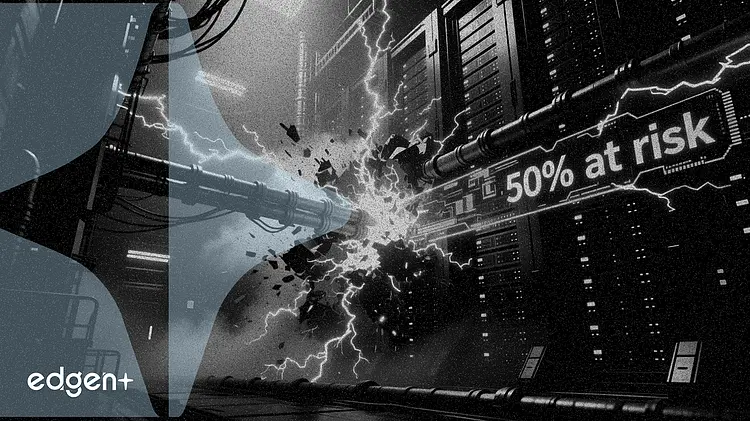
The immense power demands of the artificial intelligence boom are running into a wall of physical constraints, with a new report indicating that 30% to 50% of planned US data center projects for 2026 are facing significant delays or outright cancellation. A combination of an aging power grid, severe shortages of critical electrical components, and growing local opposition is throttling the nation’s ability to build the infrastructure required to meet the exponential growth in computing demand.
“Planning momentum in March was powered almost entirely by data center projects,” Sarah Martin, associate director of forecasting at Dodge Construction Network, said in a recent report. But Canaccord Genuity analyst George Gianarikas noted the sector is now hitting "a powerful wall of logistical resistance," a sentiment echoed by a new Sightline Climate outlook report that quantifies the bottleneck. Of the 16 gigawatts of new data center capacity planned for 2026, only about 5 gigawatts are actually under construction.
The analysis from Sightline Climate reveals a stark gap between ambition and reality. While 140 projects totaling 16 gigawatts are on the books for 2026, a staggering 11 gigawatts remain in the "announced" phase with no ground broken. With a typical construction cycle of 12 to 18 months, the probability of these projects coming online as scheduled is extremely low. The outlook for 2027 is even more strained, with 21.5 gigawatts announced but only 6.3 gigawatts currently being built.
The core of the problem lies in the electrical supply chain. Large power transformers, essential for stepping down high-voltage electricity for data center use, now have delivery lead times stretching up to five years, a dramatic increase from the 24 to 30 months considered standard before 2020. “The grid was not built for this,” Melton Chang, who leads Schneider Electric’s Power Systems division, said in an interview with Manufacturing Today India. He noted the explosive demand from AI was not in any forecast even a year ago, with single AI facilities now being planned at 8 to 10 gigawatts — a scale approaching the power generation capacity of a small country.
This equipment shortage is compounded by a lack of domestic manufacturing capacity, forcing builders to rely on imports for transformers, switchgear, and batteries. The issue reflects decades of manufacturing offshoring, a structural problem that recent policy initiatives have yet to resolve. The demand surge isn't just from data centers; the push for electric vehicles and industrial electrification is placing simultaneous strain on the same components.
The sheer scale of the new projects highlights the pressure. According to Dodge Construction Network, major projects entering the planning phase in March included 17 buildings for an Amazon data center campus in North Carolina, valued at a combined $8.5 billion, and 10 buildings for a Microsoft data center in Iowa, totaling $2.5 billion. Without the data center boom, commercial construction planning would have fallen 12.7% year-over-year, demonstrating how heavily the construction sector is relying on this single driver.
Beyond physical constraints, social and political resistance is growing. In a sign of shifting public sentiment, the Maine House of Representatives recently passed a moratorium on large data center construction until 2027 to evaluate their impact on state resources. This type of local opposition, often centered on water usage and energy consumption, adds another layer of uncertainty and delay to project timelines.
The financial requirements are just as daunting. JPMorgan estimates that the full AI infrastructure buildout could require up to $5 trillion in capital. Even with hyperscale cloud providers like Microsoft, Amazon, and Google budgeting a collective $700 billion in annual capital expenditures, a funding gap of over $1 trillion may still need to be filled by government investment, according to the bank's analysis. For investors, the situation creates a complex landscape. While the demand for AI computing is undeniable, the physical and financial roadblocks to building the necessary infrastructure are real and growing. The bottleneck suggests that growth forecasts for companies dependent on data center expansion may be overly optimistic, while manufacturers of grid components and power-management technologies stand to benefit from the urgent need to modernize the country's electrical backbone.
This article is for informational purposes only and does not constitute investment advice.

