
Unitree shares have fallen about 45 percent since a fivefold debut surge, wiping $30 billion from the humanoid robot maker's valuation and stoking concern over China's IPO system.
Unitree shares have fallen about 45 percent since a fivefold debut surge, wiping $30 billion from the humanoid robot maker's valuation and stoking concern over China's IPO system.
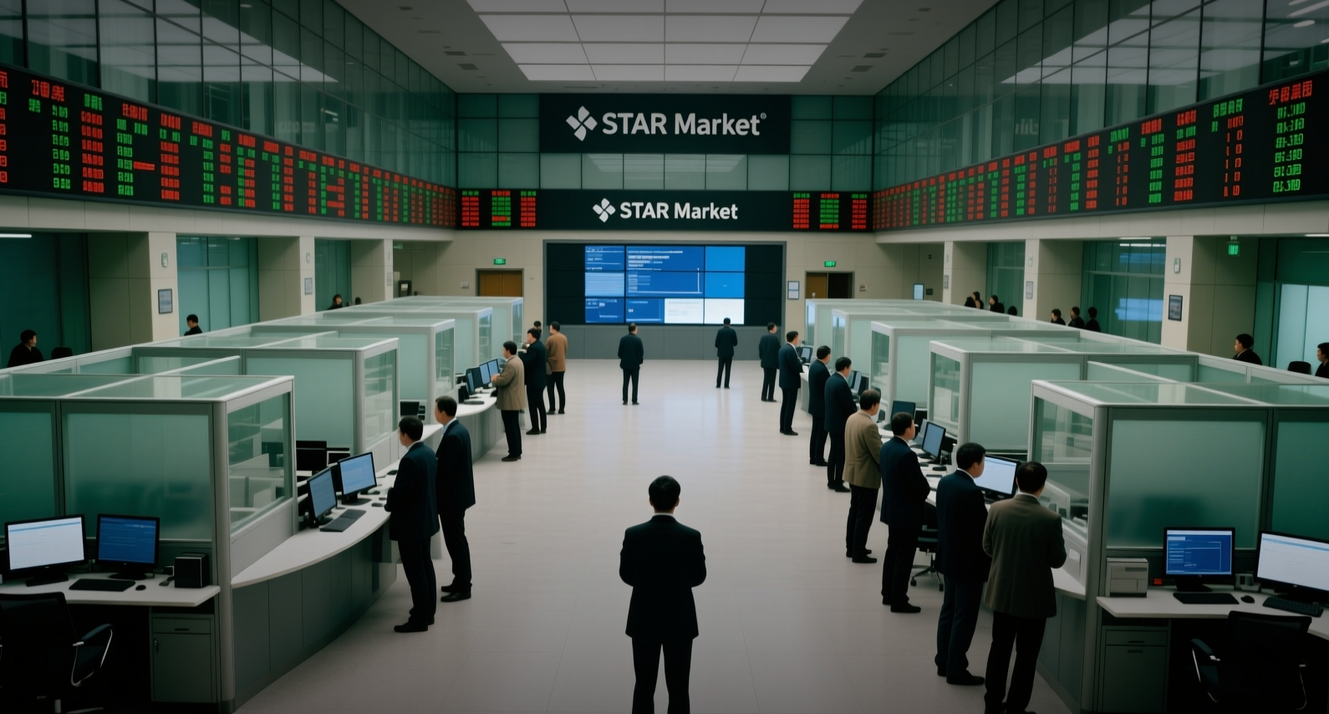
Unitree shares have fallen about 45 percent since a fivefold debut surge, wiping $30 billion from the humanoid robot maker's valuation and stoking concern over China's IPO system.
"Investors were carried away by the technology revolution narrative," said Dong Baozhen, chairman of Beijing-based asset manager Lingtong Shengtai, cautioning that "all bubbles are doomed to burst."
Unitree shares steadied Tuesday after three consecutive days of decline that took losses to 45 percent since the Aug. 19 debut on Shanghai's STAR Market. The stock closed 460 percent above its IPO price on the first trading day, compared with an average first-day gain of 226 percent for newly listed Chinese companies over the past three years. The rally briefly pushed the company's valuation to about $66 billion before it lost roughly $30 billion in market value.
The reversal could become a cautionary tale for other Chinese technology companies preparing to list as Beijing promotes domestic innovation and technological self-sufficiency. It also highlights the challenge authorities face in boosting strategic industries without triggering a market frenzy, with only 21 companies going public in Shanghai during the first seven months of the year, compared with 104 in Hong Kong.
The blockbuster debut came even as Unitree's profitability showed signs of weakening. The company reported adjusted net profit fell 53 percent to 40 million yuan ($5.95 million) in the first three months of 2026, according to its prospectus. Unitree, which competes with Tesla and Hyundai Motor Group-owned Boston Dynamics, has drawn global attention for robots capable of running, dancing and performing martial arts, but its commercial applications remain limited.
The dramatic price swings have renewed criticism of China's IPO mechanism, with critics arguing that early investors and major shareholders can benefit from sharp post-listing gains while retail investors assume greater risk in the secondary market. The lack of effective short-selling pressure can allow heavily overvalued newly listed stocks to remain detached from their fundamentals for extended periods, analysts said.
"An IPO stock worth 10 yuan can open at 100 yuan, before sliding for years. It's a rip-off," said Yuan Yuwei, hedge fund manager at Trinity Synergy Investments.
Unitree's fast-tracked listing on the STAR Market, a board reserved for hard-tech innovators in China's national strategic industries, drew investor interest because of perceived state support as Beijing vies with Washington for technological supremacy. The company's debut was not alone in attracting speculative interest — Chinese memory-chip maker CXMT saw its shares jump 466 percent on their Shanghai debut last month.
China's stock exchanges play a significant role in reviewing prospective listings and providing guidance on IPO pricing, which critics argue limits the ability of investment banks to adjust offer prices when investor demand is exceptionally strong. The wide gap between Unitree's IPO price and its opening-market valuation has prompted questions over whether the initial offering price was too low or the debut valuation was excessively high.
Dong said the staggering gap between the IPO price and the debut performance means "either one of them must be wrong," and he believes the latter was mispriced. "Debut performance is the barometer of market mood, and exuberant mood breeds bubbles."
Some investors argue that Chinese robotics should be viewed with a longer-term perspective. "Many robot makers spend a lot on research, but commercial orders are not yet in sight," said Gao Xingkun, fund manager of China Southern Asset Management Co. "It's not fair if you only look at profit," he said, drawing a parallel to the early stage of China's now-booming electric vehicle industry.
Unitree's experience could become an important test for the next wave of Chinese technology IPOs. While Beijing continues to encourage investment in artificial intelligence, robotics, semiconductors and other strategic sectors, the company's dramatic rise and subsequent decline demonstrate the risks of allowing technological optimism to overwhelm traditional measures of profitability and valuation.
This article is for informational purposes only and does not constitute investment advice.
