
The United Nations warns that the continued disruption of the Strait of Hormuz will cut global economic growth to 3.1% and push inflation to 4.4%, reflecting a structural break in global trade, not a temporary blockage.
The United Nations warns that the continued disruption of the Strait of Hormuz will cut global economic growth to 3.1% and push inflation to 4.4%, reflecting a structural break in global trade, not a temporary blockage.
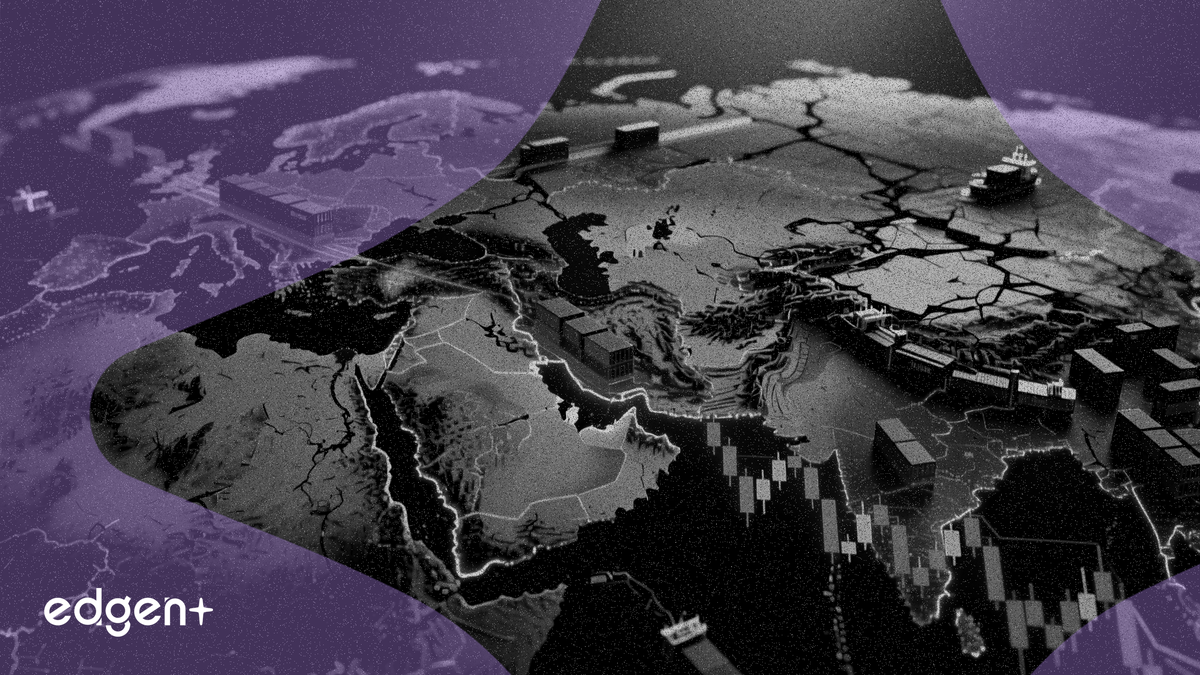
The continued disruption to shipping in the Strait of Hormuz will slash global economic growth to 3.1% and push inflation to 4.4% this year, the United Nations said, a stark warning that the crisis is inflicting deep and lasting damage to the world economy.
"Continued disruption of navigation in the Strait of Hormuz will have serious consequences," UN Secretary-General António Guterres said in a statement. "Even if the restrictions on navigation in the Strait of Hormuz were lifted now, supply chains would still take several months to recover."
The crisis has sent energy prices surging, with Brent crude, the global oil benchmark, topping $125 a barrel. The UN projections show global commodity trade growth collapsing to about 2% from 4.7% last year, with maritime traffic through the vital chokepoint falling by 90% or more. The disruption to the strait, which normally carries about 20% of the world's oil and LNG flows, has triggered what the International Energy Agency calls the largest supply shock in modern oil market history.
At stake is the reliability of the global shipping system. The core issue is a structural breakdown in trust, not a temporary physical closure. The precedent set in the Red Sea, where traffic remains depressed despite stabilization efforts, shows that once shipping networks are rerouted, they do not simply revert. The crisis in Hormuz, which began after US-Israeli strikes on Iran on February 28, is now locking in a similar, but far larger, systemic shift.
The hard data shows that even during brief periods when the strait was declared "open," vessel traffic remained at near-collapse levels, sometimes as low as three vessels per day compared to a normal 120-140. The withdrawal of war-risk insurance in March effectively shut down commercial navigation, a closure that persists economically regardless of physical access. Major operators, including some of the world’s top shipping companies, continue to refuse bookings through the strait, substantiating the lessons learned from the Red Sea: once reliability is broken, the system behaves differently. This behavioral shift, driven by risk perception rather than physical blockades, is the real story.
The consequences are a structural rerouting of global trade. The Cape of Good Hope has become the default for Asia-Europe flows, adding 10-14 days to voyages. This is no longer a temporary detour but a baseline assumption embedded in new network designs. In a direct response to the maritime impasse, Pakistan has opened six overland transit routes to Iran, formalizing a road corridor to bypass the naval blockade. This move, which followed the stranding of over 3,000 containers at Karachi port, illustrates the irreversible reconfiguration of logistics networks as the world adapts to chokepoint instability.
The crisis has demonstrated that maritime chokepoints are now active instruments of power, incentivizing the militarization of trade corridors. For policymakers, the most dangerous mistake is to treat a physical reopening as a resolution. The data shows traffic does not return, costs do not normalize, and behavior does not revert. The global system is evolving toward a model of managed instability, where redundancy replaces optimization.
This new reality means the global maritime and energy system is entering a phase of structural fragmentation. Trade flows will be more regional, more redundant, and more expensive. The price of security is now permanently embedded in the cost of trade, a fundamental shift from the era of frictionless globalization.
This article is for informational purposes only and does not constitute investment advice.

