

Uber is betting its next decade on becoming the leading commercialization platform for autonomous vehicles, targeting 15 robotaxi cities by year-end.
Uber is betting its next decade on becoming the leading commercialization platform for autonomous vehicles, targeting 15 robotaxi cities by year-end.
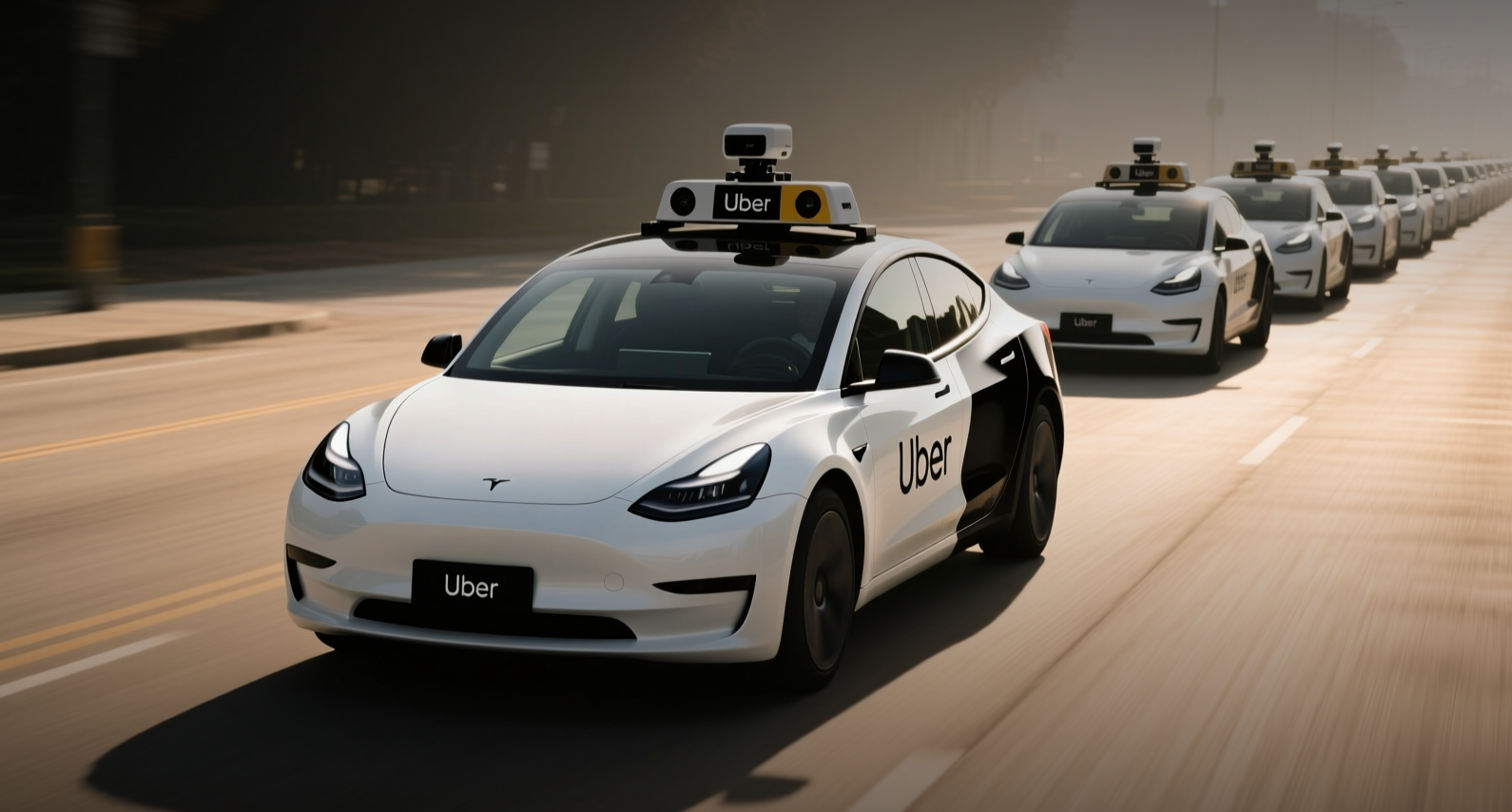
Uber is accelerating its autonomous vehicle push, targeting 15 robotaxi cities by year-end and adding 2,000 Pony.ai vehicles across Europe, as the ride-hailing giant races to become the leading commercialization platform for self-driving cars.
"Our ambition is straightforward, to become the world's leading commercialization platform for autonomous vehicles," CEO Dara Khosrowshahi said on the company's Q2 earnings call.
The Pony.ai partnership, announced Friday, will deploy 2,000 self-driving taxis across Europe and extend to the Middle East, following the launch of a commercial robotaxi service in Zagreb, Croatia in late March — the first in Europe. Uber reported Q2 gross bookings of $58 billion, up 24 percent year over year, with non-GAAP EPS of $0.81, up 35 percent.
Uber has committed $10 billion over multiple years to autonomous vehicle investments, including equity stakes in software partners and balance sheet support for ground infrastructure. The company is live in seven cities and expects to reach 15 by year-end, with partners including Wayve, Zoox, Nuro, Baidu, and Pony.ai.
The Pony.ai expansion follows the late-March launch of a commercial robotaxi service in Zagreb, Croatia's capital, which the companies claim is the first in Europe. The new agreement will roll out robotaxis to four additional European cities, though the companies did not name the locations or provide a timeframe.
The competitive field is crowded. Alphabet-backed Waymo operates a fleet of roughly 5,000 vehicles, primarily in the U.S., and is testing rides in London while setting up entities in France, the Netherlands, Spain, and Germany. Chinese rivals Baidu Apollo Go and WeRide are ramping up European operations, with WeRide and Uber announcing plans in June to launch Spain's first robotaxi pilot in Madrid.
Uber's approach differs from Waymo's vertically integrated model. Rather than building its own vehicles, Uber aggregates multiple AV partners onto its platform, collecting what Khosrowshahi calls "a super set of data" through its new AV Labs initiative. The company is deploying hundreds of cars with robotaxi-grade sensors to collect rideshare-specific scenarios that can accelerate training of end-to-end autonomous driving models for all its partners.
The data advantage is measurable. Uber's AV vehicles are already doing hundreds of thousands of trips per week, though that represents less than 0.5 percent of the company's roughly 300 million weekly trips. AV utilization rates of mid-20s to low 30s trips per vehicle per day support monetization for fleet partners, Khosrowshahi said.
The urgency is driven in part by Waymo's decision to launch its own independent app in Austin and Atlanta in January 2028, when the current exclusivity arrangement permits. Uber has invested in Wayve's $1.2 billion Series D round, valuing the company at $8.6 billion, and committed an additional $300 million in milestone-based capital contingent on Wayve deploying robotaxis across Uber's network.
The Tokyo pilot, announced Thursday, pairs Wayve's end-to-end AI Driver software with Nissan LEAF vehicles and local taxi operator Hinomaru Kotsu, marking Uber's first AV deployment in Japan. The partnership is part of a March MOU between Uber, Wayve, and Nissan covering more than 10 cities worldwide.
Uber's core business remains strong while AV scales. Gross bookings grew 22 percent year over year to $58 billion, with mobility bookings up 22 percent to $29 billion and delivery bookings up 26 percent to $27.5 billion. Monthly active platform consumers reached 208 million, up 16 percent, with first-time user momentum at a five-year high. Trailing 12-month free cash flow exceeded $10 billion for the first time.
The company guided Q3 gross bookings of $58.25 billion to $60.25 billion and non-GAAP EPS of $0.84 to $0.88. Uber has repurchased $3.5 billion of stock year to date, targeting 50 percent of free cash flow for buybacks.
Uber shares trade at roughly 25x forward earnings. The AV strategy carries execution risk — regulatory approvals, safety incidents, and partner reliability all remain open questions. But with $10.1 billion in trailing free cash flow and a $10 billion AV investment plan, the company has the balance sheet to fund the transition while maintaining buybacks. The question for investors is whether Uber can convert its distribution advantage into durable AV economics before competitors like Waymo build their own consumer networks.
This article is for informational purposes only and does not constitute investment advice.
