

TSMC is opening its most tightly guarded AI packaging step to outside contractors, a strategic shift that could reshape the semiconductor supply chain.
TSMC is opening its most tightly guarded AI packaging step to outside contractors, a strategic shift that could reshape the semiconductor supply chain.
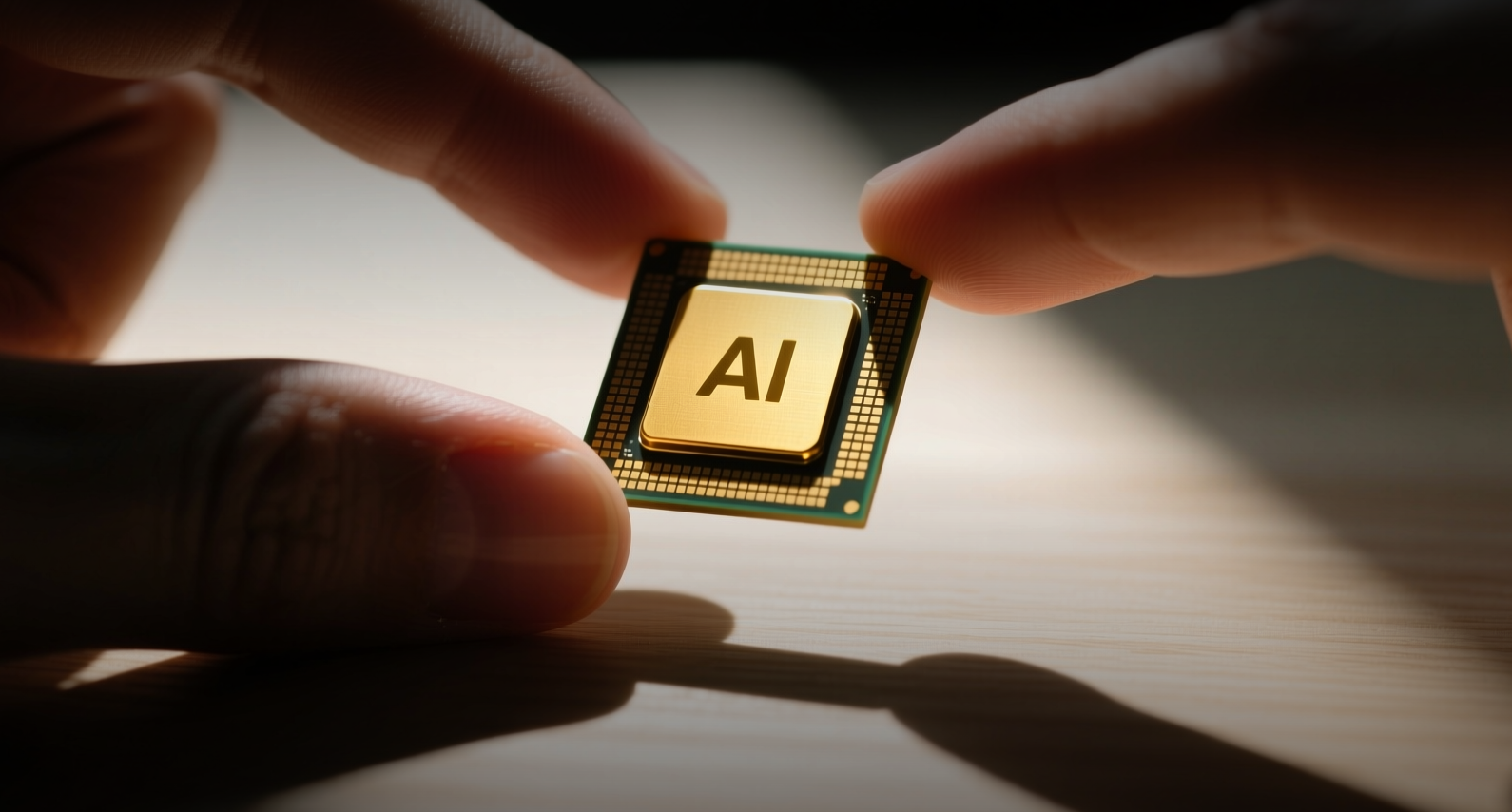
TSMC is expanding outsourcing of the CoW (chip-on-wafer) step in its CoWoS packaging process to OSAT providers including ASE Technology, as AI chip demand outpaces internal capacity by roughly 20 percent.
"TSMC has continued to invest in packaging equipment for AI chip manufacturing, but a bottleneck still occurs at the packaging stage," an industry official said. "This expansion of outsourcing is an attempt to increase production capacity together with its key OSAT partners."
CoWoS, TSMC's 2.5D packaging technology, places an AI processor at the center surrounded by high-bandwidth memory (HBM) stacks, connected through a silicon interposer. TSMC designates the chip-to-interposer attachment as CoW and the interposer-to-substrate bonding as WoS. Historically, most WoS work was outsourced to ASE, Amkor, and SPIL under license, while CoW volumes remained limited. The expansion marks a strategic shift as OSAT firms place equipment orders — including purchase order discussions with South Korean materials and equipment suppliers — focused on wafer and interposer dicing and bonding processes.
The move comes as TSMC races to scale its most advanced nodes. The company targets 100,000 wafers per month on 2nm by end of 2026 and 180,000 on 3nm ahead of Q4 2026, with 2nm already contributing 3 percent of Q3 2026 revenue. CoWoS capacity is sold out through 2026 and well into 2027, with lead times running 52 to 78 weeks.
TSMC controls roughly 90 percent of the global AI chip manufacturing market, but its packaging capacity has become the binding constraint. CEO C.C. Wei acknowledged at the July 16 earnings call that packaging capacity is so tight it limits customer growth. The company is scaling CoWoS from approximately 35,000 wafer starts per month in late 2024 to a projected 130,000 by year-end 2026 — a near-fourfold increase — yet analysts estimate the 2026 supply-demand gap at roughly 20 percent, meaning one in five orders cannot be filled on schedule.
The decision to outsource more CoW work is a recognition that the packaging stage, not just leading-edge lithography, is the critical chokepoint for AI chip supply. By using OSAT capacity, TSMC aims to increase overall output more quickly than it could alone. For ASE, Amkor, and SPIL, this represents a significant growth opportunity as they take on a larger share of high-value packaging work.
The expanded outsourcing is expected to drive a wave of backend equipment investment. Multiple sources in the South Korean equipment industry indicate that supply discussions for CoW-related equipment are already underway in the laser processing and bonding sectors. The investment focus is expected to concentrate on wafer and interposer dicing and bonding processes, with OSAT firms building new production lines.
TSMC is also racing to ramp its most advanced nodes. The 2nm process has seen four times as many tapeouts compared to 3nm at the same stage, driven by demand from NVIDIA, AMD, and Broadcom. The 3nm node is expected to reach 180,000 wafers per month ahead of its Q4 2026 schedule.
The competitive picture is also shifting. TSMC is developing an "EMIB-like" packaging architecture with Kinsus Interconnect, borrowing Intel's embedded-bridge approach, while Intel's EMIB-T platform reached 98 percent yield in mid-July 2026. Google has ordered Intel to package more than three million TPUs in 2028, and Amazon's Trainium 3 is reportedly targeting Intel's EMIB-T platform. Advanced packaging as a market is projected by Yole Group to reach approximately $69.5 billion by 2029.
For investors, the development shows that AI infrastructure buildout continues at a rapid pace, with benefits spreading beyond TSMC to its broader network of partners. OSAT providers stand to gain new revenue streams from AI packaging, while South Korean equipment makers could see significant order inflows. The expansion also shows that AI demand remains strong enough to justify major capital expenditures across the supply chain.
This article is for informational purposes only and does not constitute investment advice.
