

Key Takeaways:
- TSMC adds $100 billion to Arizona, lifting U.S. commitment to $265 billion
- Investment funds four 2-nanometer fabs plus advanced packaging plants
- Q2 net profit jumped 77% to about $22 billion on AI chip demand
Key Takeaways:
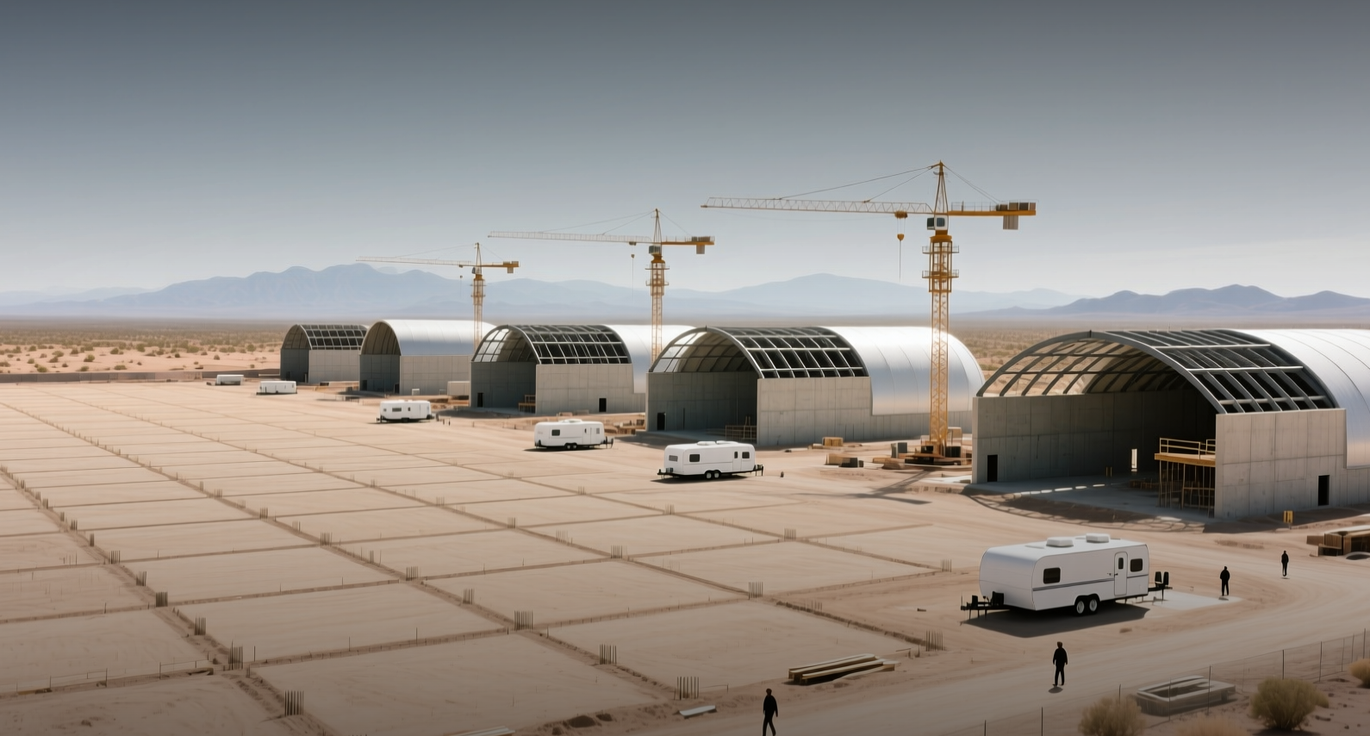
TSMC's $100 billion Arizona expansion shows AI chip demand will outrun global foundry supply for years.
TSMC is adding $100 billion to its Arizona operations, lifting its total U.S. commitment to $265 billion, as surging artificial-intelligence demand for 2-nanometer chips outpaces global foundry capacity. The investment funds four additional wafer fabs for 2-nanometer and below technologies plus advanced packaging plants, making it the largest single foreign direct investment in U.S. history.
"To address the structural increase in the overall long-term semiconductor market demand profile, TSMC collaborates closely with our customers and our customers' customers to plan our capacity," Chairman and CEO C.C. Wei said. "Based on our assessment, we are stepping up our capital investments to increase our capacity to support our customers' future growth."
TSMC reported a 77% jump in second-quarter net profit to about $22 billion, up from $12.4 billion a year earlier, and raised its 2026 capital budget to $60 billion-$64 billion from $52 billion-$56 billion. Roughly 70%-80% of that spending targets advanced process technologies, with 10%-20% going to advanced packaging, testing and mask-making. The company also plans to build 13 leading-edge and advanced packaging fabs in Taiwan over the next several years.
The expansion cements Arizona's role as America's semiconductor hub and eases TSMC's concentration risk in Taiwan, where tensions with China persist. TSMC shares, up 78.5% over the past year, trade at 29.9 times earnings with a market value near $2.2 trillion.
TSMC's first Arizona fab has been in volume production of N4 technology (a 4-nanometer-class node) since late 2024, with yields matching its Taiwan facilities. Construction of a second fab using 3-nanometer processes is complete, with volume production expected in 2027. Upon completion of the announced fabs, roughly 30% of TSMC's 2-nanometer and more advanced capacity will sit in Arizona, creating an independent leading-edge cluster. The 2-nanometer node packs more transistors per square millimeter, improving performance per watt — the metric that matters most to hyperscalers running power-hungry AI data centers.
TSMC manufactures many of the world's most advanced chips for Apple and Nvidia, making it the critical supplier to the AI buildout. The company has become Asia's most valuable publicly traded company, with a market valuation approaching $2 trillion.
The expansion deepens TSMC's lead over Samsung Foundry and Intel, both chasing the same leading-edge customers. Intel raised its 2026 capital spending outlook to exceed $20 billion on strong customer demand, while GlobalFoundries spent $408 million on capital expenditures in the second quarter, about 23% of revenue. TSMC's $60 billion-$64 billion budget dwarfs both rivals. Since 2020, Arizona has attracted more than 70 semiconductor expansions representing over $314 billion in investment, the most of any U.S. state.
Analysts remain bullish on the stock. Sanford C. Bernstein lifted its price target to $554, Bank of America to $590, and Barclays to $650, versus the stock's $418.95 close. David Tepper's Appaloosa Management added to its TSMC stake for a sixth consecutive quarter, while Trust Co. of Vermont bought 100,462 shares worth about $48 million in the second quarter. The stock trades at 10.9 times forward sales, above its historical median of 8.1 times, but earnings estimates for 2026 and 2027 have been revised upward over the past 90 days.
TSMC also raised its dividend, planning to pay TWD 24 per share in 2026, up 33% from TWD 18 in 2025. The company paid TWD 467 billion in cash dividends last year. Wei said future development of the Arizona site will depend on market demand, but the company's customers — including Apple and Nvidia — have signaled multi-year orders for leading-edge capacity. For investors, the question is whether TSMC's valuation already prices in the AI boom, or whether the $100 billion bet on U.S. soil buys the diversification that justifies the premium.
This article is for informational purposes only and does not constitute investment advice.
