
President Donald Trump demanded Canada "comply" or face more serious consequences, escalating a trade war already imposing 50% tariffs on $20 billion of goods.
President Donald Trump demanded Canada "comply" or face more serious consequences, escalating a trade war already imposing 50% tariffs on $20 billion of goods.
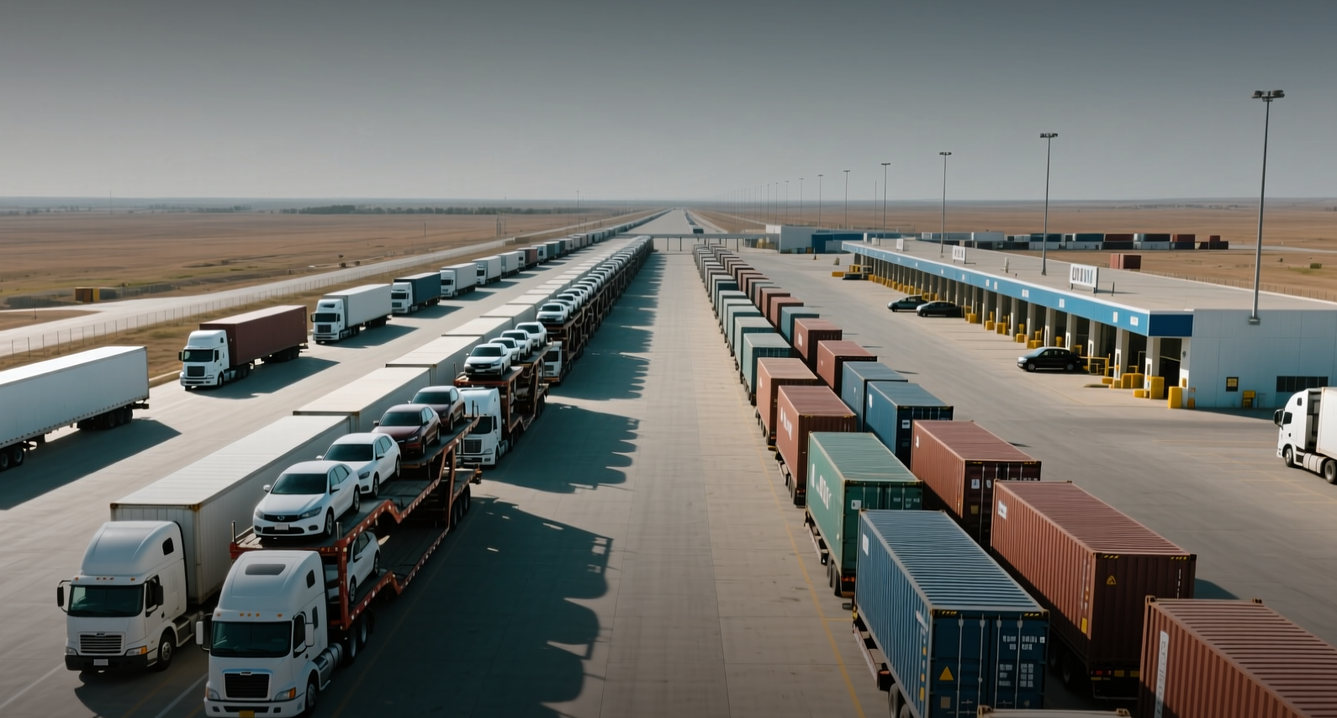
President Donald Trump demanded Canada "comply" or face more serious consequences, escalating a trade war already imposing 50% tariffs on $20 billion of goods.
President Donald Trump demanded Canada "comply" with US demands or face more serious consequences, escalating a trade dispute that has already triggered 50 percent tariffs on roughly $20 billion of Canadian imports. "The United States will always be larger, wealthier and stronger than Canada. Without the US, Canada cannot survive," Trump said in a statement Sunday.
"To think that they're going to go to war with Donald Trump and actually win that war with the US, I think it's foolish on their part," Sean Duffy, US Transportation Secretary, said on Fox News Sunday, predicting Ottawa would return to the negotiating table once the economic fallout becomes clear.
The tariffs, effective Saturday, cover more than 500 product categories including whisky, dairy, hockey equipment, plywood and smartphones — about 5.5 percent of Canada's total exports to the US. Canadian Prime Minister Mark Carney pledged matching counter-tariffs on US steel, dairy and appliances starting September 8, saying "you're at war when you get attacked. We got attacked."
The breakdown threatens the deepest fracture in the bilateral relationship since NAFTA, with 73 percent of Canadian exports — $409 billion last year — flowing to the US, according to Trading Economics. Trump's ultimatum raises the risk of broader sanctions on energy, autos and lumber, sectors whose disruption would ripple through both economies.
Talks collapse after last-minute demands
Negotiators had signaled an agreement was near as recently as Thursday, when Canadian trade minister Dominic LeBlanc told reporters a deal was "very close." Trump had postponed the original Wednesday deadline hours before it was imposed. But Carney said Friday that "last-minute changes in the US proposed terms were unfair, uneconomic, and called into question the reliability of any deal," including demands that would restrict Canada's ability to forge new trade deals and threats to French language and Quebec culture.
US Trade Representative Jamieson Greer countered that "Canada declined to finalize the trade deal under the terms agreed earlier this week." The tariffs were imposed under Section 338 of the Tariff Act of 1930, a provision not used since 1949 that allows tariffs of up to 50 percent on goods from countries found to discriminate against the US.
Economic fallout on both sides
The Business Roundtable, a group of 200 chief executives, warned the new tariffs "risk raising costs for American businesses and families" and called on both governments to resume negotiations. Steven Okun, CEO of APAC Advisors and a trade specialist, said the tariffs will be "politically painful" on both sides of the border, with blanket tariffs raising prices and fueling inflation rather than boosting investment as Trump has argued.
For Canada, the hit is concentrated. Julian Karaguesian, a lecturer and trade expert at McGill University, said the tariffs would "effectively price hundreds of Canadian goods out of the US market." Still, with 5 percent of Canadian exports affected out of a $382 billion market, "it's not a huge hit to the Canadian economy overall," Okun said.
The last major US-Canada tariff escalation, Trump's 25 percent steel and aluminum duties in 2018, cut bilateral steel trade by roughly a third within a year before the USMCA replaced NAFTA. That pact was not renewed in July over US concerns about trade deficits, removing the framework that had governed the relationship.
Carney is framing the dispute as an opportunity to diversify, courting trade partners in Asia and Europe to reduce Canada's dependence on the US. But with 73 percent of exports still destined for the US, that shift will take years. The Canadian dollar and trade-sensitive sectors — energy, autos, agriculture and lumber — face the most immediate pressure as markets price in a prolonged standoff with no formal negotiations scheduled.
This article is for informational purposes only and does not constitute investment advice.
