
The Pentagon's push to rebuild depleted munitions stockpiles is reshaping how the US defense industry does business — and where it does it.
The Pentagon's push to rebuild depleted munitions stockpiles is reshaping how the US defense industry does business — and where it does it.
The Pentagon's push to rebuild depleted munitions stockpiles is reshaping how the US defense industry does business — and where it does it.
The Trump administration's $1.5 trillion defense budget request for fiscal 2027, paired with a shift toward fixed-price procurement contracts, is triggering a competition among states to land manufacturing facilities for next-generation weapons systems.
"We're seeing a lot of growth coming out of the Department of War, new programs, new startups, really the SpaceX-ification, if you will, of the Pentagon," said Tom Stringer, a site selection consultant at Stringer Site Selection and Incentives.
The Pentagon's supplemental budget request sent to Congress includes $67 billion for the Defense Department, with $21 billion earmarked for munitions alone. The current fiscal year defense budget stands at about $1 trillion, and the administration has requested $1.5 trillion for fiscal 2027 — a sum that includes a proposed $350 billion reconciliation bill. The House Appropriations Committee has already approved a $1.1 trillion defense funding bill that endorses the Pentagon's rebrand to the Department of War.
The depleted stockpiles from the Iran war — which has cost about $29 billion since February — and ongoing support for Ukraine have exposed the limits of the traditional cost-plus contracting model, pushing the Pentagon to embrace fixed-price contracts that shift cost risk to contractors. The result is a new battleground for economic development as states compete for facilities that can deliver weapons at commercial scale.
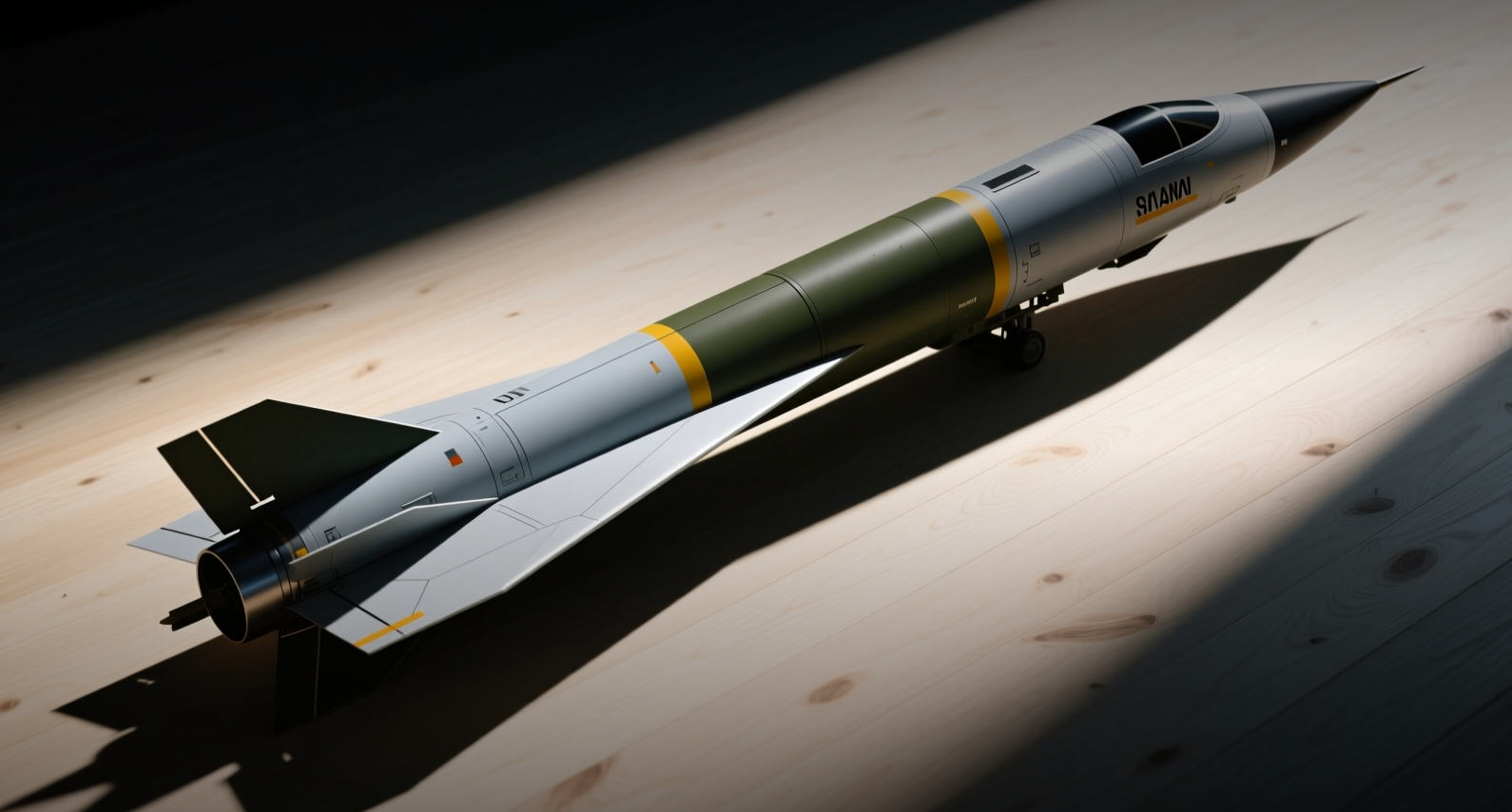
The shift is embodied by Castelion, a three-year-old startup founded by three SpaceX alumni that is applying Elon Musk's manufacturing playbook to hypersonic missiles. The company has raised more than $550 million in private capital and secured firm-fixed-price contracts with all major US service branches to deliver its first weapon system, dubbed Blackbeard, at a rate of at least 500 missiles per year.
"We're really applying standard commercial manufacturing strategies to a space that hasn't had them applied to it for many decades," said Sean Pitt, Castelion's co-founder and chief operating officer, a former SpaceX director of commercial sales. "It is not acceptable to come up with a design that we can only produce a couple dozen of."
New Mexico Bets on Hypersonics
Castelion broke ground in January on a $220 million, 1,000-acre campus in Sandoval County, New Mexico, about 30 miles north of Albuquerque. The company expects the facility to create 300 high-paying jobs and generate $650 million in economic impact over the next decade. Just six months after breaking ground, 15 of the 21 buildings are already under construction, with 1.6 million cubic yards of dirt moved.
The site selection came down to Arizona, Tennessee and New Mexico, said Andrew Kreitz, Castelion's co-founder and chief financial officer. New Mexico won on the combination of available land, a workforce anchored by Sandia and Los Alamos National Laboratories, and what Stringer described as "almost no red tape" across all levels of government.
"This company will be critical to catch up and pass China and Russia in hypersonic technologies," said Republican State Sen. Jay Block of New Mexico. "This is a race we cannot lose."
The Pentagon's New Math
The broader defense budget tells the story of a military machine under strain. The House appropriations bill allocates $248 billion for weapons procurement, $221 billion for research and development, and $10.6 billion for missiles and air defenses including Patriot and THAAD interceptors. The Navy would receive $56.7 billion to purchase 21 new ships, including 11 warships, plus $1 billion for materials for the new Trump-class nuclear-powered battleship — though the committee questioned the vessel's "maturity and affordability."
The bill also funds a total active-duty end strength of 2,112,200 personnel, about 40,000 more than fiscal 2026, with tiered pay raises: 7% for grades E-5 and below, 6% for grades E-6 through O-3, and 5% for grades O-4 and above.
The last time the US faced a comparable munitions replenishment challenge was during the post-9/11 wars in Iraq and Afghanistan, when defense spending surged to about 4.7% of GDP. The current request, if approved, would push spending toward levels not seen since the Reagan-era buildup of the 1980s, when the defense budget exceeded 6% of GDP.
For states, the stakes are clear. "We need to build really phenomenal products that deliver and that we can scale and build and deploy quickly at cost, and that's a sea change," Stringer said. Castelion's Pitt said the company expects to "significantly exceed" its initial 300-job commitment in New Mexico and will "continue to look for additional sites, both in New Mexico and across the country."
This article is for informational purposes only and does not constitute investment advice.
