
The White House wants near-term refining gains as Venezuelan crude reaches U.S. plants, though Rice's Francisco Monaldi says gas price relief is years away.
The White House wants near-term refining gains as Venezuelan crude reaches U.S. plants, though Rice's Francisco Monaldi says gas price relief is years away.
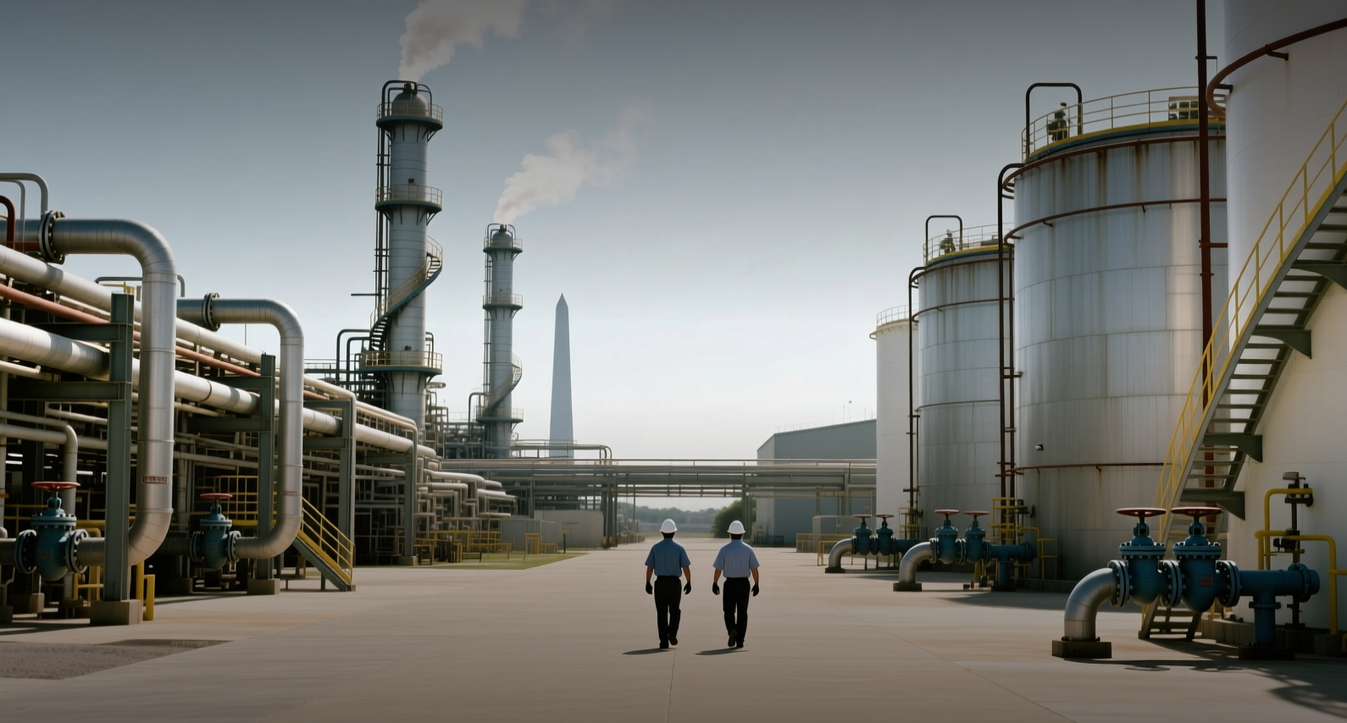
The White House wants near-term refining gains as Venezuelan crude reaches U.S. plants, though Rice's Francisco Monaldi says gas price relief is years away.
President Donald Trump will meet Tuesday with U.S. refiners to push near-term capacity gains as Venezuelan crude reaches American plants under a deal delivering 55 percent of a joint venture's output.
"A significant increase in production is highly unlikely, so this is not something that will have any relevant impact on the world oil market in the short term," Francisco Monaldi, director of the Latin America Energy Program at Rice University's Center for Energy Studies, said.
The White House says the joint venture with a private Venezuelan company gives the U.S. 55 percent of output, equivalent to about 65 billion barrels of oil underground, according to a U.S. official who spoke on condition of anonymity. Trump called it the "biggest oil deal in the world" on Truth Social, but many of the larger fields remain largely undeveloped, meaning it will take a minimum of a few years for them to produce anything, Monaldi said.
The meeting is the administration's clearest push to turn the Venezuela agreement into lower pump prices, though Gerald Kepes, president of Competitive Energy Strategies, called the idea of near-term gas price relief "absurd." Trump has separately said the U.S. Strategic Petroleum Reserve will be replenished with Venezuelan oil.
The deal's structure raises questions about execution. Unlike Saudi Arabia's Saudi Aramco or Mexico's Pemex, the U.S. does not own a national oil company and has no government-owned operational capability in the oil and gas sector, Kepes said. "The question is, who's going to operate on the ground?" he said.
The arrangement is signed with the government of acting President Delcy Rodríguez, who came into office after the U.S. seized and arrested former President Nicolás Maduro in January. Rodríguez was not elected, and Kepes said oil companies will weigh whether a deal with that government holds up in three to five years.
The "at-cost" pricing may also deter investors. Trump has said the U.S. would take its stake at whatever it costs to produce plus a set margin, stripping out the excess profits oil companies capture when prices spike. "'At cost' is not attractive in this industry," said Paasha Mahdavi, associate professor of political science at UC Santa Barbara who studies the oil industry. "So you would want to have some ability to capture on whatever premium exists between cost and the actual price of oil."
Kepes said the notion that the deal will lower gas prices now is "absurd." The larger fields under discussion are still largely undeveloped, and a significant increase in production is highly unlikely in the short term, Monaldi said. If the deal does affect gas prices, Kepes said, it will be far on the horizon.
The meeting comes as the administration pursues a broader energy push. Trump has said the Strategic Petroleum Reserve will be replenished with Venezuelan oil, and the White House is seeking near-term steps to expand refining capacity as more Venezuelan crude reaches U.S. plants. For refiners, the question is whether the added supply justifies investment in capacity that would take years to come online.
The deal marks the first time the U.S. government would take a direct equity stake in oil production, a departure from the model of state-owned producers that dominate Venezuela's neighbors. Whether private American oil companies step in to operate the venture will determine if the arrangement produces anything at all, Mahdavi said. "It's not clear who will rush in for that opportunity," he said.
This article is for informational purposes only and does not constitute investment advice.
