


Trump's push to let ranchers process their own meat targets a meatpacking industry he calls a "nasty monopoly," but small processors face structural cost hurdles that could blunt the policy's impact.
Trump's push to let ranchers process their own meat targets a meatpacking industry he calls a "nasty monopoly," but small processors face structural cost hurdles that could blunt the policy's impact.
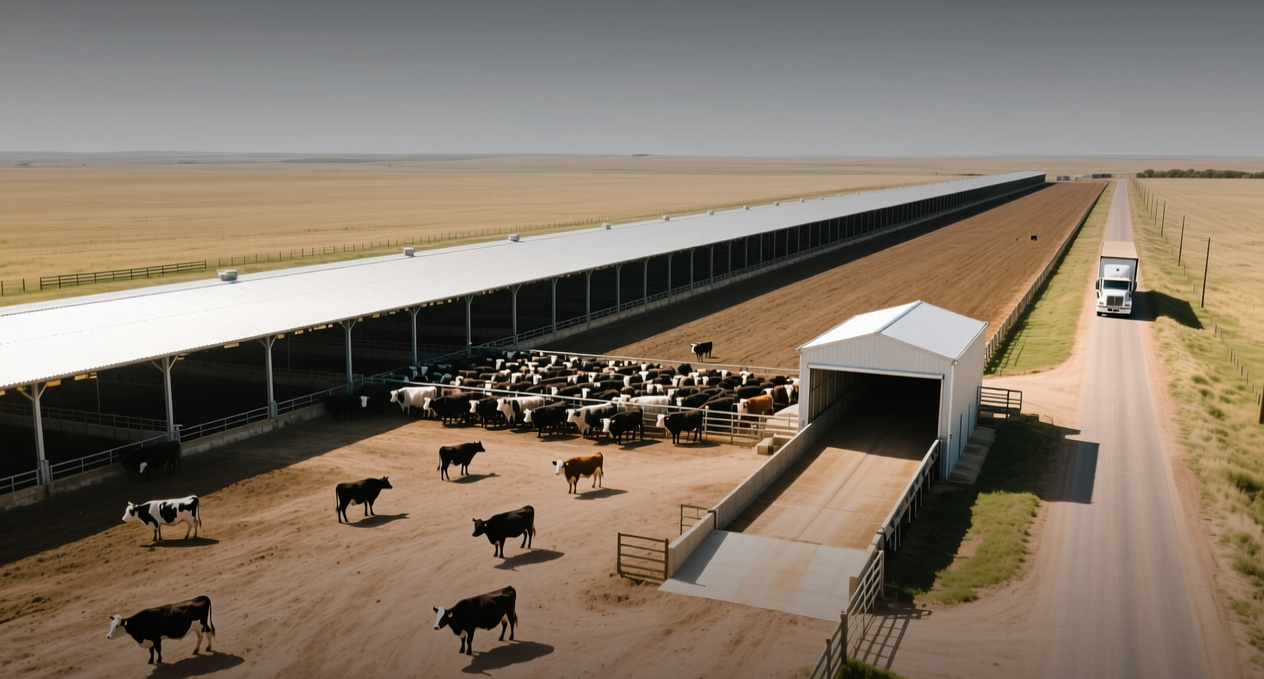
President Donald Trump authorized legal documents Friday to let ranchers process their own meat, calling the Big Four's grip a "nasty monopoly" as beef output is set to fall 4 percent in 2026.
"More independent processing is important but it's only one part," said Mike Schultz, a Kansas cattle producer and founder of the Kansas Cattlemen's Association who has worked in the industry for more than 50 years.
The move follows Trump's proclamation earlier this week that raised the quota for lean beef trimmings imports by 300,000 metric tons at lower tariff rates, part of a broader effort to address elevated beef prices and a domestic cattle herd at its lowest level in 75 years. The USDA projects beef production will decline roughly 4 percent in 2026 from 2025 levels.
The policy targets Tyson Foods, Smithfield Foods, JBS and Cargill — companies that control significant portions of U.S. meat-processing capacity — and comes as Attorney General Todd Blanche has opened an antitrust investigation into the industry. But ranchers and analysts warn that economies of scale, federal inspection requirements and labor costs could limit how much small processors can actually compete.
Schultz, who said he has made decent money in only about six of his 50-plus years in the cattle business, argued the industry's problems extend beyond processing capacity. He advocated for restricting meatpacker ownership of cattle, eliminating confidentiality rules governing cattle-price reporting, ending alternative marketing agreements and requiring greater public disclosure of cattle prices.
"Most of the feeders do not sell, do not get, four bids," Schultz said. "Most people are committed. They get a bid, and they're committed to a packer."
John Nalivka, president of Sterling Marketing and a longtime livestock-market analyst, cautioned against treating independent processing as a standalone solution. Large meat processors can spread labor, equipment, regulatory and other operating costs across much larger production volumes, creating an economic advantage that smaller facilities struggle to overcome.
"The Packers have consolidated so much into fewer Packers having a larger share of the market," Nalivka said.
Scale Economics and Inspection Hurdles
Nalivka said ranchers already can have cattle processed at smaller local facilities, meaning the practical question is whether they can do so economically and then get the product to consumers. Federal inspection for food safety remains a key requirement, and small processors also face challenges competing with larger facilities for workers. Ranchers selling directly to consumers through smaller processors could face higher costs than consumers paying for comparable products at traditional grocery stores.
The antitrust investigation, announced by Attorney General Todd Blanche, adds to longstanding concerns among ranchers that a small number of large processors wield too much influence over the market. Investigative activity has included document review, interviews, public statements and coordination with the USDA, though no major enforcement outcomes have been announced. Texas Attorney General Ken Paxton has opened a parallel investigation.
Trump previously drew ire from cattle producers when he floated importing beef from Argentina, with ranchers warning that additional foreign supply could undermine American producers. The latest import proclamation was framed as addressing an immediate supply shortage while the administration works to rebuild the domestic herd.
Agriculture Secretary Brooke Rollins said Friday that the administration would announce additional measures soon, including plans to waive red tape in meat processing, expand ranchers' ability to sell across state lines and support smaller processors. The administration has already rolled out $60 million to bolster small meat processors.
Lawmakers have attempted for years to pass the PRIME Act, which would allow small ranches and local slaughterhouses to sell meat directly to consumers without USDA inspections. The bill has bipartisan support led by Reps. Thomas Massie (R-Ky.) and Chellie Pingree (D-Maine) in the House and Sens. Rand Paul (R-Ky.) and Angus King (I-Maine) in the Senate, but has failed to gain traction against lobbying from powerful agriculture groups citing food safety concerns.
Massie posted on X that Trump's announcement "is great, but it should be a law, not just an executive order."
The Senate Agriculture Committee voted to include mandatory country-of-origin labels for beef in its farm bill package, which stalled in committee earlier this month. Any mandatory change to country-of-origin labeling would require congressional approval, as lawmakers repealed previous beef labeling rules in 2015.
The practical impact of Trump's directive remains unclear. Federal agencies are limited in how much they can unilaterally change without congressional action, and the administration has not yet provided details on what specific legal action Trump intends to take or how the proposal would interact with federal meat-inspection requirements.
This article is for informational purposes only and does not constitute investment advice.
