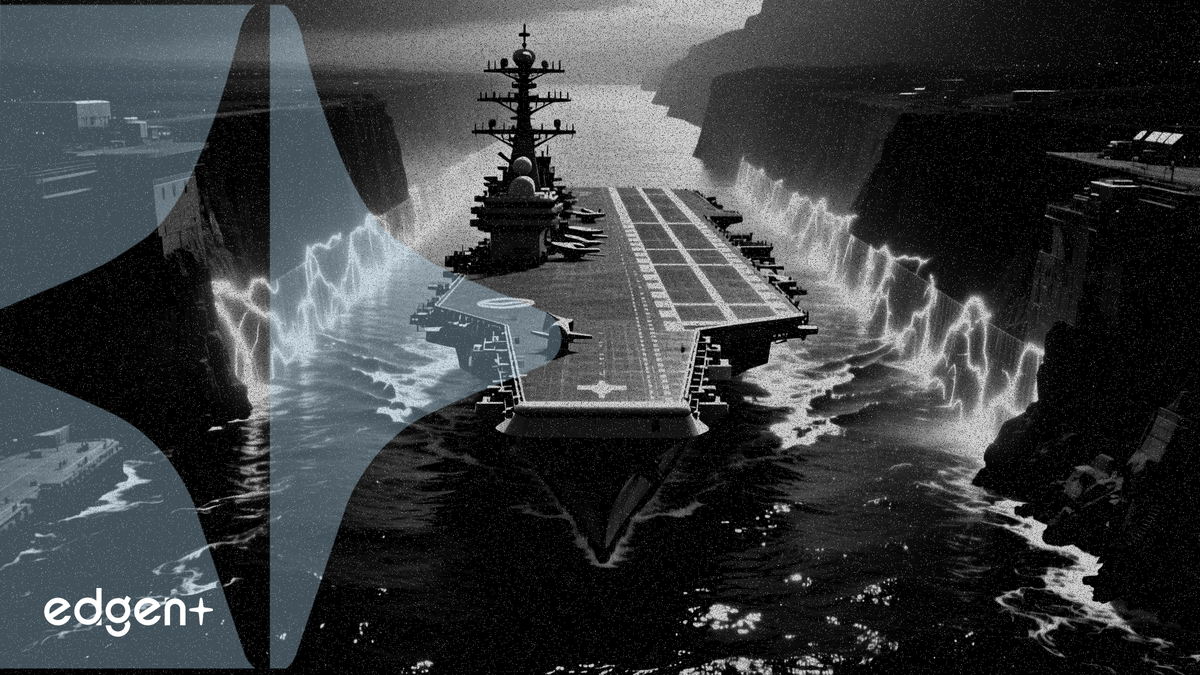
US President Donald Trump stated that a naval blockade of the Strait of Hormuz remains secure, with no ships having breached it after US forces redirected 70 vessels and disabled four others.
The statement, posted on social media, comes as Washington and Tehran engage in tense negotiations to end a conflict that has shut down one of the world’s most critical energy chokepoints and sent oil prices soaring.
"We will NOT be doing the scheduled attack of Iran tomorrow, but have further instructed them to be prepared to go forward with a full, large scale assault of Iran, on a moment’s notice," Trump said in a Truth Social post on Monday. He added that the planned attack was paused at the request of leaders from Qatar, Saudi Arabia, and the United Arab Emirates, who believe a deal is imminent.
The US Central Command confirmed it had redirected 70 commercial vessels and disabled four to enforce the blockade on ships traveling to or from Iranian ports. The fragile ceasefire, in place since April, has been punctuated by drone attacks and ship seizures, keeping regional tensions at a boiling point and threatening the 20 percent of the world's oil supply that transits the strait.
The conflict and resulting blockade risk a wider war that could draw in regional powers and further destabilize global energy markets. For the Trump administration, the escalating crisis has become a political liability, with a recent New York Times/Siena poll showing 64 percent of voters believe the war was a mistake.
High-Stakes Negotiations
Negotiations mediated by Pakistan are ongoing, though both sides appear far apart. According to Iran's semi-official Tasnim news agency, Tehran is demanding an immediate end to the war, a lifting of the US naval blockade, compensation for war damages, and recognition of its sovereignty over the Strait of Hormuz.
Washington has countered with its own demands, reportedly insisting that Iran operate only one nuclear site and transfer its stockpile of highly enriched uranium to the United States, according to Iran's Fars news agency. While Trump has recently suggested he could accept a 20-year suspension of Iran's nuclear program, down from a previous demand for a total halt, the gap between the two sides remains wide.
An Iranian source told Reuters that the US had shown some flexibility by agreeing to release a quarter of Iran's frozen funds held abroad, though Tehran wants all assets released. A separate report from Tasnim claiming the US agreed to waive oil sanctions during negotiations was denied by a US official.
Tensions Simmer Despite Ceasefire
Despite the formal pause in direct US-Iran hostilities, the region remains on edge. Saudi Arabia reported intercepting three drones from Iraqi airspace on Sunday, and a drone struck an electricity generator at the UAE's Barakah Nuclear Power Plant, the only such facility in the Arab world.
Meanwhile, shipping in the waters near the strait remains perilous. The United Kingdom Maritime Trade Operations reported on Thursday that a vessel anchored off the UAE port of Fujairah was seized and taken toward Iran. A separate Indian-flagged cargo vessel sank on Wednesday after being struck by a suspected drone or missile.
China, a major buyer of Middle Eastern oil, is also involved. President Trump said he had a "good" meeting with Chinese President Xi Jinping, who reportedly agreed that the strait must remain open and that Beijing would not provide military equipment to Iran. Reflecting a special arrangement, about 30 vessels, some of them Chinese, have been allowed by Iran to transit the waterway since Wednesday.
This article is for informational purposes only and does not constitute investment advice.