
Key Takeaways:
- Titan America launched a 3D-printable concrete technology on June 22
- The global 3D-printed construction market may reach $8.4 billion by 2032
- Titan Cement trades at 12x earnings, below peers Holcim and Heidelberg
Key Takeaways:
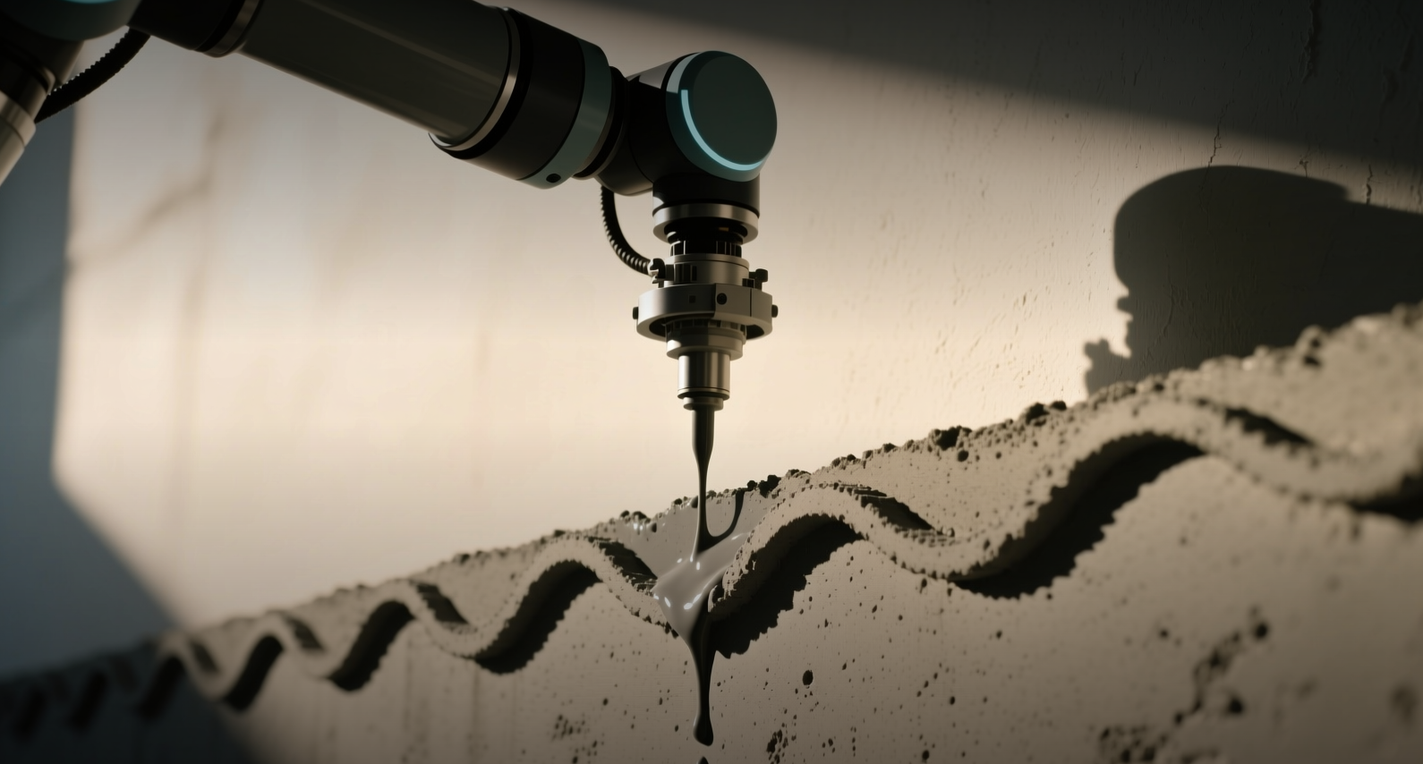
Titan America's new 3D-printable concrete could reshape how builders approach low-cost housing and infrastructure projects.
Titan America's entry into 3D-printable concrete targets a global construction sector where traditional materials account for 8% of carbon emissions, offering builders a faster alternative to conventional poured concrete that has remained largely unchanged for decades. The Norfolk, Virginia-based company announced the technology on June 22 but did not disclose a specific product name, pricing or commercial availability date.
"Three-dimensional printing with concrete has the potential to cut construction timelines by as much as 50 percent for certain structures, but the industry has struggled with material consistency and structural certification," said John B. Rogers, a construction technology analyst at Dodge Data & Analytics. "A major ready-mix producer entering this space signals that the technology is moving from pilot projects toward commercial viability."
The 3D-printable concrete formulation is designed to work with existing gantry and robotic arm printing systems, eliminating the need for custom equipment. Titan America, one of the largest cement and ready-mix concrete producers in the eastern United States, did not disclose compressive strength targets, curing time improvements or cost per cubic yard compared with standard concrete mixes. The company operates 11 cement plants and more than 70 concrete batch plants across the East Coast, giving it a distribution network that smaller 3D-printing material startups lack.
The global 3D-printed construction market was valued at $1.6 billion in 2025 and is projected to reach $8.4 billion by 2032, according to Grand View Research, growing at a compound annual rate of 27 percent. Traditional concrete production generates about 2.5 billion metric tons of carbon dioxide annually, or roughly 8 percent of global emissions, making lower-carbon alternatives a priority for builders facing tightening environmental regulations. Titan America's parent company, Titan Cement Group, has set a target of reducing carbon emissions by 35 percent per ton of cement by 2030 from 2020 levels.
Competitive Landscape
Titan America joins a field that includes dedicated 3D-printing construction firms such as ICON, which has printed homes in Texas and Mexico using its proprietary Lavacrete material, and COBOD International, a Danish supplier of 3D-printing systems used in Europe and the Middle East. Unlike those companies, which sell printing systems and printed structures, Titan America's model focuses on supplying the raw material — a ready-mix concrete formulation optimized for layer-by-layer extrusion — to general contractors and printing system operators.
ICON has printed more than 200 homes and secured a $57 million contract with the US Department of Defense for military housing. COBOD has supplied printers for projects including a seven-story apartment building in Germany, the tallest 3D-printed structure in Europe. Titan America's distribution scale — serving customers across 12 states — could give it a cost advantage in material logistics if the product achieves certification from the International Code Council, the body that sets US building safety standards.
Investment Implications
Titan Cement Group, listed on the Euronext Brussels exchange with a market capitalization of about 3.2 billion euros, trades at 12 times forward earnings, a discount to European construction materials peers such as Holcim at 15 times and Heidelberg Materials at 14 times. A successful 3D-printable concrete product could open a new revenue stream with higher margins than traditional ready-mix concrete, which typically operates on single-digit margins due to high transportation costs and commodity pricing. The company did not provide revenue guidance for the new product line or specify when it expects to begin commercial shipments.
This article is for informational purposes only and does not constitute investment advice.
