

Tesla's Optimus humanoid robot has entered production at the Fremont factory, learning assembly tasks by watching human workers rather than through coded instructions.
Tesla's Optimus humanoid robot has entered production at the Fremont factory, learning assembly tasks by watching human workers rather than through coded instructions.
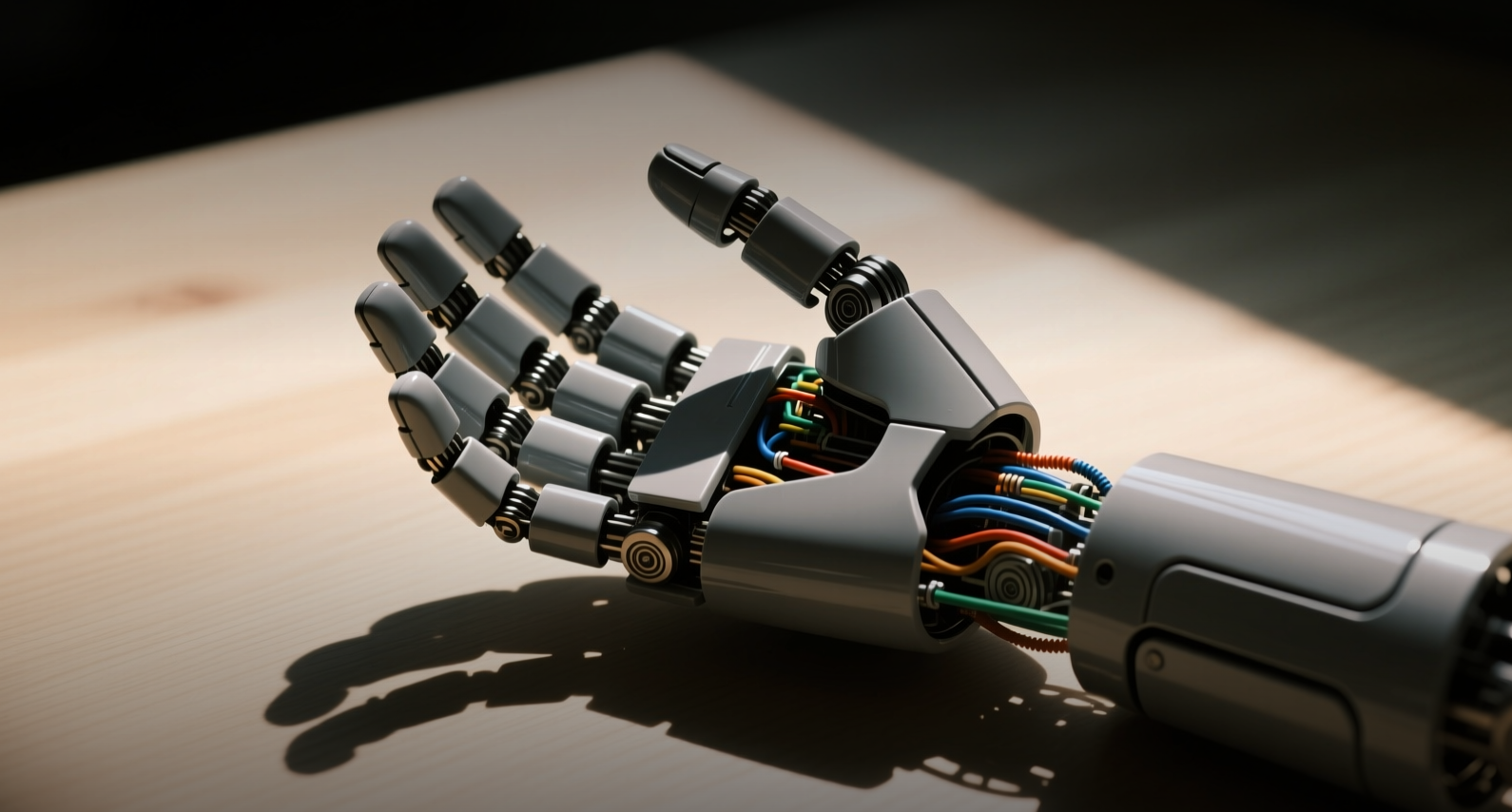
Optimus learns by watching — not through lines of code — a breakthrough that could reshape how factories deploy humanoid robots and give Tesla a lead in the robotics market.
"You've probably seen lots of impressive demonstrations of robots on the internet," Elon Musk, chief executive officer at Tesla, said on the company's second-quarter earnings call Wednesday. "Optimus is the first robot that learns by watching."
The 5-foot-11, 160-pound robot features more than 40 degrees of freedom and 11-degree-of-freedom hands designed for human-like dexterity. At Tesla's Gigafactory in Grünheide, Germany, selected workers wear backpack-mounted cameras that record how they grip tools and handle components, according to a report by Handelsblatt. The data trains Optimus to replicate those actions autonomously — a method Tesla already uses at its U.S. facilities with dedicated data collection operators.
The production milestone comes as Tesla reported adjusted earnings of 33 cents a share for the second quarter, missing the 51-cent consensus, while revenue reached $28.2 billion. Capital expenditures surged to $5.8 billion in the period, driving the company's first cash burn in two years. Tesla expects capital spending to exceed $25 billion this year as it scales Optimus, the Cybercab and its robotaxi fleet.
Unlike conventional industrial robots that follow pre-programmed routines, Optimus uses a vision-based learning system that captures human motion data and translates it into robotic actions. The approach mirrors advances in foundation models for robotics, where systems learn from demonstration rather than explicit programming. Tesla has not disclosed the specific architecture or training compute behind the system.
Musk described scaling Optimus production as "the most difficult manufacturing challenge Tesla has ever faced," noting that nearly every component must be built from scratch. Unlike electric vehicles, which benefit from mature supplier networks, Optimus requires new suppliers or in-house manufacturing for most parts. Tesla also faces shortages of AI chips and must overcome constraints in memory, logic and semiconductor packaging before production can scale, Musk said. Suppliers including Samsung Electronics Co., Taiwan Semiconductor Manufacturing Co. and Micron Technology Inc. are expanding capacity to support future Optimus production.
For investors, Optimus represents both opportunity and cost. The robot opens a new revenue stream beyond automotive, but the $5.8 billion quarterly spend — and the more than $25 billion annual CapEx forecast — pressures near-term profitability. Tesla shares trade at elevated multiples relative to traditional automakers, with the premium tied to Musk's ability to deliver on AI and robotics promises. Competitors including Boston Dynamics and Figure AI are developing their own humanoid platforms, though none have announced production timelines comparable to Tesla's.
This article is for informational purposes only and does not constitute investment advice.
