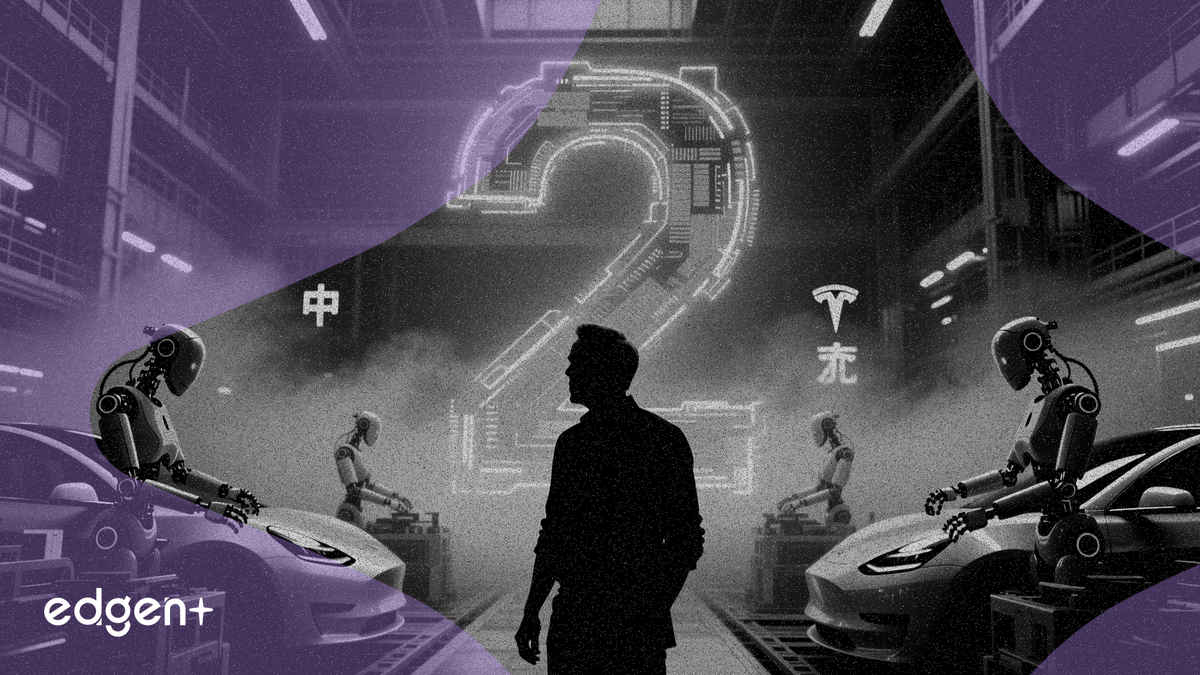
Tesla is making a dual bet on artificial intelligence, seeking software dominance in China while retooling car production lines for humanoid robots at home.
Tesla Inc. Chief Executive Elon Musk is in Beijing this week as part of a high-profile U.S. business delegation, a trip aimed at securing approval for the company’s Full Self-Driving software in the world's largest auto market. The visit comes as Tesla halts production of its flagship Model S and X vehicles to repurpose the line for its Optimus humanoid robot, a move that underscores the company’s long-term pivot from manufacturing cars to developing artificial intelligence.
"I will be asking President Xi, a Leader of extraordinary distinction, to ‘open up’ China so that these brilliant people can work their magic," President Donald Trump said in a social media post. Musk is one of at least 16 executives, including Apple's Tim Cook and Nvidia's Jensen Huang, accompanying Trump on the visit.
The dual initiatives highlight a critical juncture for the electric-vehicle maker. A successful FSD launch in China could add a significant, high-margin software revenue stream, with subscriptions in the U.S. already growing to 1.3 million as of the first quarter, up from 850,000 a year prior. Simultaneously, the halt in production of two of its four consumer vehicles signals a firm commitment to the Optimus project, a venture Musk has claimed could ultimately be more valuable than the car business.
This strategic shift places Tesla in direct competition not just with automakers, but with global technology leaders in AI software and robotics. The stakes are amplified by the geopolitical tensions surrounding the summit, which is focused on trade, war, and the proliferation of artificial intelligence.
The $99 Billion FSD Prize
Musk’s primary goal in China is to gain regulatory approval to sell Tesla’s driver-assistance software, which costs American drivers $99 per month. Unlocking the Chinese market is crucial for Tesla’s valuation, which is pinned on its future as an AI and software company rather than just a car manufacturer. Approval would validate the company’s AI-driven strategy and open a vast new market for a product with nearly pure software margins.
The CEO delegation itself reflects the complex competitive landscape. The last-minute addition of Nvidia CEO Jensen Huang, who boarded Air Force One during a layover, was particularly notable. Huang has been actively lobbying Washington and Beijing to allow sales of Nvidia’s AI chips to China, the same chips that power the data centers necessary for training systems like Tesla’s FSD. His presence alongside Musk and Apple’s Tim Cook puts three of the world’s most influential technology leaders at the center of sensitive U.S.-China negotiations.
From Model S to Optimus
While Musk negotiates in China, Tesla has stopped making its premium Model S and Model X cars. The production halt, confirmed via a post from Musk, is to convert the manufacturing capacity into a production line for the Optimus humanoid robot. The company has been tight-lipped about the robot's capabilities, with Musk citing competitive threats from rivals who "copy everything they possibly can."
This move represents a significant capital and resource allocation away from its core automotive business. It’s a high-risk, high-reward bet on a future where humanoid robots play a key role in manufacturing and beyond. Investors are awaiting a demonstration of the Optimus version three this summer, which will be a critical test of whether the pivot from high-margin luxury cars to robotics is a viable long-term strategy.
For investors, Tesla's stock, down four percent this year, reflects this uncertainty. The company is no longer just a bet on electric vehicle adoption but a complex wager on its ability to execute on two separate and ambitious AI frontiers. The outcome of the China visit could provide a near-term catalyst, but the success of the Optimus project will determine whether Tesla can redefine itself as an AI-first company.
This article is for informational purposes only and does not constitute investment advice.