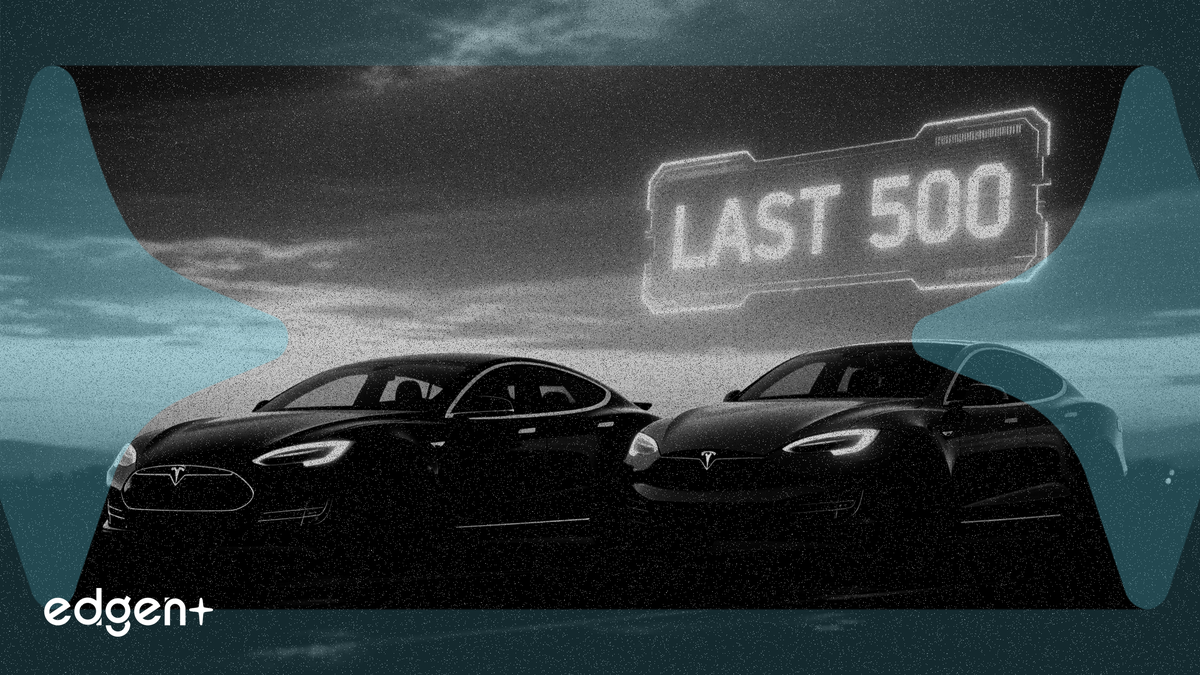
(P1) Tesla Inc. is winding down sales of its flagship Model S and Model X vehicles, with Chief Executive Elon Musk confirming only a few hundred remain in inventory, as the company accelerates its pivot from vehicle manufacturing to autonomous driving and robotics.
(P2) "There are only a few hundred Model S/X cars left in inventory," Musk said in a post on X on April 9, 2026, confirming the end of the line for the premium electric vehicles.
(P3) The move concludes a production run that started with the Model S in 2012 and the Model X in 2015, vehicles that established Tesla's brand in the luxury EV market. The discontinuation of its highest-margin cars points to a significant reallocation of capital and engineering resources toward the company's artificial intelligence initiatives.
(P4) While ending the high-margin models could create near-term revenue headwinds, the decision underscores Tesla's long-term bet that its valuation will be driven by software licensing for autonomous fleets and the deployment of humanoid robots, a market some analysts project could be worth trillions.
The strategic pivot has been years in the making. Tesla has been collecting data from its fleet of millions of vehicles to train its Full Self-Driving (FSD) software. The company aims to achieve Level 5 autonomy, where the car can drive itself in all conditions without human intervention. This would unlock the potential for a robotaxi network, a concept Musk has touted for years. The company faces intense competition in the autonomous vehicle space from Alphabet's Waymo and General Motors' Cruise, which have already logged millions of driverless miles in select cities.
Beyond autonomous cars, Tesla is also investing heavily in its Optimus humanoid robot. The company envisions a future where these robots can perform repetitive tasks in manufacturing facilities, and eventually, in homes. This places it in direct competition with established robotics firms like Boston Dynamics.
The market's reaction to the end of the Model S and X is uncertain. The loss of these high-priced models could be viewed as a negative for short-term profitability. However, long-term investors may see the sharpened focus on the higher-potential sectors of autonomy and robotics as a bullish signal, validating the thesis that Tesla is more than just a car company. The transition period, however, increases execution risk and will be closely watched by investors.
This article is for informational purposes only and does not constitute investment advice.