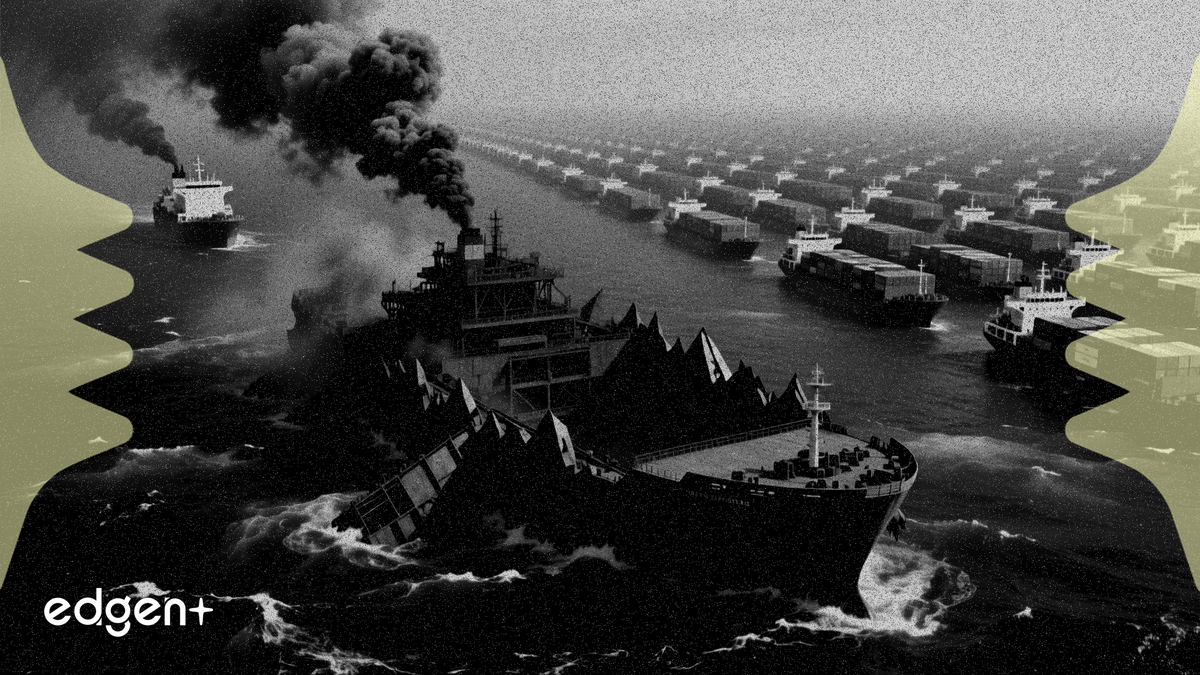
The discovery of a suspected floating mine in Omani waters threatens to delay reopening of the Strait of Hormuz, where 1,500 vessels remain stranded after nearly three months of war.

A suspected floating mine discovered in Oman's territorial waters near the Strait of Hormuz threatens to complicate already-fragile efforts to reopen the waterway, where about 1,500 ships have been trapped since the conflict with Iran began.
"Any vessel observed to be engaged in, or supporting, mine-laying activities will be targeted by U.S. forces in self-defense," US Central Command said in an advisory published Friday through the Joint Maritime Information Center, warning it would conduct military operations near the strait.
The Omani warning came a day after CENTCOM's statement and follows weeks of minesweeping preparations by British, French and German naval forces. The strait, which carried about one-fifth of the world's oil and gas before the war, is 21 nautical miles wide at its narrowest. Iran is believed to have planted seabed mines that release gas bubbles to rupture hulls, according to British military officials. Navies from the US, UK, France and Germany would need several weeks to deploy minesweepers, the International Energy Agency said in a report this month.
Even if a diplomatic deal is reached, the mine threat will keep maritime insurance rates elevated and delay the return of normal shipping traffic. Brent crude futures are likely to price in a higher risk premium, adding to supply-disruption fears that have already pushed energy prices higher globally. Before the war, more than 130 ships transited the strait each day, carrying about 17 million barrels of oil.
The mine warning comes as the US and Iran move closer to a potential agreement to reopen the strait, though significant obstacles remain. US President Donald Trump is making a "final determination" on Iran, while Iranian officials have insisted on maintaining control over the waterway as part of any deal. The US has not confirmed that Iran placed mines in the strait despite continued searches, two US officials said, adding to confusion around the conflict.
The Logistics of Reopening
Even under an ideal scenario, restoring normal traffic will take 30 to 45 days, according to Lasse Kristoffersen, chief executive of Wallenius Wilhelmsen, a car-shipping giant with one vessel stuck in the Gulf. Ships idle for months have accumulated barnacles and marine growth that reduce maximum speed. Hapag-Lloyd, the fifth-largest container line, said one vessel it extracted required extensive cleaning and could only achieve "significantly less" than normal speed afterward.
Companies will need to know how their ships will be prioritized, said Jakob P. Larsen, chief safety and security officer of the Baltic and International Maritime Council, which represents maritime companies. Vessels would ideally follow a speed limit to minimize collision risk in shallow waters, he added. Iran has established a regulatory agency to manage traffic through the waterway, signaling it intends to assert control over any reopening process.
The last time a major chokepoint faced sustained mining — during the Iran-Iraq War's Tanker War in the 1980s — the US Navy escorted reflagged tankers through the Gulf in Operation Earnest Will. That effort took months to organize and did not fully restore commercial confidence. The current situation involves a larger volume of traffic and a more sophisticated mine threat, with Iran believed to have deployed advanced influence mines that respond to acoustic and magnetic signatures.
Market Fallout
If a deal is reached but minesweeping takes weeks, traffic may recover to only 40% to 50% of normal levels over three to four weeks, said Dimitris Ampatzidis, a risk manager at Kpler. Shipping companies must also assess whether the Red Sea — still subject to reduced Houthi attacks — is safe enough for normal routing, adding another layer of uncertainty.
The mine discovery is likely to push Brent crude futures higher as traders price in a longer disruption to the world's most important oil chokepoint. Defense stocks may see increased interest as investors anticipate extended naval deployment in the region. The broader equity market faces a risk-off tilt if oil prices climb further, squeezing consumer spending and corporate margins already under pressure from elevated inflation. The VIX, which measures implied volatility, could rise as geopolitical uncertainty compounds existing macro concerns.
This article is for informational purposes only and does not constitute investment advice.