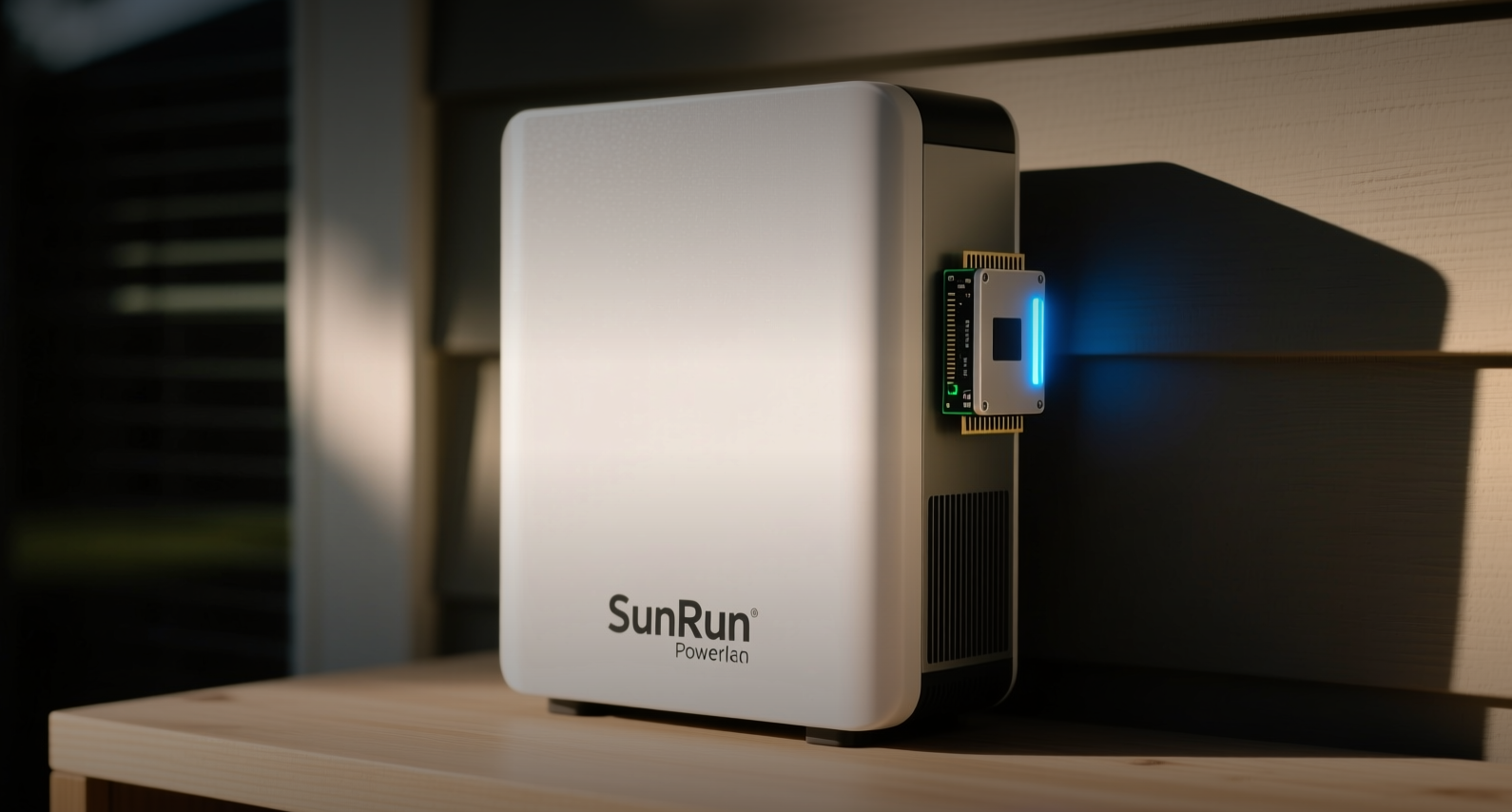
Sunrun is turning 1.1 million US rooftops into a distributed AI computing network, paying homeowners hundreds of dollars monthly for hosting compute nodes.
Sunrun Inc. is piloting a program that places AI inference compute nodes inside customer homes equipped with its solar and battery systems, creating a distributed computing network that bypasses traditional data center bottlenecks.
"AI companies are scrambling to secure greater access to energy and computing power," Paul Dickson, Sunrun's President and Chief Revenue Officer, said. "Over nearly two decades, we have perfected our ability to operationalize, finance, and scale distributed assets."
The San Francisco-based company operates about 1.1 million residential solar and battery storage systems across the US. Its pilot installs localized compute nodes behind the meter, integrated with home batteries for backup power during grid outages. Homeowners receive financial compensation for hosting the equipment, with Chief Executive Officer Mary Powell saying participants could earn hundreds of dollars per month. Sunrun is selling the AI inference capacity directly to enterprise customers.
Demand for AI inference computing is growing about 35% annually, according to McKinsey research, and is expected to overtake AI training workloads by 2030, accounting for more than half of global AI computing demand. Sunrun's model avoids land acquisition, new transmission infrastructure, and lengthy utility interconnection queues that plague traditional data center buildouts.
The pilot follows a successful proof-of-concept that demonstrated both customer demand and revenue generation from distributed computing capacity, the company said. Sunrun plans to complete the multi-month pilot before evaluating performance against key milestones and deciding on the scale of a wider rollout. It is already in discussions with enterprise computing customers, homebuilders, and utility partners for future commercial deployment.
A New Revenue Stream for a Beleaguered Stock
Sunrun shares have fallen about 36% year-to-date, making the AI pivot a potential catalyst for a stock that trades at roughly 12x forward earnings — a discount to rival Enphase Energy Inc. The announcement sent shares up 3% on the day of the news. The company's recent 16-gigawatt clean energy partnership with Tesla Inc. and Renew Home complements the distributed computing initiative, creating a broader platform for energy and compute services.
The Economics of Distributed AI
Unlike hyperscale data centers that require hundreds of megawatts of grid capacity, Sunrun's model places computing hardware in individual homes, leveraging existing solar generation and battery storage. Each node can process AI inference workloads — the task of running trained models on new data — which is less energy-intensive than training but far more distributed in nature. The company did not disclose the specific hardware or compute capacity of each node, nor the exact compensation structure for homeowners.
For investors, the question is whether this model can scale. Sunrun's 1.1 million installed systems represent a potential addressable market of over 1 million compute nodes, though the pilot will determine technical and economic viability. If successful, the program could transform Sunrun from a pure-play solar installer into an AI infrastructure provider, opening a high-margin revenue stream alongside its core energy business.
This article is for informational purposes only and does not constitute investment advice.