

Paga's millions of users gain access to dollar-denominated tokenized assets through Sui's blockchain, starting at a $100 minimum investment.
Paga's millions of users gain access to dollar-denominated tokenized assets through Sui's blockchain, starting at a $100 minimum investment.
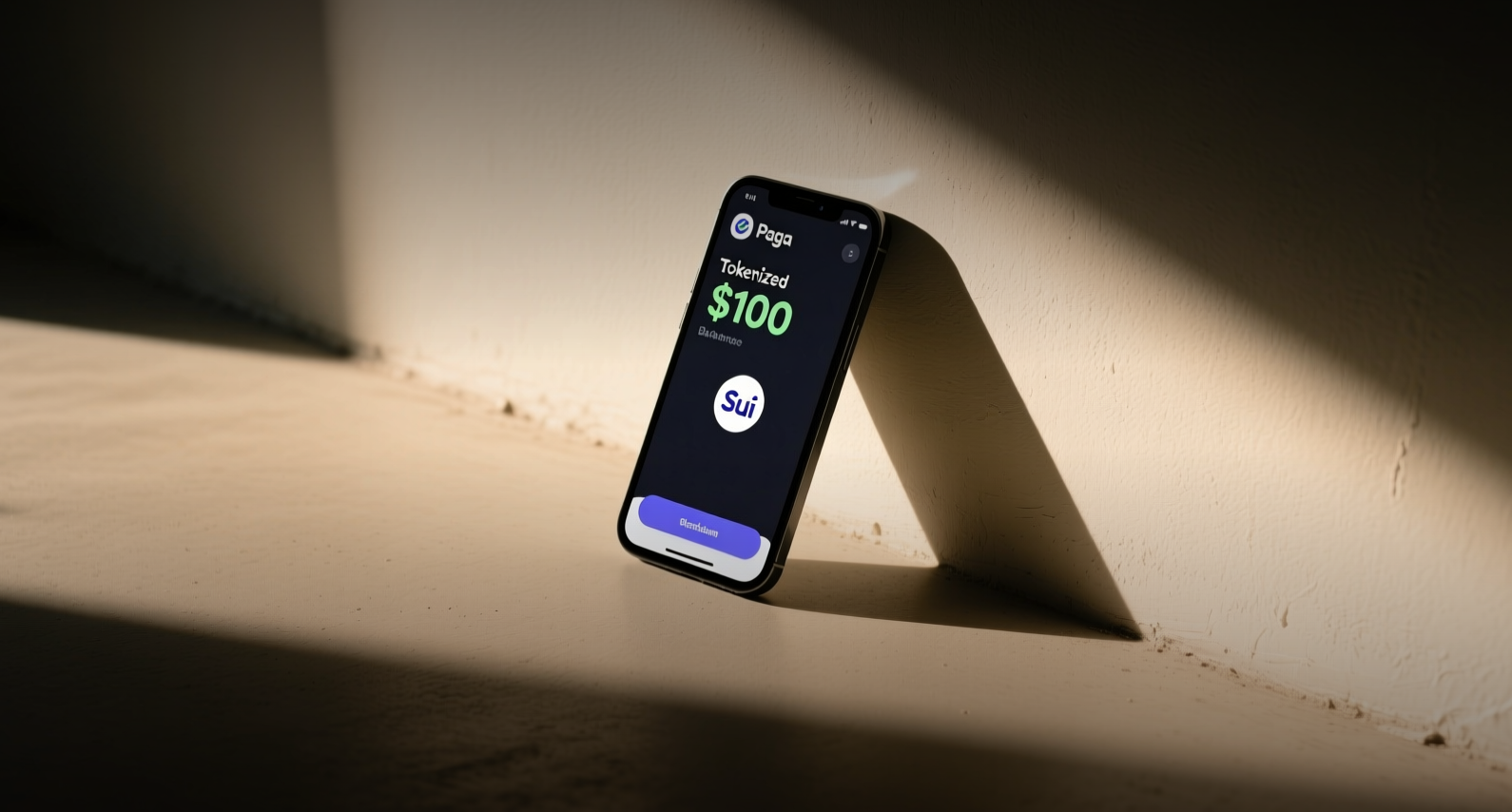
Paga's millions of users gain access to dollar-denominated tokenized assets through Sui's blockchain, starting at a $100 minimum investment.
Sui Foundation and Nigerian fintech giant Paga announced a partnership on July 1 to bring tokenized real-world assets to African retail users through TBook's embedded liquidity layer. Paga, which processes roughly $1.5 billion in monthly transactions and has handled over $42 billion cumulatively across 653 million transactions, will offer USD-denominated tokenized investment products with a minimum threshold of $100 — a deliberately low entry point aimed at retail rather than institutional adoption.
"This partnership connects African markets to the global economy by giving users access to stable currency-denominated assets," Tayo Oviosu, CEO of Paga, said at Sui Live Miami 2026. The integration covers three product areas: high-yield USD-denominated accounts, stablecoin-powered payment solutions, and improved cross-border transactions — all running on Sui's Layer-1 blockchain.
TBook serves as the embedded liquidity layer connecting institutional-grade tokenized yields to Paga's consumer-facing app. Rather than requiring users to navigate DeFi protocols or manage wallets independently, TBook's infrastructure lets Paga offer these products natively within its existing platform. TBook's ecosystem runs on its native token, $BOOK, which has a total supply of 10 billion, and also integrates with other fintechs including Omnipay, suggesting a broader strategy of embedding tokenized assets across multiple distribution channels in emerging markets.
For Sui, the partnership represents a concrete use case beyond speculative DeFi yield farming and on-chain trading. Onboarding a fintech with $1.5 billion in monthly transaction volume gives the network a distribution channel that most Layer-1 blockchains would struggle to replicate organically. The deal positions Sui against other L1s like Ethereum and Solana in the race to capture real-world asset tokenization — a sector that has emerged as one of the fastest-growing narratives in crypto, with protocols like Ondo Finance and BlackRock's BUIDL fund driving institutional interest.
What tokenized RWAs mean for African users
African currencies face persistent volatility against the dollar, making USD-denominated assets particularly attractive for retail savers. Paga's existing user base — spanning millions across Nigeria and other African markets — can now access tokenized Treasury yields and stablecoin-based products without leaving the app they already use for payments. The $100 minimum investment threshold signals that Paga and TBook are targeting genuine retail accessibility rather than institutional-only products.
Regulatory and adoption risks
The partnership faces varying regulatory environments across African nations. What works in Nigeria may encounter different hurdles in other markets on the continent, where crypto-specific regulations and currency controls remain fragmented. Paga's existing regulatory relationships provide some advantage, but tokenized assets introduce new complexities that regulators globally are still navigating. The conversion from existing Paga user to tokenized RWA investor will depend on education, trust, and whether the yields justify the learning curve — factors that will determine whether this partnership becomes a template for fintech-blockchain integration or remains an announced deal with limited uptake.
This article is for informational purposes only and does not constitute investment advice.
