
Russia says Ukrainian forces struck central Donetsk with British-French Storm Shadow cruise missiles, days after London handed Kyiv the blueprints to build them domestically.
Russia says Ukrainian forces struck central Donetsk with British-French Storm Shadow cruise missiles, days after London handed Kyiv the blueprints to build them domestically.
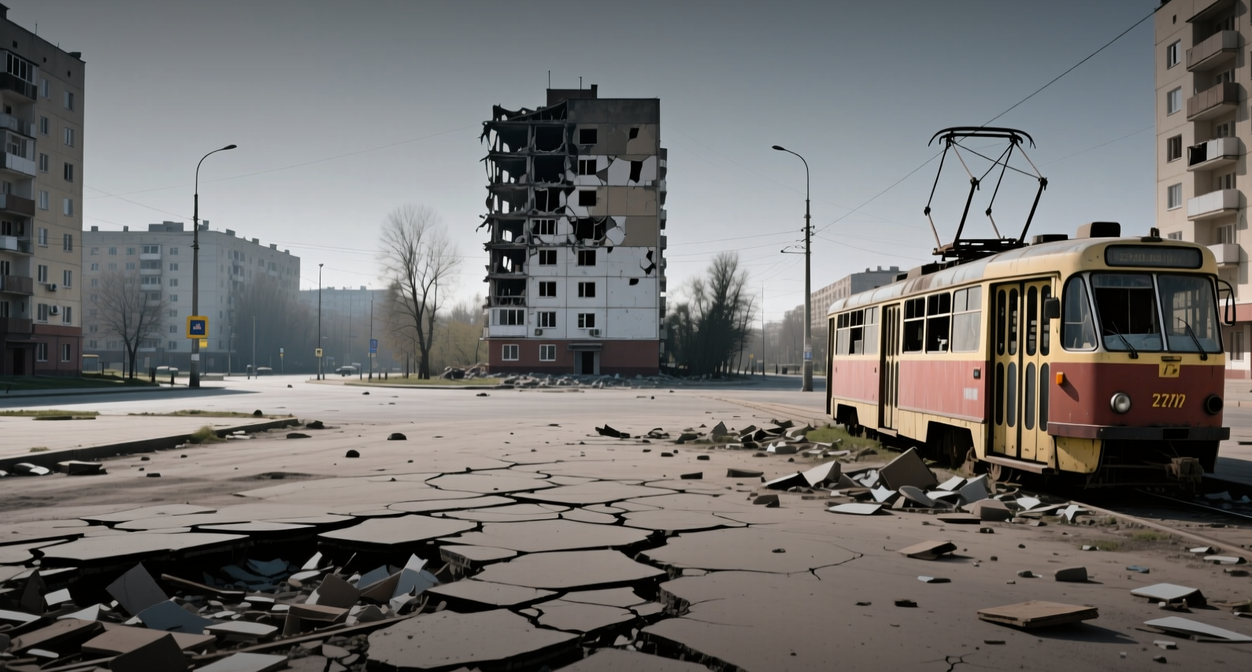
Russia says Ukrainian forces struck central Donetsk with British-French Storm Shadow cruise missiles, days after London handed Kyiv the blueprints to build them domestically.
Russia reported Ukrainian forces struck central Donetsk with British-French Storm Shadow/SCALP-EG cruise missiles, the latest escalation in a conflict where the UK has committed £25 billion to Ukraine's defense.
"Russia cannot possibly acknowledge being beaten militarily by the Ukrainians," Peter Dickinson, a scholar at the Atlantic Council, said. "It is therefore extremely useful from a Kremlin perspective to blame everything on the British."
The strike follows UK Prime Minister Andy Burnham's visit to Kyiv on Ukraine's Independence Day, where he delivered classified blueprints for British-made Storm Shadow components. France had already granted Ukraine a production license in July. The UK's £25 billion package includes £16 billion in military assistance and £5.6 billion in non-military support, alongside a 100-year bilateral partnership agreement signed in 2025.
The escalation raises the geopolitical risk premium across energy and safe-haven markets. Crude oil and gold typically rally on such developments, while European equities face pressure from potential supply disruptions and Russian hybrid attacks that have already included drone incursions and sabotage operations across NATO territory.
The missile strike on Donetsk's city center marks a significant escalation in Ukraine's deep-strike campaign, which has targeted Russian oil refineries and warehouses ahead of September elections. Moscow's response has been swift: the Russian Embassy in London warned that the UK "will inevitably carry consequences for which it will have to answer," while Kremlin advisor Andrei Fedorov told the BBC that British factories supporting Ukraine could face a "semi-military" response from "unknown sources."
The UK's decision to share Storm Shadow blueprints represents a strategic shift in Western military support. London was the first to supply long-range strike weapons to Ukraine in May 2023, initially restricting their use against Russian territory. France followed with SCALP missiles shortly after, and the US quietly began delivering ATACMS ballistic missiles in the fall. Range restrictions were fully lifted in May 2025 when Germany, the UK, France, and the US jointly authorized strikes deep across Russian territory.
The Kremlin's threats extend beyond rhetoric. Russian-linked hybrid operations across Europe have intensified, including a drone packed with explosives sent into an east German airport near NATO and Ukrainian military aircraft, a cruise missile fired 90 kilometers into Polish territory, and an alleged plot to assassinate an American inside Poland. US intelligence agencies have predicted Russia could launch a limited armed attack on a NATO state this year, according to Dickinson.
Dickinson said Moscow's goal is to "intimidate and influence British public opinion against continued support for Ukraine" by showing that such support carries painful costs. "The past few months have seen a sharp increase in the quantity of incidents, while Russia is also growing bolder," he said. "Each new incident is a test. Russia is watching to see how NATO reacts."
The escalation carries direct implications for energy and financial markets. Ukrainian deep-strike capabilities have already demonstrated the ability to disrupt Russian oil infrastructure, and further strikes raise the prospect of supply disruptions that could push crude prices higher. Safe-haven demand for gold and the dollar typically strengthens during such escalations, while European equities face headwinds from increased geopolitical uncertainty.
The UK's £25 billion commitment — including £16 billion in military assistance — reflects sustained Western financial backing for Ukraine's defense. The 100-year bilateral partnership agreement institutionalizes this support, making it harder for any future UK government to withdraw. However, Ukraine's ability to produce Storm Shadow missiles domestically remains constrained by a lack of high-precision manufacturing equipment at scale, a challenge complicated by the ongoing war.
This article is for informational purposes only and does not constitute investment advice.
