

Key Takeaways:
- SpaceX plans global satellite phone service via Starlink by end of 2026
- Starlink Mobile TAM projected at $740 billion, per IPO prospectus
- Traditional telecoms face disruption as BCE shares drop 13% on fears
Key Takeaways:
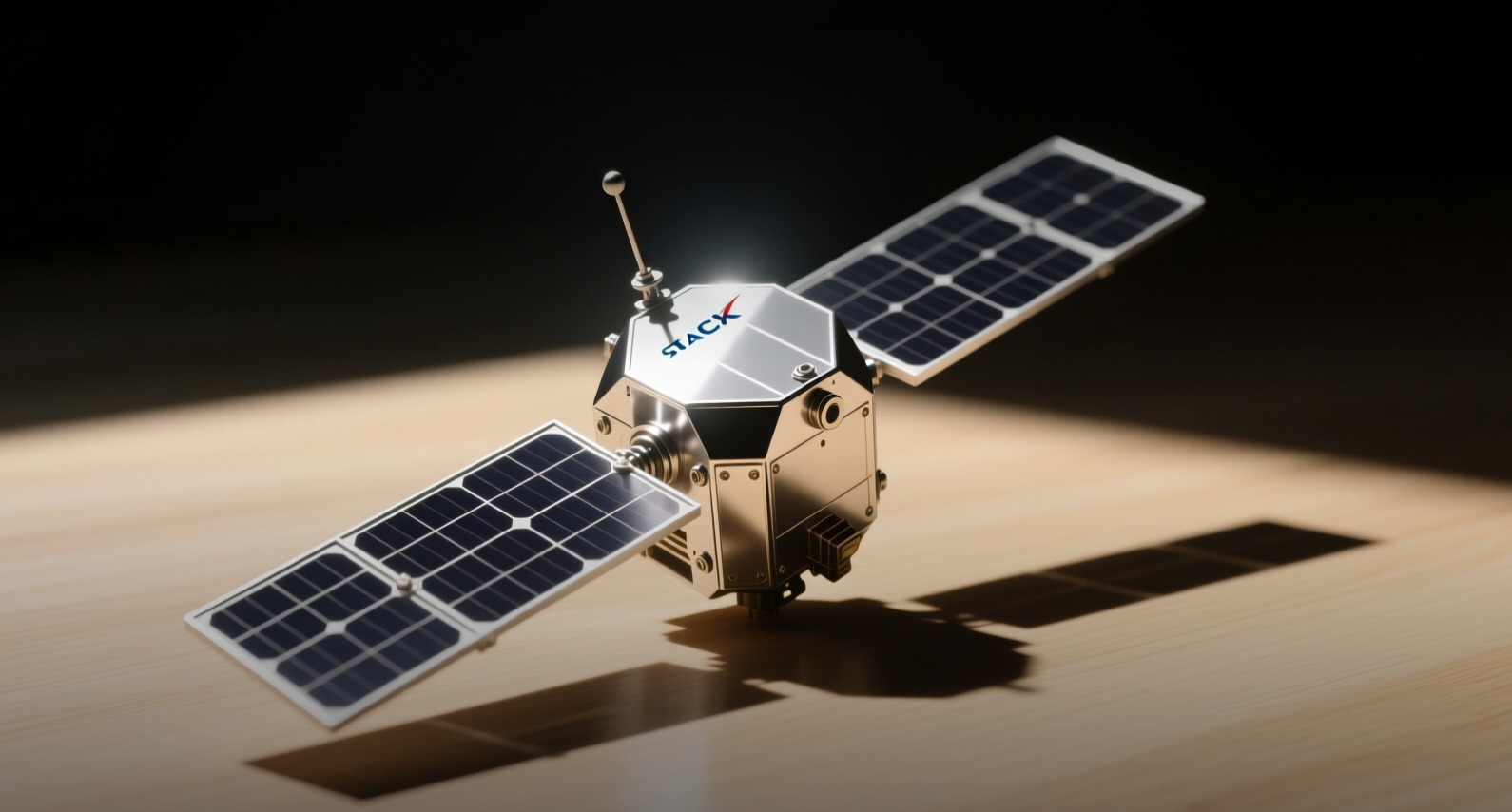
SpaceX's Starlink satellite network, already 10,000 satellites strong, is preparing to bypass cell towers entirely and connect smartphones directly from orbit — threatening a $740 billion mobile market.
SpaceX's plan to connect smartphones directly from low-Earth orbit threatens to upend the $1.7 trillion global telecom industry, bypassing the cell towers that have defined mobile networks for four decades.
"The potential market size for the Starlink Mobile business is projected to reach $740 billion," SpaceX said in its recent IPO prospectus, as reported by the Chosun Ilbo.
SpaceX has launched over 10,000 small satellites at 550 kilometers altitude since 2019, with plans to expand to 40,000. Last September, it spent $17 billion to acquire EchoStar's S-band frequencies — 2-to-4 gigahertz spectrum with longer wavelengths suited for satellite communications. The company aims to test global satellite phone service by year-end, enabling voice calls, text messaging and data connections wherever the sky is visible.
Starlink, SpaceX's only profitable business, carries a 63% to 65% margin rate and counts more than 12 million global subscribers. TD Cowen analysts project intensifying competition between SpaceX and major telecom companies, while BCE shares have already fallen 13% since early June on disruption fears.
How Starlink Mobile Changes the Economics of Connectivity
Traditional mobile networks require hundreds of thousands of terrestrial base stations connected by fiber-optic cables — infrastructure that costs billions to build and maintain. SpaceX's approach eliminates most of that. Aside from initial satellite launch costs, ground maintenance expenses are near zero, according to a senior aerospace industry source cited by the Chosun Ilbo. The company does not need to replace base stations with each new mobile generation, a cycle that has historically required telecoms to spend tens of billions on network upgrades.
The technical path is becoming clearer. Apple's upcoming iPhone 18 Pro is rumored to include an in-house C2 chip that enables web browsing via satellite, according to 247wallst.com. That would mark a leap from current satellite connectivity, which is largely limited to emergency SOS messages. If smartphone makers embed satellite-capable chips as standard, Starlink could reach billions of devices without SpaceX ever manufacturing a handset.
Why Licensing Makes More Sense Than Building a Phone
Elon Musk has denied reports that SpaceX plans to develop its own smartphone, calling such speculation "utterly false." Licensing Starlink's low-Earth orbit constellation to phone makers makes more strategic sense, given SpaceX's capital priorities in spacecraft manufacturing and Mars migration funding. The mobile communications business can generate stable profits using existing infrastructure, unlike artificial intelligence development, which requires massive upfront investment before generating returns.
The threat to incumbent telecoms is real but uneven. TD Cowen analyst Vince Valentini, who upgraded BCE to Buy on July 2, argued that Canadian telecoms are a "relative haven" from U.S. wireless disruption due to foreign ownership rules, spectrum constraints and the structure of Canada's mandated MVNO framework. He estimates Starlink has reached about 500,000 rural homes in Canada, mainly legacy DSL customers, and called any broadband share loss "gradual and manageable."
In the U.S., the calculus is different. SpaceX's direct-to-device service could compete head-on with AT&T, Verizon and T-Mobile, which together spend more than $30 billion annually on network infrastructure. If Starlink Mobile achieves comparable latency and throughput — a significant technical challenge given current satellite-to-phone bandwidth limits — the cost advantage could pressure telecom margins and accelerate consolidation.
SpaceX trades on the Nasdaq under ticker SPCX with an expected valuation of roughly $1.75 trillion following its recent IPO. The stock's performance will increasingly reflect Starlink's ability to convert its satellite fleet into a mobile revenue stream, not just a rural broadband service.
This article is for informational purposes only and does not constitute investment advice.
