

A standoff is defining the 2026 market: Michael Burry’s dire warnings of a tech bubble face off against contrarians who see lingering skepticism as the primary fuel for more gains.
A standoff is defining the 2026 market: Michael Burry’s dire warnings of a tech bubble face off against contrarians who see lingering skepticism as the primary fuel for more gains.
A standoff is defining the 2026 market: Michael Burry’s dire warnings of a tech bubble face off against contrarians who see lingering skepticism as the primary fuel for more gains.
The global equity rally is forcing a difficult choice upon investors: ride the artificial intelligence wave that has propelled semiconductor stocks up more than 70% this year, or heed warnings from bears like Michael Burry that the market is mirroring the 1999 dot-com bubble.
"For any stocks going parabolic reduce positions almost entirely," Burry, the investor famed for his bet against the 2008 housing market, wrote in a recent Substack post. He argued that the current rally, driven by a "two letter thesis that everyone thinks they understand," feels like the last months before the 2000 crash.
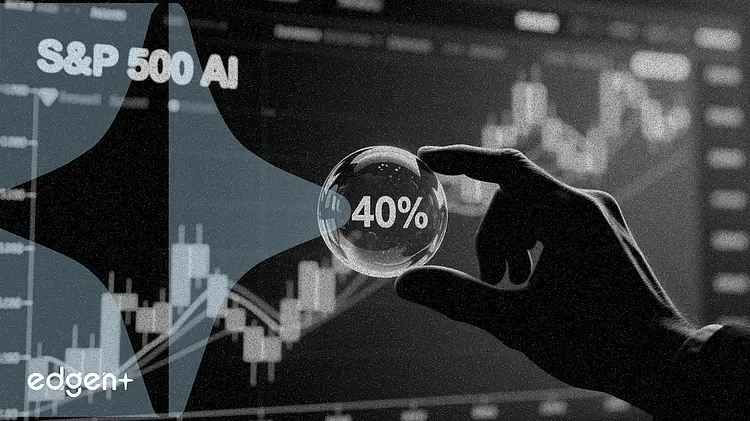
The numbers support the scale of the ascent. The Philadelphia Semiconductor Index (SOX) has surged 70.5% in 2026, with individual names like Intel soaring 214.6 percent, far outpacing even Nvidia's recent gains. This concentration has grown so extreme that the top 10 AI-related companies now constitute roughly 40% of the S&P 500's total market capitalization, according to Morgan Stanley data.
The central question for investors is whether this is a sustainable paradigm shift or a concentrated, high-risk bubble. The resolution depends on whether AI-driven profitability can broaden beyond a few tech giants to the wider economy, justifying valuations that appear stretched by traditional metrics.
While Burry's comparison to the dot-com era is stark, some fund managers argue it misses a crucial difference. In the late 1990s, bullishness was nearly universal. Today, despite record highs, a significant cohort of investors remains skeptical, a dynamic contrarians believe provides the necessary "wall of worry" for the market to climb.
This skepticism is quantifiable. Bank of America data shows global fund managers have cut their overweight allocation to equities by two-thirds since March. For contrarian investors, this indicates that there is still significant capital on the sidelines, ready to fuel the next leg of the rally if and when these skeptics are forced to capitulate and buy into the market. The argument is that the existence of a large camp of non-believers is itself a bullish signal, providing potential buyers who can push prices higher.
The market's heavy concentration is undeniable and a key risk highlighted by bears. With just 10 companies representing 40% of the S&P 500's value, a downturn in a few key names could have an outsized negative impact on the entire index. Burry himself is targeting this concentration, placing bearish put options against the semiconductor sector.
However, history shows that high market concentration is not without precedent, with similar levels seen in the 1930s and 1960s. Proponents of the current structure argue that today's leaders, unlike the profitless ventures of the dot-com era, are generating immense economic profits. Morgan Stanley data indicates that over the past decade, as concentration has risen, the top 10 stocks have not only accounted for a fifth of the market's value but have generated nearly half of its economic profit. The optimistic scenario is that AI will expand the overall profit pie so rapidly that it will eventually diffuse to other sectors, mitigating concentration risk over time rather than ending in a crash.
This article is for informational purposes only and does not constitute investment advice.
