
Key Takeaways: SK Hynix told investors its proposed US listing received "tremendously positive" feedback as AI memory demand keeps supply tight through the decade.
Key Takeaways: SK Hynix told investors its proposed US listing received "tremendously positive" feedback as AI memory demand keeps supply tight through the decade.
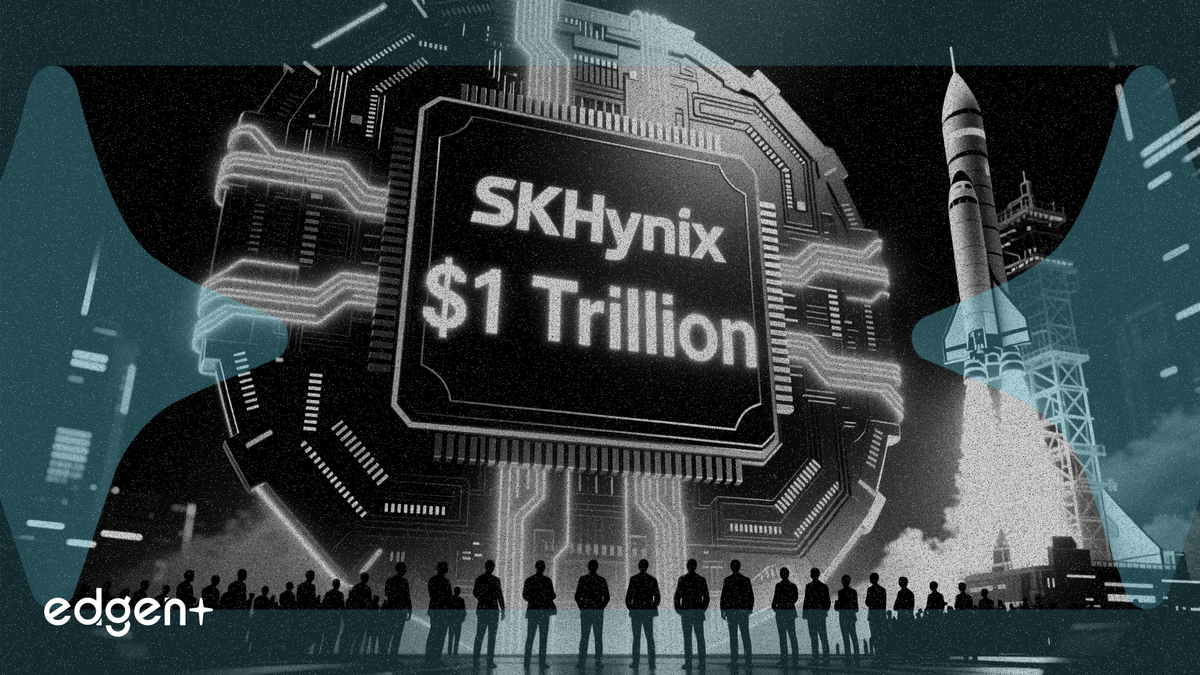
SK Hynix told investors this week its proposed US listing drew "tremendously positive" feedback, a source said, as the memory maker rides AI chip demand that Chairman Chey Tae-won says may outstrip supply until 2030.
"The feedback from stockholders to our US listing plan has been tremendously positive given AI demand and our competitive position in the memory-chip market," the company told investors during meetings this week, according to a person familiar with the matter.
The South Korean chipmaker made a confidential filing to list American depositary receipts in New York this year, with a March report suggesting the deal could raise as much as $14 billion. Its shares have surged 250% this year, pushing its market value past $1 trillion last week — making it the third Asian company to hit that milestone after Taiwan Semiconductor Manufacturing Co. and Samsung Electronics Co. The company said it could not provide specific updates as the US Securities and Exchange Commission review continues, but plans to issue ADRs within 2026.
The listing would give US institutional investors constrained to domestic listings a direct way to own the AI memory trade. SK Hynix holds about 57% of the high-bandwidth memory market and 32% of global DRAM, and Chey said at Computex in Taipei on June 2 that the company plans to double wafer capacity within five years. He put the lead time for a greenfield fab at more than five years, suggesting fresh output arrives near the tail end of the shortage window he predicts.
The company expects a favorable pricing environment for its HBM chips to continue into next year, with discussions underway with customers on future pricing. Strong demand for LPDDR memory from Nvidia for its next-generation Vera Rubin AI platform could tighten supply across the broader memory market from 2027, SK Hynix told investors. The company said it plans to adjust investments and product mix to maximize output but acknowledged it would be difficult to fully satisfy all demand.
AI Memory Crunch Drives Expansion Plans
Chey said the company's 2026 capital expenditure will rise significantly from 30.2 trillion won, or roughly $20 billion, spent in 2025. The cost of the buildout remains difficult to pin down as prices for land, equipment and electricity keep moving. With existing production lines already saturated, customers have offered to buy SK Hynix's EUV scanners and prefund fab lines as available capacity has fallen to near zero, according to Chey's comments at Computex.
The shortage is most acute in HBM, which consumes far more wafers per bit than standard DRAM and carries the industry's highest margins. TrendForce projected DRAM contract prices to rise 63% in the second quarter after climbing roughly 95% in the first, while DDR4 spot pricing ran up around 2,200% over 12 months before a recent decline.
What the US Listing Means for Investors
A successful US listing would broaden SK Hynix's investor base, as some US-based institutional investors invest only in US-listed stocks due to internal mandates. The company, a key supplier to Nvidia, is seeking more manufacturing partnerships in Taiwan beyond TSMC as it positions to become a major HBM supplier for Nvidia's Vera Rubin platform.
The listing comes as memory has become one of the biggest bottlenecks in artificial intelligence, powering everything from HBM used to train AI systems to DRAM and NAND flash deployed across data centers. Arm Holdings CEO Rene Haas has also pointed to memory as the biggest constraint for the global AI industry, partly because leading producers pulled back on expansion after the post-Covid downturn.
This article is for informational purposes only and does not constitute investment advice.
