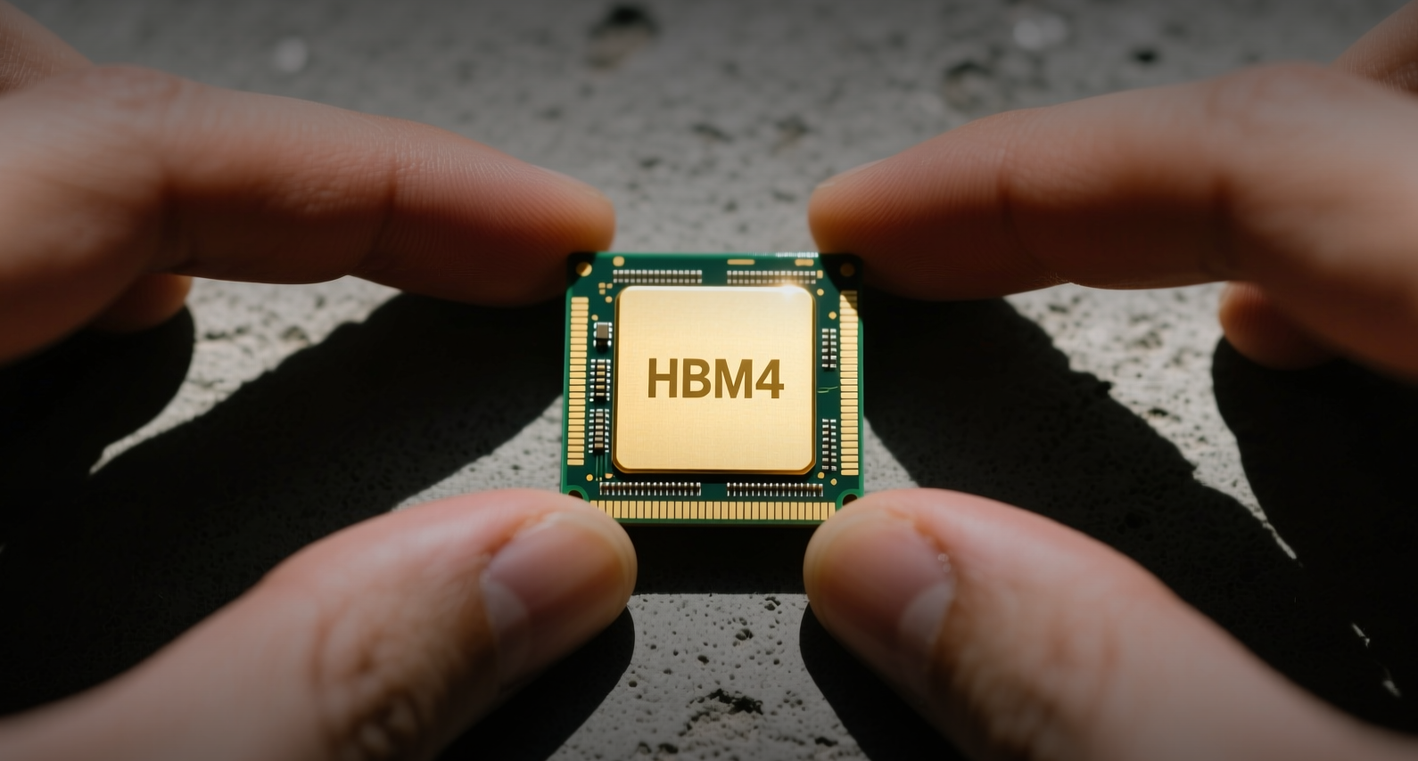
SK Hynix is placing up to 400 billion won in HBM4 testing equipment orders for its Cheongju plant, the first tangible procurement signal from a 1,100 trillion won expansion that will reshape global AI memory supply.
The world's largest high-bandwidth memory maker is in talks with multiple semiconductor equipment suppliers for about 200 testing machines destined for its P&T7 advanced packaging facility in Cheongju, according to people familiar with the discussions. Each HBM4 tester costs between 1.5 billion and 2 billion won, putting the total order value at as much as 400 billion won ($308 million). The company is coordinating delivery volumes available for next year.
"The scale of this equipment order confirms that SK Hynix is moving from planning to execution on HBM4 production," said Rachel Kim, semiconductor supply chain analyst at Edgen. "Testing capacity is a gating factor for HBM ramp — these machines validate the stacked memory dies before they ship to customers like Nvidia."
The procurement comes as SK Hynix accelerates the most aggressive capacity buildout in memory industry history. On June 29, the company unveiled a 1,100 trillion won long-term investment plan spanning three geographic pillars. The Yongin semiconductor cluster, originally scheduled for completion in 2045, will now finish by 2033 — a 12-year acceleration. SK Hynix allocated 600 trillion won to Yongin, where the first of four fabrication plants has completed civil engineering and entered the cleanroom infrastructure phase. The first cleanroom is expected to open in February 2027.
Cheongju receives 100 trillion won for NAND flash expansion and HBM advanced packaging, including the P&T7 facility where the current tester orders are headed. SK Hynix had previously announced about 19 trillion won for P&T7 alone. The South Korean government separately disclosed that Samsung Electronics and SK Hynix will invest a combined 81 trillion won in HBM packaging facilities in the Chungcheong region.
The third pillar is a new semiconductor cluster in Korea's southwest region, where SK Hynix plans to build two fabrication plants with a total investment of 400 trillion won for land acquisition, construction, and production equipment. Specific locations remain under discussion with central and local governments.
The competitive stakes for HBM4 leadership
HBM4 represents the next generation of high-bandwidth memory, which stacks multiple DRAM dies vertically to deliver the extreme data throughput required by Nvidia's and AMD's AI accelerators. Current HBM3E products transfer data at up to 1.2 terabytes per second; HBM4 is expected to double that bandwidth while reducing power consumption per bit. SK Hynix has been the dominant HBM supplier, holding an estimated 50 percent-plus share of the market, ahead of Samsung Electronics and Micron Technology.
The equipment orders for Cheongju suggest SK Hynix is preparing HBM4 production lines ahead of its competitors. Samsung has announced plans for its own HBM4 development but has not disclosed equivalent testing equipment procurement. Micron, the third player, has focused on HBM3E ramp at its Taiwan and US facilities.
SK Group Chairman Chey Tae-won said at the June 29 national briefing that the group will invest an additional 1,000 trillion won in AI data center projects, bringing total planned SK investment to more than 100 trillion won annually over the next decade. The AI data center network targets 15 gigawatts of total capacity, with an initial 5 GW phase in regions with secured power and land.
Government backing and the national AI agenda
The expansion plans from both SK Hynix and Samsung — which separately announced 2,655 trillion won in domestic investment across semiconductors, robotics, batteries, and bio — align with the Korean government's largest-ever semiconductor and AI industrial plan. President Lee Jae Myung's administration has positioned semiconductors, physical AI, and AI data centers as the "three pillars" of industrial upgrading, targeting a doubling of DRAM production capacity within five years.
For equipment suppliers, the P&T7 procurement window provides multi-year order visibility. Testing equipment makers serving the memory sector stand to benefit directly as SK Hynix's 1,100 trillion won plan translates into sustained capital expenditure through the early 2030s. The accelerated Yongin timeline alone pulls forward years of fab construction and tool installation spending.
SK Hynix shares have gained more than 40 percent over the past 12 months, making it South Korea's most valuable listed company by market capitalization, surpassing Samsung Electronics. The stock trades at about 12 times forward earnings, a discount to US semiconductor peers, reflecting investor uncertainty about whether the AI memory cycle can sustain its current trajectory. The 1,100 trillion won commitment — equivalent to roughly 60 percent of South Korea's annual GDP — signals management's conviction that demand will remain structurally elevated.
This article is for informational purposes only and does not constitute investment advice.