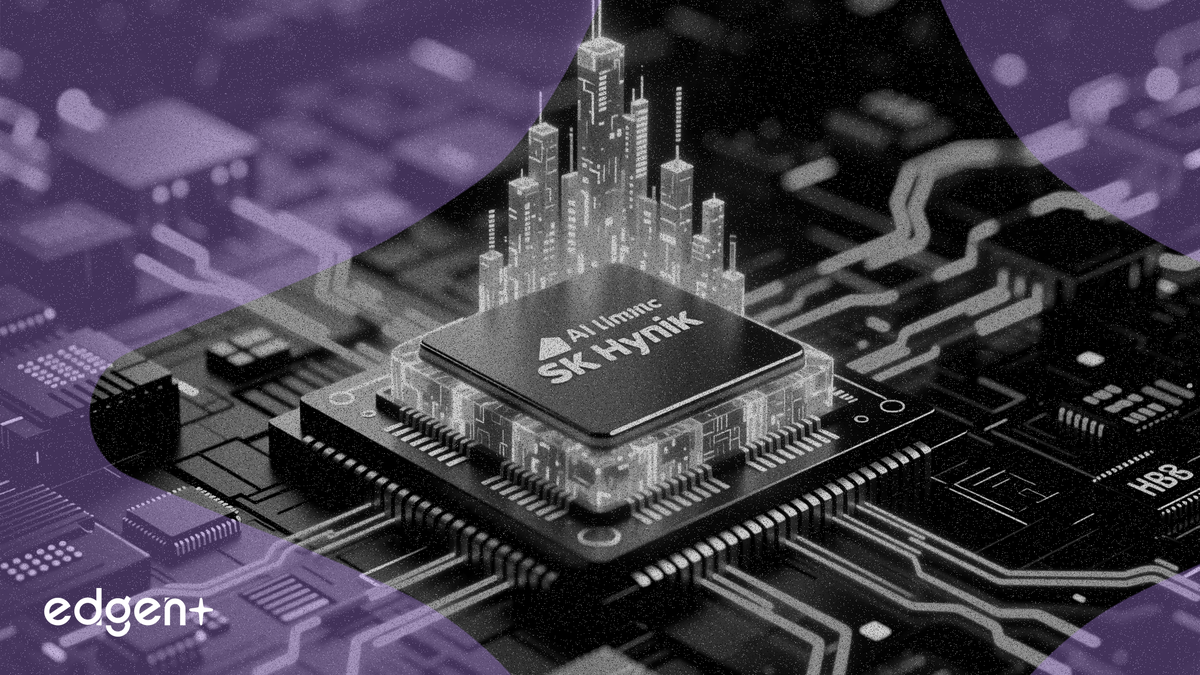
SK Hynix Inc. a lancé lundi une nouvelle solution de mémoire à large bande passante qui s'attaque directement au problème croissant de la chaleur dans les accélérateurs d'IA, une initiative qui renforce ses défenses dans un marché marqué par une demande et une volatilité sans précédent. La technologie iHBM de l'entreprise intègre des éléments de refroidissement directement dans le boîtier mémoire, réduisant la résistance thermique de 30 % et garantissant un fonctionnement stable dans les environnements haute pression des centres de données d'IA de nouvelle génération.
« L'iHBM est une solution optimale pour la gestion thermique, combinant nos capacités de conception de mémoire avec une technologie de mise en boîtier avancée », a déclaré Kangwook Lee, vice-président senior et responsable du développement PKG chez SK Hynix, dans un communiqué. « L'entreprise consolidera son leadership dans le domaine de la mémoire IA en prenant des mesures préventives pour offrir à ses clients les valeurs nécessaires dans l'environnement de l'IA. »
La nouvelle solution place des éléments de refroidissement intégrés (ICE) dans la couche physique die-to-die, l'interface entre la HBM et l'accélérateur d'IA où la concentration de chaleur est la plus élevée. Cela crée un chemin direct de dissipation thermique, un changement significatif par rapport aux méthodes existantes qui reposent sur un refroidissement indirect via la puce centrale. SK Hynix a confirmé que la technologie est prévue pour un déploiement dans ses produits HBM5 et utilisera son processus existant de remplissage sous puce moulé par refusion de masse (MR-MUF), qui, selon l'entreprise, offre une compatibilité de conception élevée et permet une production de masse stable.
Cette avancée technique intervient alors que SK Hynix navigue sur un marché paradoxal. L'entreprise est l'un des principaux bénéficiaires du boom de l'IA, son chiffre d'affaires du premier trimestre ayant dépassé les 50 000 milliards de wons pour la première fois. Pourtant, elle a simultanément fait face à un retrait record des investisseurs étrangers, avec des ventes nettes de 19 531 milliards de wons sur 12 jours de bourse consécutifs en mai, selon les données de la bourse.
Une déconnexion du marché
La divergence entre les performances opérationnelles de SK Hynix et les flux d'investisseurs étrangers est flagrante. L'entreprise a annoncé un premier trimestre exceptionnel le 22 avril, avec un bénéfice d'exploitation bondissant à 37 610 milliards de wons grâce à une demande insatiable pour sa mémoire HBM et ses SSD d'entreprise. Sa position de trésorerie nette s'élevait à 35 000 milliards de wons. Malgré cela, les investisseurs étrangers se sont délestés de leurs actions, représentant 42 % de toutes les ventes nettes étrangères sur le marché principal coréen au cours de la semaine terminée le 22 mai. Les analystes attribuent ces ventes principalement à un rééquilibrage de portefeuille après un rallye de 186 % depuis le début de l'année, plutôt qu'à un changement fondamental des perspectives. L'action elle-même est restée résiliente, clôturant le 23 mai à seulement 1,77 % de son plus haut de 52 semaines.
Le puzzle du packaging
Le lancement de l'iHBM met également en lumière le rôle critique du packaging avancé dans la chaîne d'approvisionnement de l'IA. Alors que SK Hynix entretient une relation étroite avec TSMC, l'acteur dominant du packaging 2.5D avec sa technologie CoWoS, des rapports indiquent que le géant coréen de la mémoire explore également des alternatives. Selon ZDNet, SK Hynix mène des activités de R&D sur le packaging EMIB (Embedded Multi-die Interconnect Bridge) d'Intel. Alors que la capacité CoWoS de TSMC est confrontée à de sévères contraintes, des acteurs majeurs de l'IA comme Google et Meta envisageraient l'EMIB d'Intel pour leurs futurs produits, faisant de la R&D précoce de SK Hynix une couverture stratégique cruciale pour garantir que sa HBM puisse être intégrée sur différentes plateformes de packaging.
Pour les investisseurs, SK Hynix présente un tableau complexe. Le leadership technologique de l'entreprise sur le marché indispensable de la HBM pour l'IA est clair, renforcé par des innovations comme l'iHBM. Ses investissements massifs, y compris une nouvelle usine de 3,87 milliards de dollars dans l'Indiana, signalent une confiance dans la demande à long terme. Cependant, la valorisation élevée de l'action et sa sensibilité aux flux de fonds étrangers créent une volatilité importante à court terme. La nouvelle solution iHBM constitue un rempart critique, mais la performance boursière de l'entreprise dépendra de sa capacité à ce que son exécution technique continue de l'emporter sur les pressions plus larges du marché.
Cet article est fourni à titre informatif uniquement et ne constitue pas un conseil en investissement.