
A bipartisan US Senate vote has advanced a measure to limit presidential war powers, signaling growing congressional opposition to the 80-day conflict with Iran.
A bipartisan US Senate vote has advanced a measure to limit presidential war powers, signaling growing congressional opposition to the 80-day conflict with Iran.
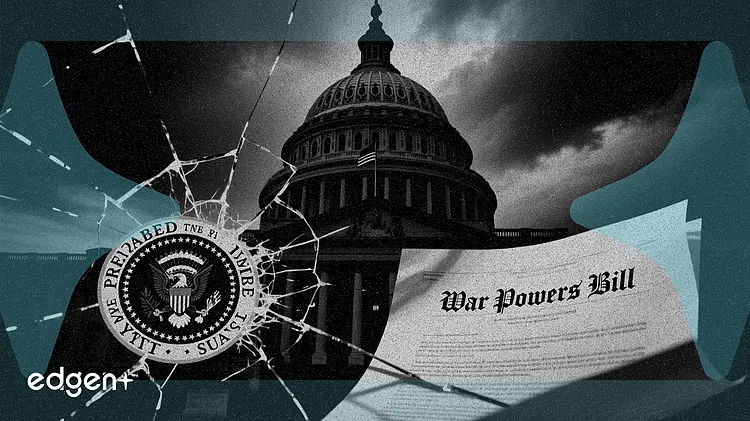
The U.S. Senate advanced a war powers resolution Tuesday in a 50-47 vote, a bipartisan rebuke to President Donald Trump that seeks to reassert congressional authority over military action in Iran.
"Congress has the power to slam the brakes on this unwise conflict," said the bill's sponsor, Democratic Senator Tim Kaine of Virginia. "Today should be the day when the Senate tells the President to stop his disastrous war.”
Four Republican senators—Bill Cassidy, Susan Collins, Lisa Murkowski, and Rand Paul—joined Democrats to advance the measure. The vote comes 80 days after the U.S. and Israel began military operations against Iran, a conflict that has pressured global economies and kept risk assets like cryptocurrencies suppressed.
The resolution challenges the president's authority under the 1973 War Powers Resolution and could force a withdrawal of U.S. forces if passed. While the bill faces a likely presidential veto, its advancement alone may serve as a de-escalation signal for markets, with analysts watching for a potential relief rally in assets from oil to Bitcoin.
The procedural vote allows the full Senate to begin debate on the resolution, which aims to halt U.S. military action against Iran that has not been authorized by Congress. The debate centers on the 1973 War Powers Resolution, a law that limits a president’s ability to commit armed forces to military action for more than 60 days without a congressional declaration of war or authorization. President Trump formally notified Congress of the conflict on Feb. 28, triggering a May 1 deadline under the statute.
While the White House maintains the president's actions are lawful, a growing number of lawmakers disagree. “While I support the administration’s efforts to dismantle Iran’s nuclear program, the White House and Pentagon have left Congress in the dark on Operation Epic Fury,” Republican Senator Bill Cassidy said in a statement explaining his vote. The measure was opposed by all but one Democrat, Senator John Fetterman.
The ongoing conflict has been a significant headwind for global markets, contributing to higher energy prices and dampening investor appetite for risk. A potential de-escalation could provide a bullish catalyst, according to market analysts.
Andri Fauzan Adziima, research lead at the Bitrue Research Institute, told Cointelegraph the resolution's advance is "a strong bullish catalyst for crypto, likely sparking a sharp 6% to 10% Bitcoin relief rally in the coming days.” At the time of the vote, Bitcoin was trading flat around $76,500.
Others see a more muted, though positive, effect. The move is "a relatively mild positive catalyst for risk assets as a whole," said Tim Sun, a senior researcher at HashKey Group, who noted the market's primary focus remains on broader macroeconomic trends. "If geopolitical conflicts ease and subsequently drive oil prices further down, it will lower the valuation risk across all risk assets and foster a positive turnaround in the crypto market," he added.
The resolution still faces significant hurdles, including a vote in the Republican-controlled House and a near-certain presidential veto. Overriding a veto would require a two-thirds majority in both chambers.
This article is for informational purposes only and does not constitute investment advice.
