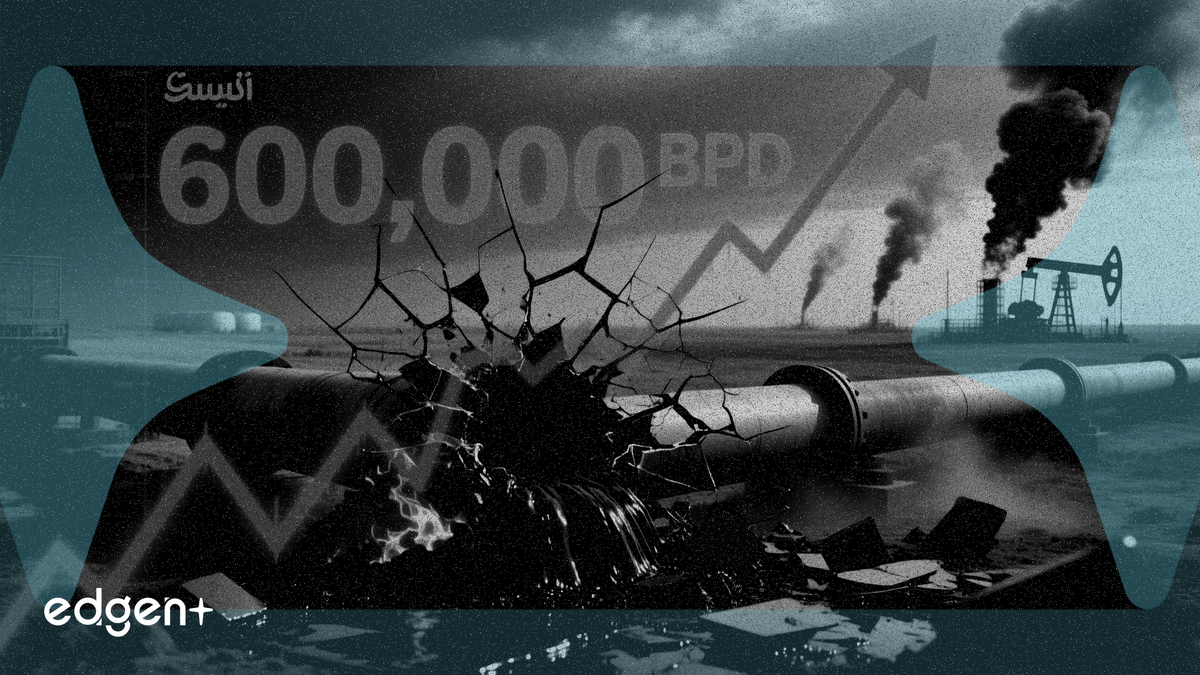
Multiple Saudi Arabian energy facilities have suspended operations after a series of attacks, cutting the kingdom's oil production capacity by 600,000 barrels per day and escalating fears of a global energy supply crisis. The disruption strikes at the heart of the world's largest oil exporter, threatening to push crude prices higher as markets grapple with ongoing geopolitical instability.
"The attacks targeted a pump station on the East-West Pipeline, as well as the Manifa and Khurais production facilities," a source at the Saudi Ministry of Energy told the state-run Saudi Press Agency (SPA). The ministry confirmed the total production curtailment and noted that the incidents also resulted in the death of a Saudi Aramco employee.
The damage is concentrated at key production hubs, with output cut by 300,000 barrels per day at both the Manifa and Khurais fields, according to the SPA report. The attacks also hit a pumping station on the critical East-West Pipeline, a 1,200-kilometer conduit that allows Saudi Arabia to bypass the vulnerable Strait of Hormuz and export crude from its Red Sea ports. Iran's Islamic Revolutionary Guard Corps (IRGC) claimed it had hit several regional targets, according to a Reuters report.
This outage represents a significant blow to a global energy system already strained by conflict. The East-West pipeline had been a crucial outlet, diverting around 7 million barrels per day as tensions effectively shuttered the Strait of Hormuz. The loss of 600,000 bpd of Saudi production, while not catastrophic, tightens the supply-demand balance and removes a critical buffer, likely leading to increased price volatility and fueling global inflationary pressures.
Refined Products and Gas Exports Hit
The attacks extended beyond crude production, impacting major downstream assets and threatening the supply of processed fuels to international markets. According to the ministry source, the SATORP refinery in Jubail, the SAMREF refinery in Yanbu, the Ras Tanura refinery, and a facility in Riyadh were all affected.
Furthermore, a fire at the Ju'aymah gas processing plant has impacted the export of liquefied petroleum gas (LPG) and natural gas liquids (NGL), key feedstocks for the petrochemical industry. The simultaneous disruption of crude and refined product exports amplifies the event's impact on global supply chains and energy security for consumer nations. The timing of the attack, coming just hours after a ceasefire was announced in the wider Middle East conflict, complicates diplomatic efforts and injects fresh uncertainty into the market.
This article is for informational purposes only and does not constitute investment advice.