Sanctioned Stablecoin A7A5 Adds Nearly $90B in Supply
The ruble-pegged stablecoin A7A5 expanded its circulating supply by nearly $90 billion last year, a growth rate that dwarfed established market leaders. According to Artemis data, Tether's USDT grew by $49 billion and Circle's USDC added $31 billion in the same period. This expansion is directly fueled by its utility as a payment system for Russian businesses and their international partners, who are restricted from accessing the traditional U.S. dollar-based financial system.
Despite its growth, A7A5 operates under heavy regulatory scrutiny. Its issuing entities, Old Vector LLC and A7 LLC, along with its reserve-holding bank, Promsvyazbank (PSB), are all sanctioned by the U.S. Department of the Treasury. Speaking at the Consensus Hong Kong conference, A7A5's Director for Regulatory and Overseas Affairs, Oleg Ogienko, asserted that the firm is fully compliant with the laws of Kyrgyzstan, its country of incorporation, and adheres to international anti-money laundering standards. This creates a functional, albeit contentious, parallel financial infrastructure.
Firm Targets Over 20% of Russia's Cross-Border Trade
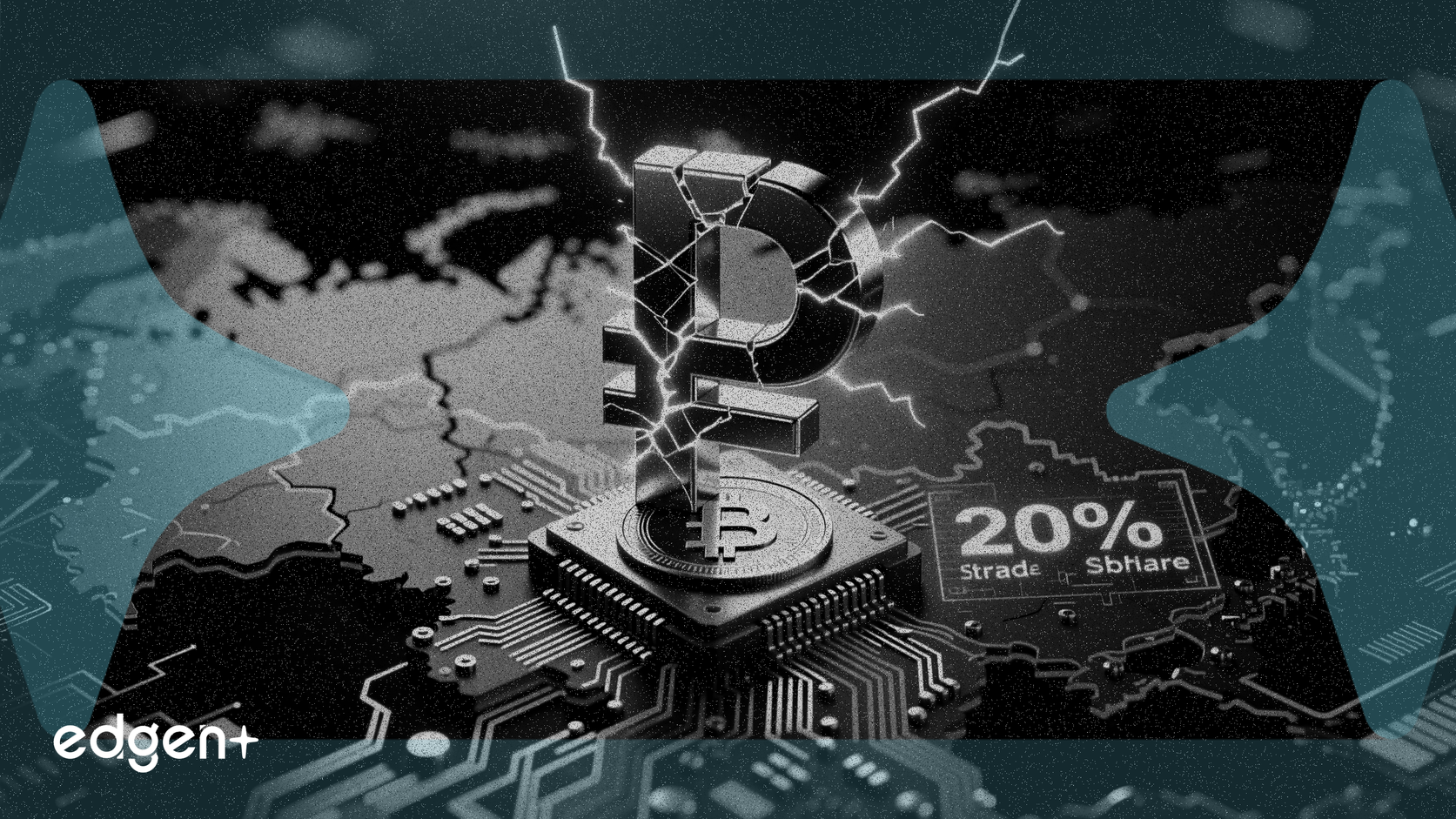
Ogienko detailed the company's ambition to become a cornerstone of Russian international commerce, stating a goal to settle over 20% of the nation's trade volumes. A7A5's primary demand comes from commercial entities in Asia, Africa, and South America that require mechanisms for cross-border payments with Russian counterparts. The stablecoin provides a direct channel for these transactions while also offering a pathway into USDT liquidity through decentralized finance (DeFi) protocols, without requiring direct custody of dollar-pegged assets.
We think that we can make the trade volumes settled in A7A5 grow … we hope that we can do more than 20% of Russia’s trade settlements with different countries in A7A5.
— Oleg Ogienko, Director for Regulatory and Overseas Affairs, A7A5.
DeFi Liquidity Limited to $50,000 Despite Growth
While A7A5's supply has ballooned, its practical liquidity remains a significant operational hurdle. Centralized exchanges have avoided listing the token due to the high risk of secondary sanctions, severely limiting its accessibility for large-scale transactions. Though deployed on the Tron and Ethereum networks, A7A5's own dashboard indicates that its DeFi liquidity pools hold only around $50,000 in USDT. This bottleneck challenges its goal of facilitating substantial trade flows. Ogienko confirmed he was actively seeking partnerships with exchanges and other blockchains to address this critical liquidity shortage and expand the stablecoin's utility.