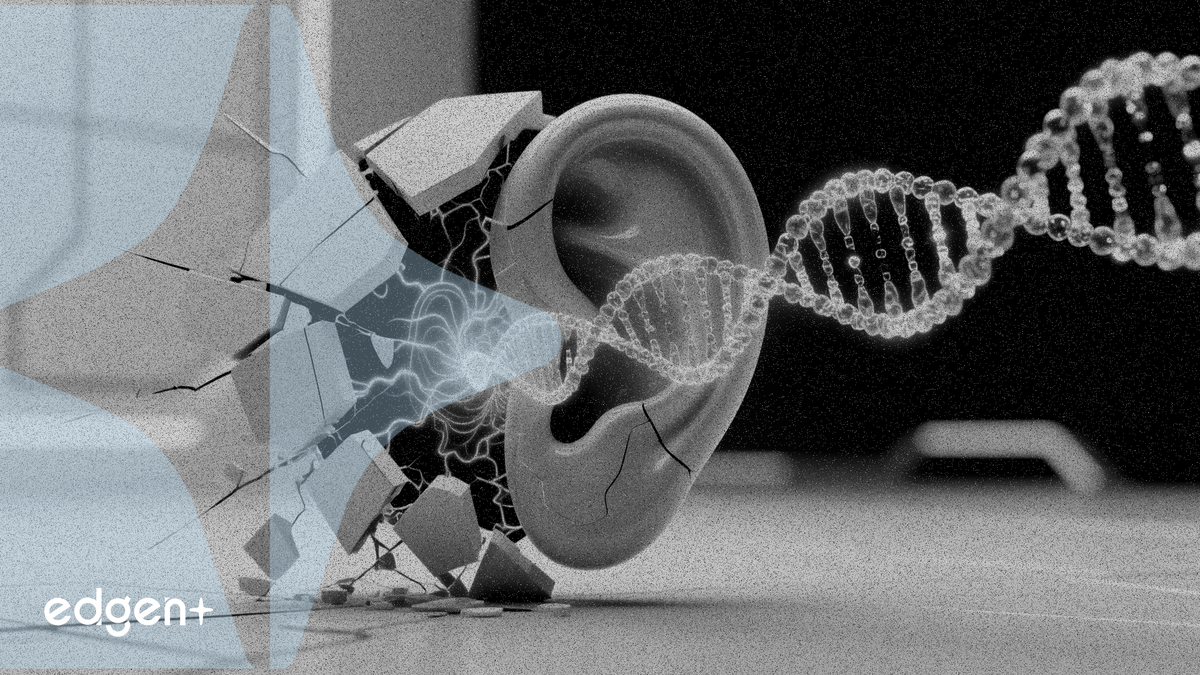
(P1) The U.S. Food and Drug Administration granted accelerated approval to Regeneron Pharmaceuticals Inc.’s Otarmeni, the first-ever gene therapy for a rare form of genetic deafness, after a pivotal trial showed 80% of participants regained hearing.
(P2) "The FDA approval of Otarmeni signals a new era in the treatment of genetic forms of hearing loss, where reinstating 24/7 natural hearing is now possible,” said Dr. A. Eliot Shearer, an investigator on the CHORD trial and an otolaryngologist at Boston Children’s Hospital.
(P3) The approval was based on results from the ongoing Phase 1/2 CHORD trial, where 16 of 20 participants with hearing loss related to OTOF gene mutations experienced significant hearing improvements by week 24. For the 12 participants followed to 48 weeks, 42% (five patients) achieved normal hearing levels, defined as ≤25 decibels, allowing them to hear whispers.
(P4) Otarmeni (lunsotogene parvec-cwha) is a one-time intracochlear infusion designed to deliver a working copy of the OTOF gene. While Regeneron will provide the therapy for free in the U.S., the approval establishes a new frontier for gene therapies targeting neurosensory functions and solidifies Regeneron's leadership in genetic medicine.
A New Era for Genetic Hearing Loss
OTOF-related hearing loss is an ultra-rare condition, affecting approximately 50 newborns in the U.S. each year. It is caused by mutations in the OTOF gene, which prevents the production of otoferlin, a protein essential for communication between inner ear sensory cells and the auditory nerve. Though the ear's structures are intact, this missing protein leads to profound deafness from birth.
Historically, the condition was managed with devices like cochlear implants, which amplify sound but do not restore the full spectrum of natural hearing. Otarmeni is designed to restore this function by providing a functional copy of the gene directly to the inner ear.
"I’ve witnessed firsthand my trial participant responding to their mother’s voice, dancing to music and interacting with the world, and these moments are now possible for more children born with this specific form of hearing loss,” Shearer added.
Trial Data and Future Steps
The CHORD trial evaluated the safety and efficacy of Otarmeni in 20 participants aged 10 months to 16 years. The primary endpoint was the improvement of hearing sensitivity as measured by pure tone audiometry (PTA). The therapy demonstrated a consistent and durable response, with all responders maintaining their hearing gains at the 48-week mark.
Continued approval for Otarmeni may be contingent upon verification of clinical benefit in the confirmatory portion of the CHORD trial. The treatment is administered via a surgical procedure similar to cochlear implantation and is not recommended for patients where inner ear access is not feasible.
The approval marks a significant milestone for Regeneron, representing its first approved genetic medicine. "This unprecedented breakthrough in gene therapy has already proven to be life-changing for many of the children in our clinical trial and their families," said George D. Yancopoulos, Regeneron's Chief Scientific Officer.
This article is for informational purposes only and does not constitute investment advice.