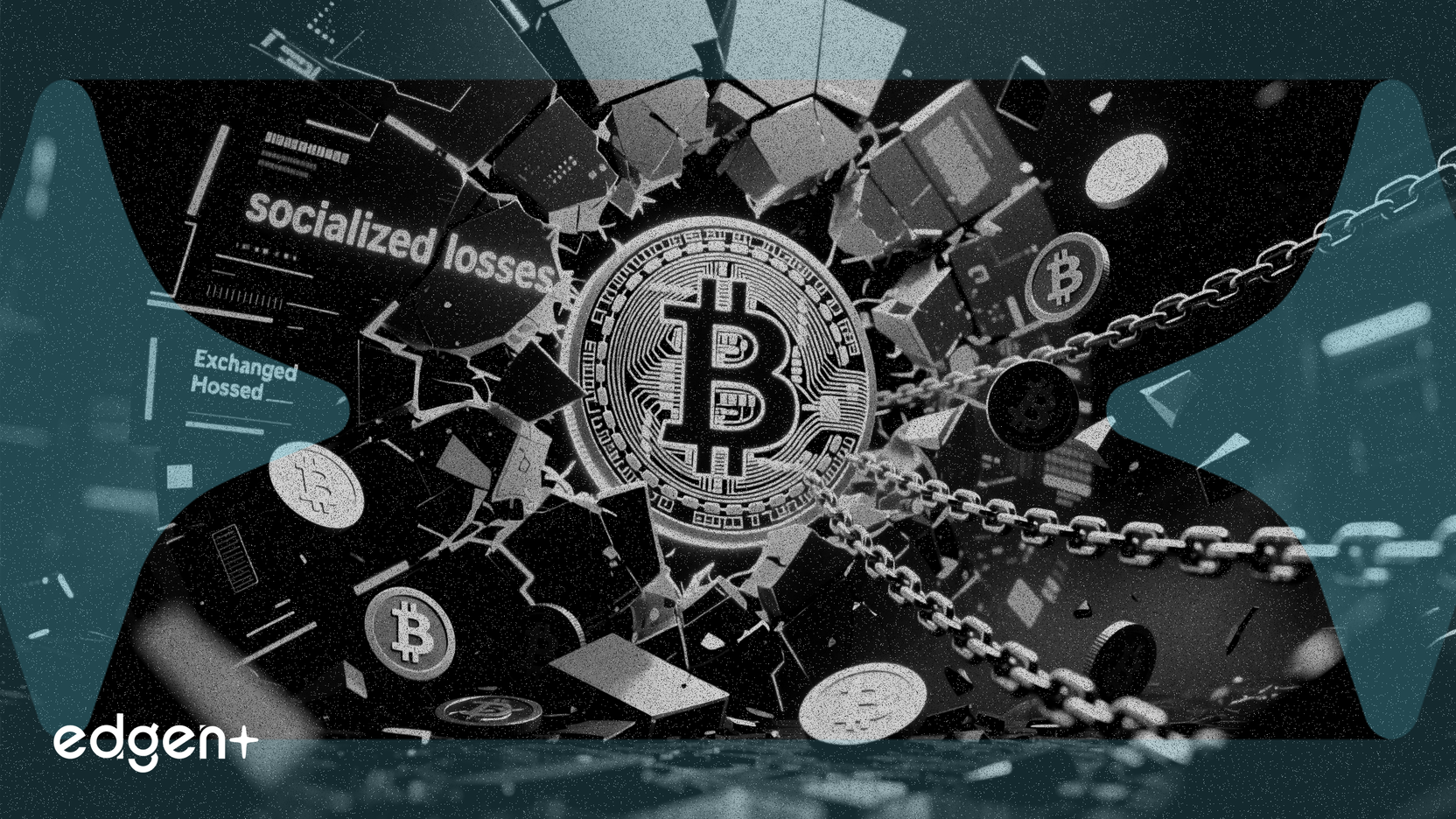
October 10 Crash Reveals "Socialized Loss" Risk in Altcoins
The deleveraging event on October 10 drew a clear line between Bitcoin and the broader altcoin market, according to Darius Sit, co-founder of the $60 billion-per-year trading desk QCP Capital. The episode exposed how crypto-native exchanges handle credit risk during a crisis. Unlike traditional finance with its layered clearinghouse structures, many crypto platforms operate as single points of failure.
During the crash, some exchanges with depleted insurance funds resorted to "socialized losses," a mechanism where profitable traders' positions are closed out to cover the shortfalls from bankrupt accounts. This practice of making winners pay for losers has fractured market confidence. Sit argues that this counterparty risk, not just price volatility, is a major deterrent for institutional capital.
The moment you trigger socialized loss, your platform will lose trust.
— Darius Sit, Co-founder and Managing Partner, QCP Capital.
Bitcoin Volatility Gauge Nears 100% as Liquidity Vanishes
Recent price action saw Bitcoin plunge toward the $60,000 support level, with its volatility gauge (BVIV) spiking to nearly 100%—its highest reading since the 2022 FTX collapse. This move reflects a severe liquidity squeeze rather than a breakdown in Bitcoin's long-term value proposition against gold. Sit characterizes the direct comparison as one between "a mouse versus an elephant," given gold's immense market size and sovereign demand. Bitcoin's underperformance is attributed to forced position unwinds in a thin market.
This dynamic was evident as Bitcoin became historically oversold, with its Relative Strength Index (RSI) hitting 17, before rebounding. While Bitcoin and Ether recovered from the liquidation-driven sell-offs, gold slipped 3.7% to approximately $4,740 per ounce. In Sit's view, Bitcoin continues to behave like a long-term inflation hedge and collateral, whereas the rest of the crypto market now trades with a discount tied directly to the governance and reliability of the venues on which they are traded.