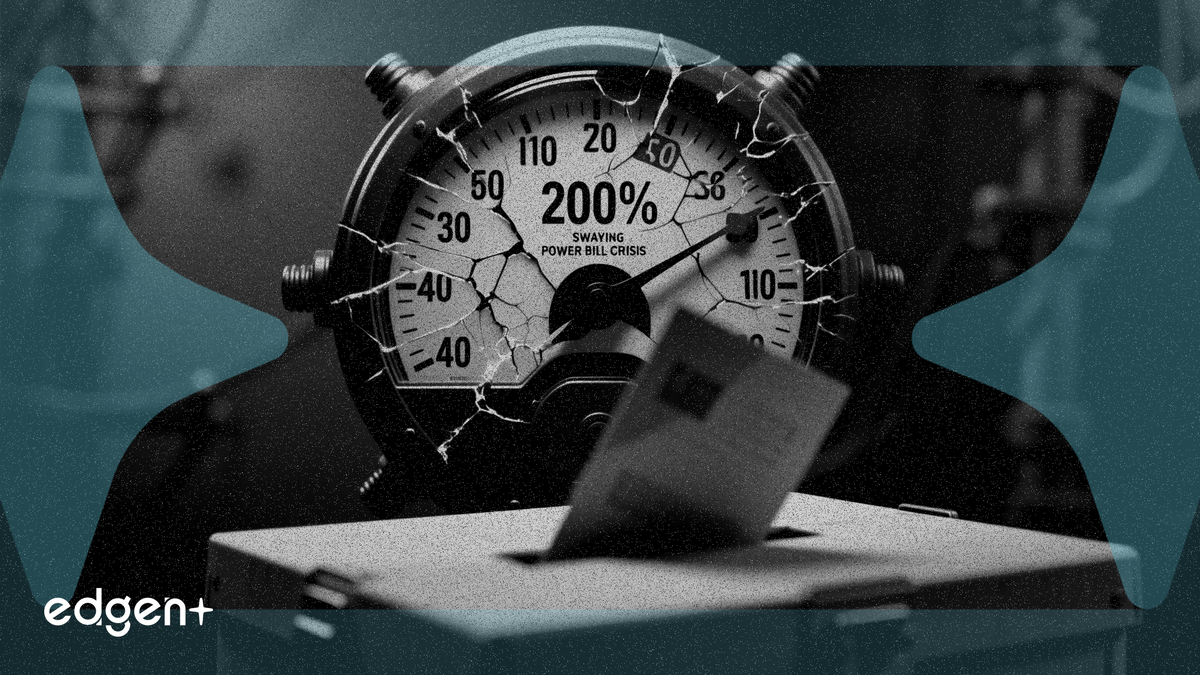
Soaring electricity bills are becoming a political flashpoint ahead of the 2026 U.S. midterm elections, with prices in some areas jumping 200% and creating a new line of attack in key swing districts.
"Whether it's a Republican or a Democrat, whoever can lower my electricity bill gets my vote," said José Echevarria, a warehouse supervisor in Pennsylvania’s Lehigh Valley who saw his monthly winter bill surge to $367 from about $200.
The PJM grid, largest in the U.S., forecasts data centers will add $230 billion in costs for its users by May 2028. Since 2020, residential electricity prices in Pennsylvania, New Jersey, and Maryland have climbed about 40%, with some parts of eastern Pennsylvania seeing bills rise by about $23 per month this year alone.
The issue is crystallizing in swing districts like Pennsylvania's 7th, where the incumbent Republican faces a challenge from a Democrat campaigning heavily on cutting power costs. A 2025 Ipsos poll shows three-quarters of respondents are worried about rising electricity bills, turning a household expense into a significant electoral liability.
The price pressure stems from a combination of surging demand and strained supply. The North American Electric Reliability Corporation projects U.S. summer electricity demand will grow by 224 gigawatts over the next decade, an amount equivalent to powering 180 million homes. Much of this new demand is attributed to the rapid expansion of energy-intensive data centers for artificial intelligence. This comes as older power plants are being retired, tightening the supply-demand balance.
In Pennsylvania's 7th congressional district, a key national swing district, the debate is already heated. Republican Rep. Ryan Mackenzie, who is facing a tough reelection battle, blames the Biden administration's energy policies for the price hikes and advocates for more coal, natural gas, and nuclear power. He faces the challenge of supporting data center investment while addressing voter anger over high power bills.
His Democratic challenger, Carol Obando-Derstine, a former employee of the local utility, has labeled data centers "energy black holes" and is campaigning on a platform to restore clean energy incentives. The Democratic Congressional Campaign Committee has targeted the district as a top opportunity to flip a Republican seat.
The frustration is bipartisan. Chris Breck, a 74-year-old retired social worker, said her monthly bill increased from about $58 in June 2021 to nearly $100 in June 2025. She stated she would support any candidate, regardless of party, who can offer a real solution.
The convergence of energy infrastructure and political campaigning suggests utility rates will be a decisive factor in closely contested races. Investors are watching for potential policy shifts on data center regulation and grid investment that could emerge from the 2026 election results, impacting utility and tech sector stocks.
This article is for informational purposes only and does not constitute investment advice.