
A US-designed drone, battle-hardened in Ukraine, is set to be produced in Germany, signaling a potential shift in the global defense technology landscape.
A US-designed drone, battle-hardened in Ukraine, is set to be produced in Germany, signaling a potential shift in the global defense technology landscape.
A US-designed drone, battle-hardened in Ukraine, is set to be produced in Germany, signaling a potential shift in the global defense technology landscape.
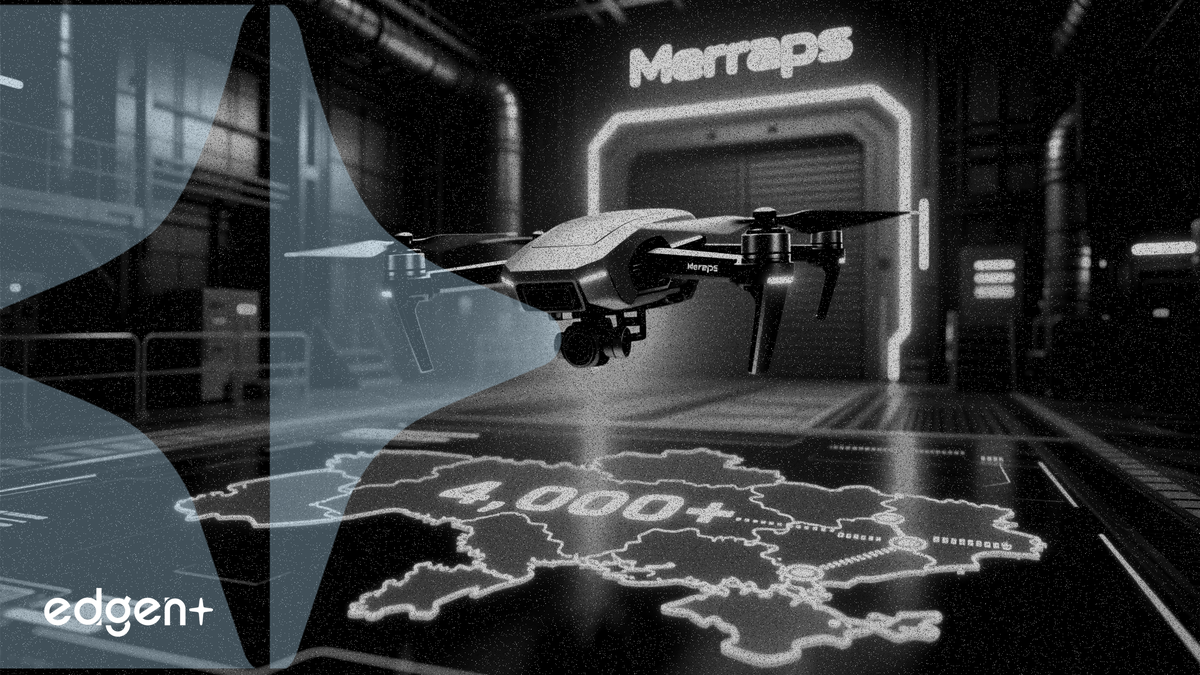
Perennial Autonomy, a U.S. defense tech company backed by former Google CEO Eric Schmidt, will manufacture its Merops counter-drone system in Germany through a partnership with Munich-based Twentyfour Industries. The move highlights Europe's accelerated adoption of combat-proven Ukrainian military technology, with the Merops drone having a verified track record of intercepting more than 4,000 Russian drones in Ukraine.
"We are reluctant to admit that the Ukrainians are now probably the world leaders on both drone offense and defense,” said Eliot Cohen, a scholar at the Center for Strategic and International Studies think tank.
The Merops system autonomously seeks an incoming drone using radio waves, radar, or its target's heat signature. At a distance of approximately one mile, it employs artificial intelligence to lock onto the target and detonates nearby. According to users, the drone can travel at speeds exceeding 180 miles per hour and reach altitudes of up to 16,000 feet. Each unit costs less than $10,000, with the price expected to fall to around $7,000 as production scales.
The deal shows a growing trend of European nations capitalizing on Ukrainian battlefield innovations, a pace that appears to be outstripping that of the United States. While Washington and Kyiv have been negotiating a drone manufacturing deal since at least September, Ukrainian companies are already establishing production in Germany, Poland, and the U.K., with Denmark and Norway expected to follow.
The war in Ukraine has become a laboratory for next-generation warfare, with drones at the forefront. Ukrainian forces have pioneered the use of marine drones to attack Russian naval assets and have deployed AI-coordinated drone swarms. The effectiveness of these low-cost, high-impact systems is reshaping military doctrine. Ukrainian drone pilots, invited to a recent NATO exercise in Sweden, reportedly "destroyed" Swedish troops in a simulated engagement, prompting the Swedish general to emphasize that Western forces need to "learn rapidly" from their Ukrainian counterparts.
This new form of warfare is not just about tactical victories; it's about a fundamental shift in the economics of conflict. As one analysis points out, a small investment in Ukraine's drone production could yield a disproportionately large drain on Russia's military budget. Ukraine aims to produce 10 million first-person-view (FPV) drones annually, a number they estimate could inflict 50,000 Russian casualties per month, potentially crippling Russia's combat effectiveness.
Europe's embrace of Ukrainian-developed or tested technology like the Merops drone reflects a strategic realignment in the face of Russian aggression. The continent is moving to bolster its own defense industrial base, leveraging the hard-won experience of Ukraine. The Pentagon has also taken note, forwarding a list of 12 different Ukrainian drones to major U.S. defense companies for potential collaboration.
The decision by Perennial Autonomy to manufacture in Germany is a significant step in this process. It provides a blueprint for how Western technology, refined by Ukrainian ingenuity and combat experience, can be rapidly scaled within Europe. This creates a more resilient and responsive defense supply chain for NATO and its allies, reducing reliance on a U.S. industrial base that has been slower to adapt. The last time a similar technology transfer occurred was during the Cold War, which led to decades of transatlantic defense cooperation. The current wave of innovation, however, is flowing from a battlefield, not a lab, and Europe appears to be the first to fully grasp its implications.
This article is for informational purposes only and does not constitute investment advice.
