


Key Takeaways:
- Palantir Q1 revenue surged 85% to $1.63 billion, beating consensus by $0.05 per share
- SanDisk posted a blowout quarter as AI storage demand accelerated
- Palantir trades at 80x forward earnings vs SanDisk's cheaper hardware leverage
Key Takeaways:
Palantir's 85% revenue surge and SanDisk's storage boom show AI infrastructure demand is broadening beyond GPUs — but their valuations tell opposite stories.
Palantir Technologies and SanDisk both posted blowout quarterly results, proving AI infrastructure demand spans from software platforms to storage silicon — yet their valuations sit on opposite ends of the spectrum. Palantir reported Q1 revenue of $1.632 billion, up 84.7% year over year, while SanDisk rode a wave of AI-driven storage demand that lifted its own results.
"Palantir's Rule of 40 score has soared to 145%, a feat matched only by fellow AI infrastructure companies," Chief Executive Alex Karp said on the Q1 earnings call, naming Nvidia, Micron and SK hynix as peers in that metric. Palantir's U.S. commercial revenue surged 133% to $595 million, and GAAP operating income hit $754 million, a 46% margin. Adjusted EPS of $0.33 beat the $0.28 consensus estimate.
The divergence lies in valuation. Palantir trades at 80 times forward earnings and 54 times sales, pricing in years of continued hypergrowth. The stock is down 29% year to date, touching a 52-week low of $106.37 before bouncing to around $130. Morningstar assigns a $153 fair value estimate, while Bank of America's Mariana Perez Mora targets $255 — implying a near-double from current levels.
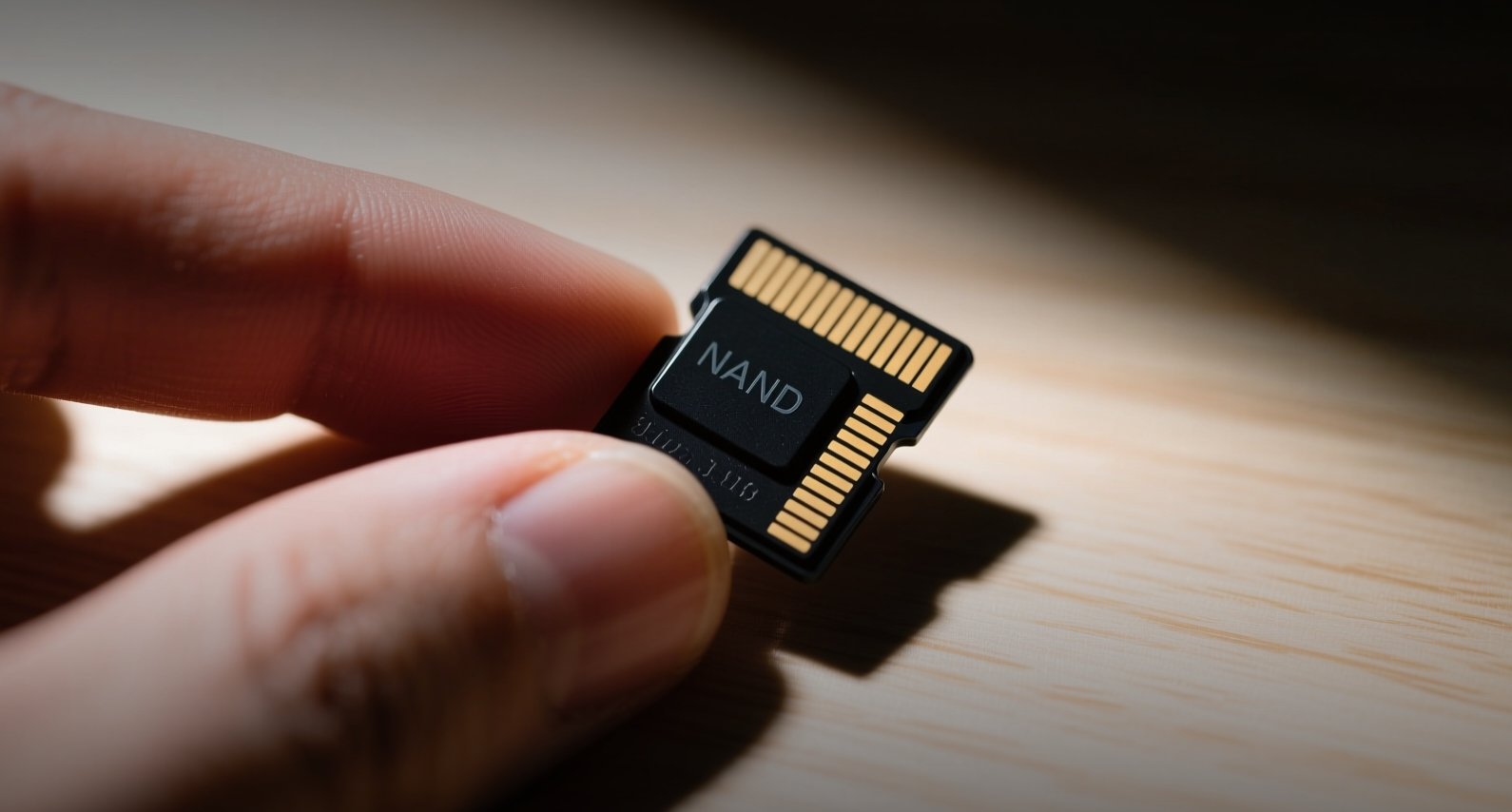
SanDisk, as a NAND flash supplier critical to AI data center storage, offers a cheaper entry into the same infrastructure buildout. The company's blowout quarter reflects the surging demand for high-capacity storage that AI training and inference workloads require — a trend that benefits hardware suppliers with lower valuation multiples than high-growth software peers.
Why valuation matters in AI infrastructure
The AI infrastructure buildout has two layers: the application layer, where Palantir's ontology framework helps enterprises deploy AI while maintaining data control, and the hardware layer, where SanDisk's NAND flash enables the storage throughput that AI workloads demand. Karp has argued that durable AI profits sit at the compute and application layers, not in token-based model access — a thesis Palantir's 145% Rule of 40 score supports.
But investors are paying a premium for that thesis. Palantir's forward P/E of 80 compares with Nvidia's 23, despite Karp grouping his company with Nvidia on operational efficiency. Analysts' consensus price target of $182.75 for Palantir implies roughly 40% upside, but any growth deceleration — Wall Street expects revenue growth to slow from 85% to 72% in 2026 and 45% in 2027 — could compress the multiple further.
For SanDisk, the AI storage cycle provides a more direct catalyst. Data center operators are consuming NAND flash at record rates to support AI model training, where storage bandwidth directly impacts training time. The company's position in the AI supply chain gives it revenue visibility without the extreme valuation premium that Palantir carries.
The investment takeaway
The choice between Palantir and SanDisk comes down to time horizon and risk tolerance. Palantir offers a software moat — its ontology framework creates switching costs that Morningstar rates as a narrow economic moat — but at a price that leaves no room for execution missteps. SanDisk offers hardware leverage to the same AI trend at a fraction of the valuation, but with less pricing power and more cyclical exposure.
Both companies sit on different rungs of the same AI infrastructure ladder. The winner depends on whether the market rewards Palantir's software margins or SanDisk's hardware volume as the AI buildout enters its next phase.
This article is for informational purposes only and does not constitute investment advice.
