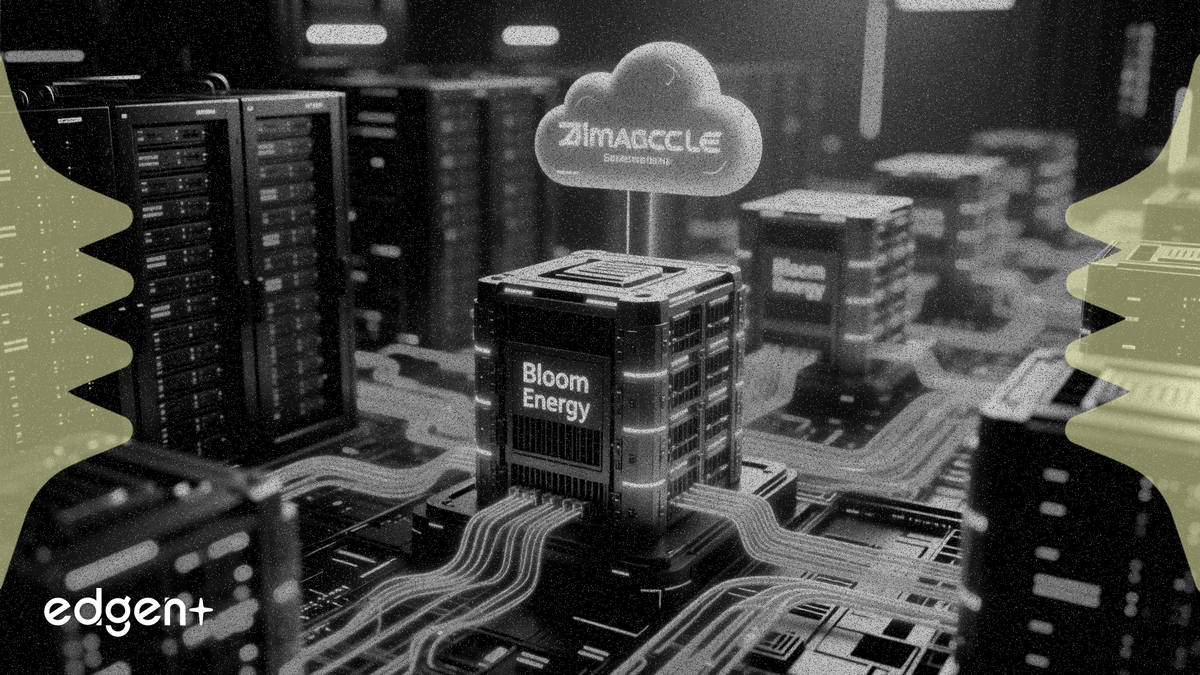
(P1) Oracle will deploy up to 2.8 gigawatts of clean-power infrastructure from Bloom Energy to support the rapid build-out of its AI and cloud computing services, significantly expanding a strategic partnership between the two companies.
(P2/P3) Under a newly signed master services agreement, an initial 1.2 GW of Bloom's fuel cell capacity has been contracted, with deployment already underway and set to continue into next year, the companies announced on April 13, 2026. The agreement provides a framework for Oracle to procure the additional 1.6 GW of capacity as its infrastructure needs grow.
(P4) The deal, one of the largest of its kind, provides a critical component for Oracle's aggressive expansion in the competitive AI and cloud market, securing a massive block of power independent of traditional grid constraints. For Bloom Energy, the multi-gigawatt order represents a significant long-term revenue stream and a major validation of its fuel cell technology for powering energy-intensive data centers.
Powering the AI Arms Race
The enormous energy consumption of AI data centers has become a primary constraint for cloud providers like Oracle, Amazon Web Services, and Microsoft's Azure, who are all racing to build out capacity. Training and running large language models requires vast amounts of electricity, putting a strain on local utility grids and creating a need for alternative, on-site power generation.
Bloom's solid-oxide fuel cells convert natural gas or hydrogen into electricity without combustion, offering a cleaner and more reliable power source than diesel generators and a smaller footprint than solar or wind installations. This allows hyperscalers like Oracle to build data centers in locations where grid power might be insufficient, accelerating their time to market.
Market Impact and Financials
While the specific financial terms of the 2.8 GW agreement were not disclosed, the scale of the deal is expected to have a material impact on Bloom Energy's revenue and backlog. The initial 1.2 GW deployment alone represents a substantial portion of the company's existing manufacturing capacity. The agreement highlights a growing trend of data center operators directly procuring power generation systems to ensure operational certainty for their AI roadmaps.
This article is for informational purposes only and does not constitute investment advice.