

Oracle's stock has lost 63% of its value since September, even as the company amassed a $638 billion backlog of future cloud revenue — the widest gap between fundamentals and market perception in enterprise tech.
Oracle's stock has lost 63% of its value since September, even as the company amassed a $638 billion backlog of future cloud revenue — the widest gap between fundamentals and market perception in enterprise tech.
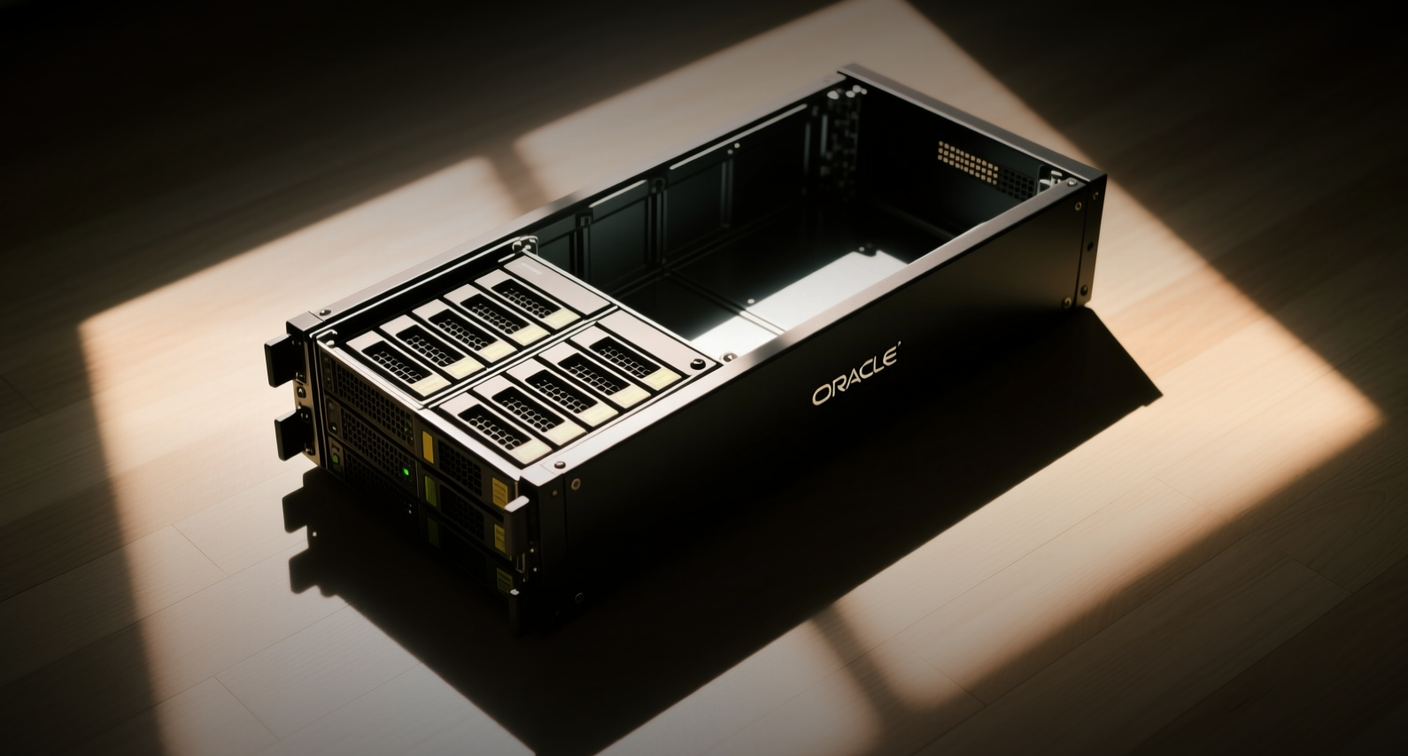
Oracle's $638 billion backlog of future cloud revenue — the largest in enterprise software history — has failed to halt a 63% stock decline, as investors question whether the company's AI infrastructure bet will generate returns before its balance sheet cracks under the weight of $70 billion in annual capital spending.
"The unprecedented level of RPO provides exceptional visibility into our future revenue growth," Chief Financial Officer Hilary Maxson told analysts, pointing to steady-state project-level returns on invested capital in the high 20s.
Cloud infrastructure revenue surged 93% in the June quarter, pushing cloud to 52% of total revenue. But the growth came at a steep cost: capital expenditures reached $55.7 billion over the trailing twelve months, producing negative free cash flow of $23.7 billion. S&P Global Ratings cut Oracle's credit rating to BBB- earlier this month, one notch above junk, citing "rising capital expenditure requirements, an uncertain path to profitability, and high customer concentration" — with OpenAI representing roughly half of the $638 billion backlog.
The disconnect between Oracle's backlog and its stock price — down 35% year to date against a 10% gain in the S&P 500 — reflects a market that has priced in execution risk rather than revenue visibility. The company expects to spend roughly $70 billion on capex in fiscal 2027 and raise about $40 billion in debt and equity to fund it, a capital plan that leaves no room for error.
The $70 Billion Annual Bet on AI Infrastructure
Oracle's transformation from database software vendor to hyperscale AI landlord has been the most dramatic pivot in enterprise technology. The company now operates 72 multicloud data center regions embedded inside Amazon Web Services, Microsoft Azure and Google Cloud, positioning itself as the neutral infrastructure layer for enterprises running AI workloads. The strategy produced $67 billion in AI infrastructure contracts signed in the June quarter alone.
But the capital required to build those data centers has overwhelmed Oracle's cash generation. BNP Paribas analyst Stefan Slowinski estimates fiscal 2027 capital spending could land between $80 billion and $100 billion as the company accelerates development of non-Abilene Stargate campuses, well above the consensus estimate of roughly $60 billion. A New Mexico pipeline permit denial and nationwide protests around data center energy use have added execution risk to an already ambitious build-out.
Can Margins Hold Above 30%?
The bull case rests on a single question: will Oracle's cloud infrastructure margins hold in the 30% to 40% range as the company scales? Guggenheim's John DiFucci, who maintains a $400 price target on Oracle and named it his top software idea for 2026, argues that near-term margin compression is drowning out an unprecedented backlog signal. He expects free cash flow to rebound dramatically starting in fiscal 2029 as front-loaded infrastructure spend converts into recurring, high-margin revenue.
The bear case is equally stark. A second S&P downgrade would push Oracle into junk territory, forcing selling from investment-grade mandates and repricing the entire capital plan. The stock's forward price-to-earnings multiple of 16 — a discount to the S&P 500's 24 — already reflects deep skepticism. Its price-to-sales ratio of 5.5, however, remains well above the market's 3.3, suggesting investors are still paying a premium for revenue growth that has yet to translate into cash profits.
Oracle shares touched $121.50 on Friday, their lowest since April 2025, and now trade 15% below their 20-day moving average. The relative strength index of 27.4 signals oversold conditions that have historically preceded sharp countertrend bounces. Whether this is a buying opportunity or a value trap depends on whether management can convert its backlog into cash before the credit market forces a reckoning.
This article is for informational purposes only and does not constitute investment advice.
