
A potential de-escalation in the U.S.-Iran conflict sends oil prices lower, providing relief to markets rattled by the threat of a full-blown energy crisis.
A potential de-escalation in the U.S.-Iran conflict sends oil prices lower, providing relief to markets rattled by the threat of a full-blown energy crisis.
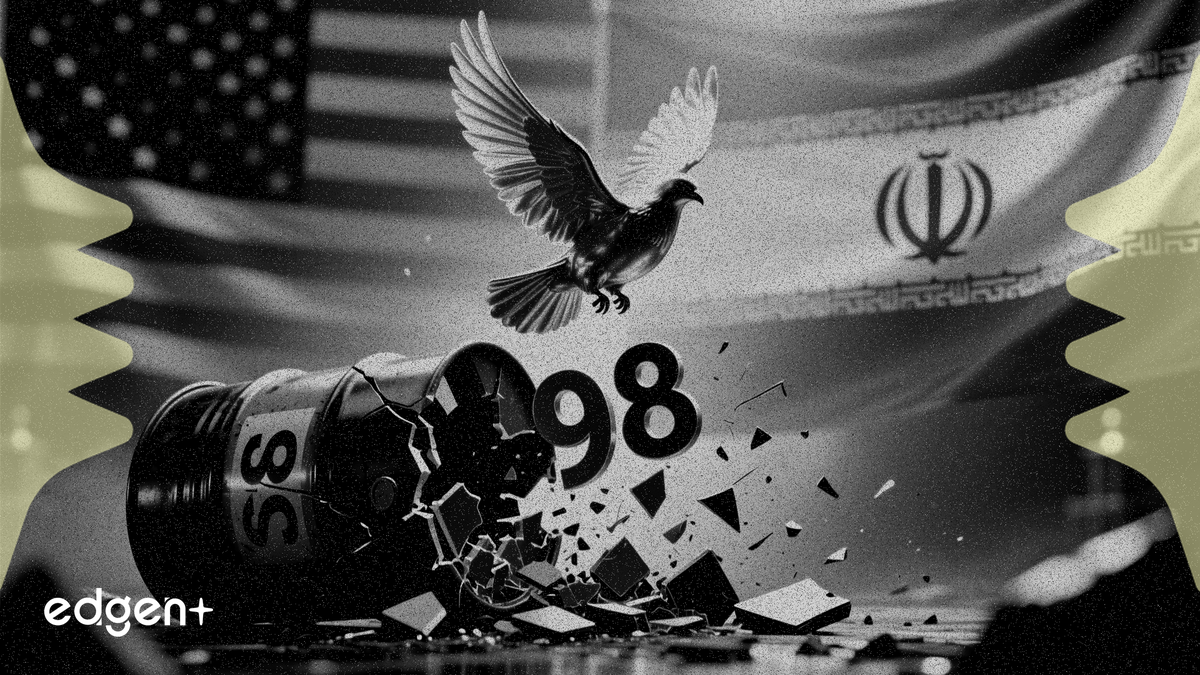
Global oil prices pulled back from recent highs on Tuesday after U.S. President Donald Trump suggested the war in Iran is “very close to being over,” sparking a relief rally in equity markets.
"The key question for Monday is whether markets interpret this as a temporary breakdown in negotiations or a structural collapse of the ceasefire framework," Kyle Rodda, an analyst at Capital.com, told Bloomberg. "That distinction will determine whether the risk-off move fades quickly or extends further."
The global benchmark Brent crude fell about 1% to $98.40 a barrel in Asian trading, after surging above $100 following the breakdown of peace talks over the weekend. West Texas Intermediate futures, the U.S. benchmark, saw a steeper decline of 4.4% to $94.70. The move came as Asian stock markets edged higher, with Japan's Nikkei 225 gaining 2.6%, and U.S. indexes like the S&P 500 and Nasdaq followed with gains of 0.7% and 1.1% respectively.
The sudden shift in sentiment hinges on the stability of the Strait of Hormuz, a critical chokepoint for nearly a fifth of the world's oil supply. A potential diplomatic breakthrough could reopen the waterway, averting a protracted supply shock that economists warned could tip the global economy into recession. Markets are now pricing in the possibility of a second round of face-to-face talks, even as a U.S. naval blockade of Iranian ports officially remains in effect.
The optimism is a sharp reversal from Sunday, when talks in Pakistan collapsed, prompting President Trump to order a naval blockade of the Strait of Hormuz. "Effective immediately, the United States Navy, the Finest in the World, will begin the process of BLOCKADING any and all Ships trying to enter, or leave, the Strait of Hormuz," Trump wrote on Truth Social. The move followed Iran's threats to attack vessels in the strait in retaliation for U.S.-Israeli strikes, effectively halting traffic and sending energy prices soaring. However, speaking to reporters on Monday, Trump struck a different tone, stating, "I can tell you we've been called by the other side. They'd like to make a deal very badly." This was echoed by reports that Iran's foreign minister informed his French counterpart that progress had been made on several issues.
The drop in oil prices provided a welcome reprieve for the broader economy, where fears of war-fueled inflation were running high. A U.S. Producer Price Index (PPI) report for March showed wholesale prices increased by 0.5%, far less than the 1.1% economists had expected. The increase was driven by an 8.5% jump in energy prices, but the core reading, which excludes food and energy, rose only 0.2%. The milder-than-expected inflation data, combined with the prospect of lower oil prices, suggests the economic damage from the conflict could be contained if a peace deal is secured. The International Energy Agency noted in a recent report that "demand destruction will spread as scarcity and higher prices persist," adding another incentive for both sides to find a resolution.
This article is for informational purposes only and does not constitute investment advice.