
Japan's Nikkei 225 fell 0.8% to 64,980.53 on Tuesday as electronics and chip stocks led declines after U.S. technology shares dropped overnight.
Japan's Nikkei 225 fell 0.8% to 64,980.53 on Tuesday as electronics and chip stocks led declines after U.S. technology shares dropped overnight.
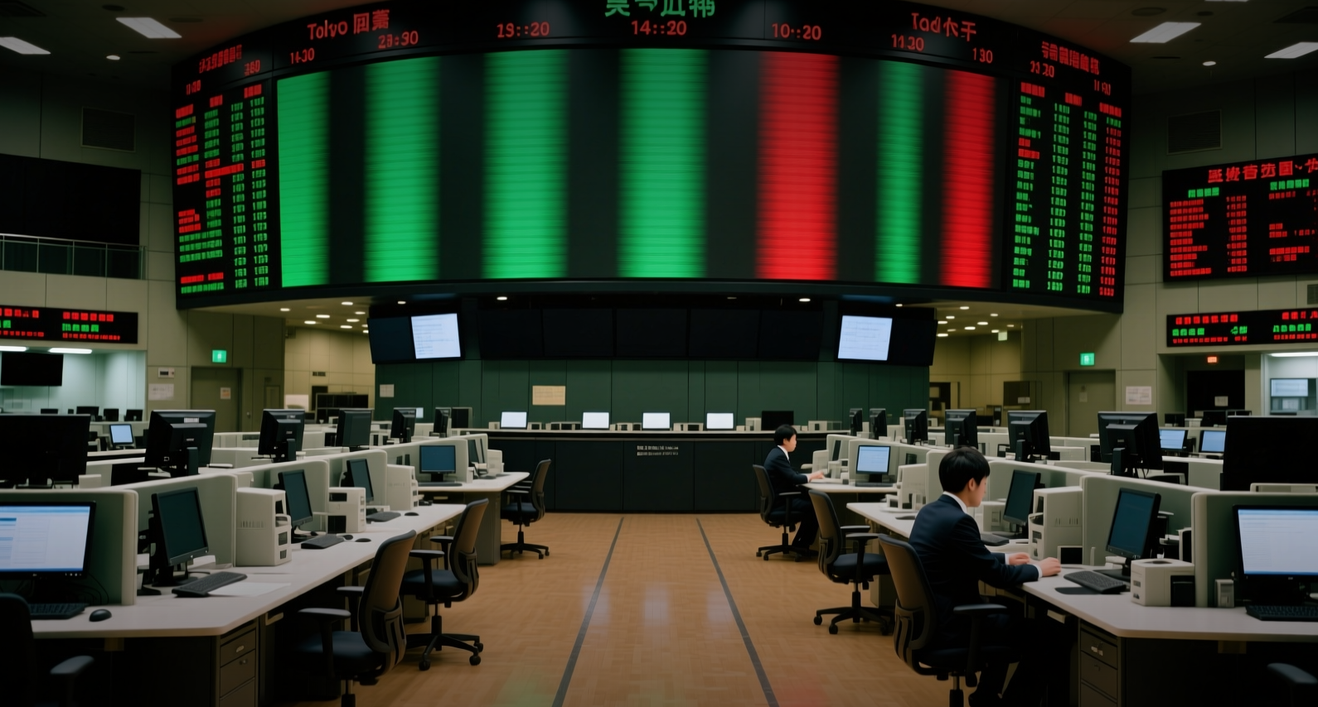
The Nikkei 225 fell 0.8 percent to 64,980.53 on Tuesday as electronics and chip stocks led declines after U.S. technology shares dropped overnight. The benchmark opened at 65,195, down 332 yen from the previous session, and held in the mid-60,000 range through the morning as a broad wait-and-see mood prevailed.
"Japanese stocks are lower after U.S. technology shares fell overnight," the Wall Street Journal reported, with chip and electronics names leading the decline.
Kioxia Holdings fell 2.8 percent, Advantest dropped 3.6 percent and Panasonic Holdings declined 4.0 percent. The dollar traded at 159.13 yen, compared with 158.94 at Monday's Tokyo stock market close.
Investors are closely watching the Iran war and crude oil prices after Treasury Secretary Scott Bessent said the U.S. is launching a new campaign to isolate the Iranian regime.
The decline tracked Wall Street's overnight session, where the Philadelphia Semiconductor Index fell 2.7 percent and the tech-heavy Nasdaq Composite was sluggish, according to moomoo News. Kioxia Holdings slipped below the key 50,000-yen level again, pressured by a 6.5 percent plunge in U.S.-listed SanDisk, whose memory products are closely correlated with Kioxia's. Advantest continued its decline as investors reacted negatively to the slump in U.S. tech stocks, with position-adjusting sales dominating as concerns over U.S.-Canada tariff reports, Middle East risks and caution ahead of Nvidia's earnings release weighed on the sector.
Buying on dips has been limited in the near term ahead of Nvidia's earnings, with traders also watching South Korea's KOSPI for direction during the session. The market is also likely to be influenced by the trend of rising domestic 10-year government bond yields, which adds pressure on equity valuations.
Japan's chip and electronics names have become central to the global AI investment cycle, with companies such as Tokyo Electron, a leader in semiconductor deposition and etching equipment, and Advantest, a dominant supplier of chip-testing systems, serving as indispensable links in the AI hardware supply chain. That exposure has made the Nikkei unusually sensitive to swings in U.S. technology sentiment, pushing the index higher during the AI buildout and exposing it to sharper declines during any pullback.
The geopolitical backdrop compounded the selling. Treasury Secretary Scott Bessent's announcement of a new U.S. campaign to isolate the Iranian regime kept crude oil prices and the Iran war in focus, a factor that carries particular weight for Japan's import-dependent economy. A sustained rise in oil prices would pressure Japan's trade balance and corporate cost structures, while a stronger yen from any safe-haven flows would weigh on exporter earnings.
For investors, the near-term direction of the Nikkei hinges on the interplay between the global AI and semiconductor investment cycle and the domestic monetary policy outlook. A stabilization in U.S. technology stocks, supported by evidence that the AI infrastructure buildout remains intact, would provide the most direct support for Japan's chip and electronics names. A further deterioration, however, would expose the index to additional downside given its concentrated exposure to the sector.
This article is for informational purposes only and does not constitute investment advice.
