


US consumer and auto brands from Nike to General Motors are losing their grip on China as domestic rivals surge and geopolitics reshape the market.
US consumer and auto brands from Nike to General Motors are losing their grip on China as domestic rivals surge and geopolitics reshape the market.
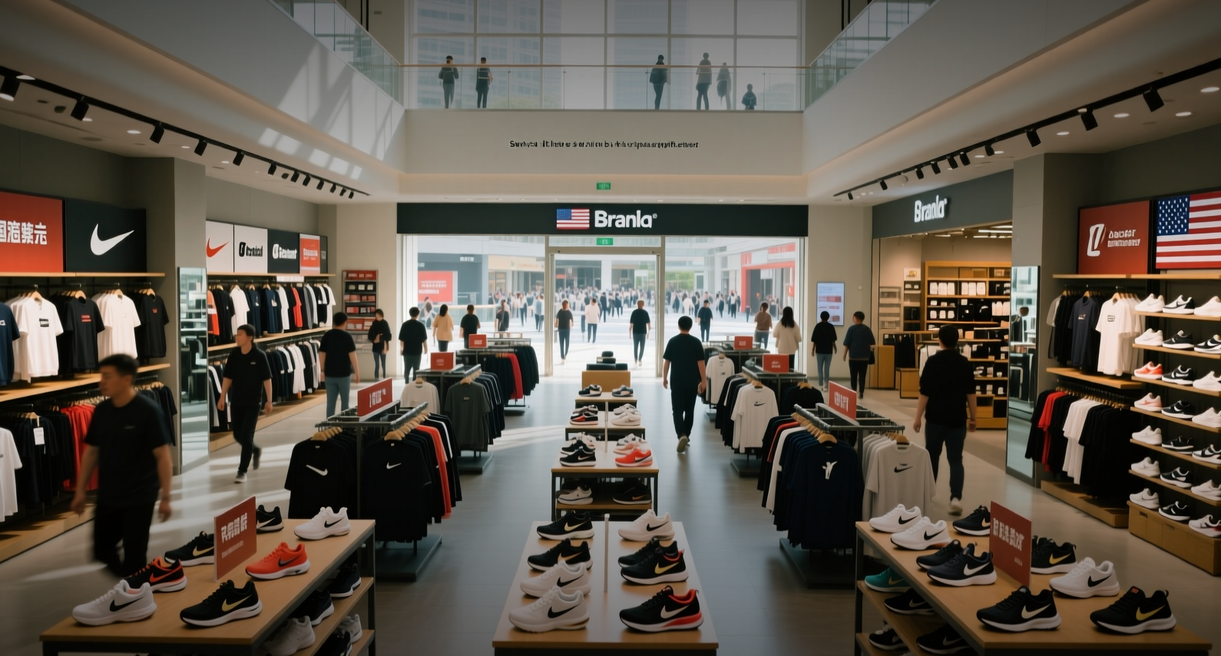
US consumer and auto brands from Nike to General Motors are losing their grip on China as domestic rivals surge and geopolitics reshape the market.
Nike's China business has shrunk 30 percent since 2021, while General Motors posted two consecutive years of losses and Starbucks ceded share to Luckin Coffee.
"The question isn't what's going wrong in China — it's why isn't that happening in the rest of the world," said Aaron Cheris, head of global retail practice at Bain & Company.
The erosion spans sectors. Nike reported a 10 percent decline in Greater China sales in its fiscal third quarter ended Feb. 28, with fourth-quarter sales expected to drop about 20 percent. GM's China earnings fell from roughly $2 billion annually in 2018 to losses in both 2024 and 2025. Detroit's Big Three automakers — GM, Ford, and Stellantis — collectively fell from 21.4 percent global market share in 2019 to an estimated 15.7 percent in 2025, according to S&P Global Mobility.
China remains the second-largest market for Starbucks, Procter & Gamble, and several other US multinationals. With domestic competitors like Anta, Li-Ning, BYD, and Luckin Coffee gaining share, US companies face continued earnings pressure and downward revenue revisions unless they adapt their product strategies to local preferences.
Nike's struggles illustrate the broader retail decline. The sneaker maker's gross margin has fallen for six consecutive quarters, dropping 130 basis points to 40.2 percent, with management citing tariffs as the primary cause. CFO Matt Friend said on the company's most recent earnings call that he could not determine when the China business would return to growth. Nike's stock has dropped 17 percent this year.
The company faces a two-front challenge: insufficient product assortment for Chinese consumers and aggressive domestic rivals. Anta and Li-Ning have eroded Nike's market share as the sportswear line experienced a double-digit decline. Nike's subsidiary Converse also missed expectations.
Starbucks has faced similar headwinds. Luckin Coffee now operates more than three times the number of stores in China and sells drinks at steep discounts. Starbucks responded by creating a joint venture with Boyu Capital, which holds roughly 60 percent of the entity, to use local knowledge to lift sales.
The pain extends beyond apparel and coffee. Estée Lauder's CEO Stéphane de La Faverie said on a conference call in early June that he does not believe China will soon resume double-digit growth. Gap sold its China business to e-commerce firm Baozun in a $40 million all-cash deal in 2022 after failing to connect with Chinese consumers. Procter & Gamble's pricey SK-II skincare brand saw sales plummet in late 2023 as anti-Japanese sentiment weighed on demand.
The auto sector has been hit hardest. GM's China business, once generating about $2 billion annually, has swung to losses. Ford reported a 32.4 percent decline in China sales between 2018 and 2022 and no longer reports regional financial results. Tesla is reportedly weighing the sale or spinoff of its Chinese business.
Chinese consumers are increasingly choosing domestic EVs. New energy vehicles — battery and hybrid-powered cars — accounted for 65.1 percent of new passenger cars sold in July, up from 54 percent a year earlier, according to China Passenger Car Association data. Local automakers BYD and Geely, fueled by government support and rapid innovation cycles, have begun exporting to Europe, Canada, and South America.
Not all US brands are struggling. Lululemon expects China to grow about 20 percent this year, and Ralph Lauren saw 40 percent growth in its most recent quarter. Cheris attributes the divergence to "the basics" — compelling products, local relevance, and proper distribution.
The tariff backdrop compounds the challenge. President Donald Trump's volatile tariff agenda has raised costs for US brands while simultaneously discouraging Chinese consumers from buying American products. Cheris said price premiums for American products are often not worth it for Chinese consumers, who now have access to domestic brands with faster innovation cycles and better distribution.
This article is for informational purposes only and does not constitute investment advice.
