

Key Takeaways:
- Nabors paid $35 million for a 14 percent stake in Quaise Energy
- Funding is part of Quaise's $180 million Series B round
- Project Obsidian targets 50 MW initially, up to 1 GW later
Key Takeaways:
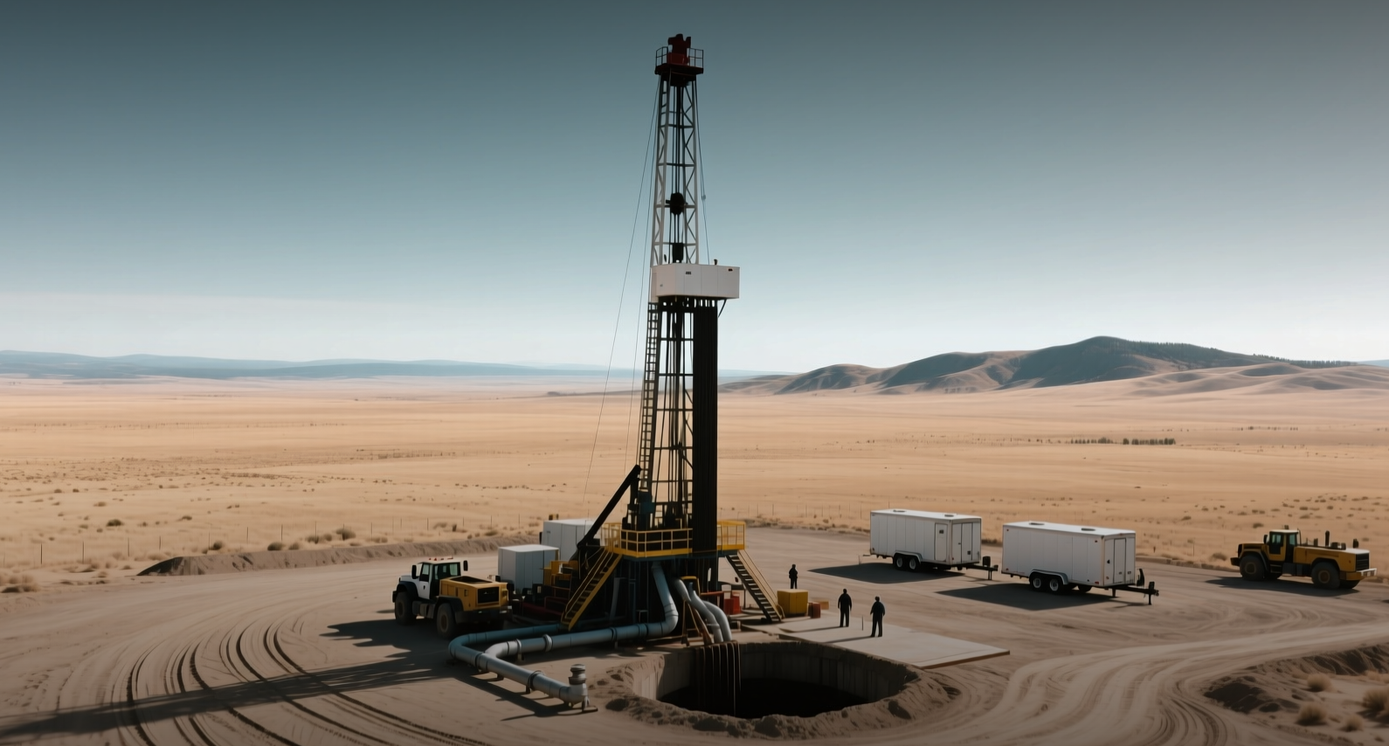
Nabors Industries paid $35 million for a 14 percent stake in Quaise Energy, betting millimeter-wave drilling can unlock superhot geothermal power at commercial scale.
Nabors Industries paid $35 million for a 14 percent fully diluted stake in Quaise Energy, becoming the geothermal driller's largest shareholder as its millimeter-wave drilling platform moves toward commercial deployment. The investment, announced Aug. 27, extends Nabors' push into adjacent energy markets beyond its traditional oil and gas drilling business.
"Quaise's technology closely aligns with our core strengths," Anthony G. Petrello, chairman, president and chief executive officer of Nabors, said. "By pairing its innovation with Nabors' global platform, technical expertise, and field execution capabilities, we believe we can help accelerate industry adoption while creating an attractive pathway for long-term value creation."
The funding is part of Quaise's Series B round, which closed at $180 million and brings the company's total funding to $280 million. Nabors paid through the issuance of about 392,000 shares of its common stock. A Nabors PACE-B rig is already drilling at Quaise's Project Obsidian in Oregon, where the first phase targets 50 megawatts of reliable power and later phases up to one gigawatt of additional capacity.
The investment establishes an exclusivity arrangement for Nabors to provide drilling services on Quaise's geothermal projects, opening a path to future revenue from rig engineering, automation and global project development as the technology scales.
How millimeter-wave drilling works
Quaise's hybrid platform combines conventional rotary drilling with high-power millimeter-wave energy to reach deeper, hotter geothermal resources that standard methods cannot access. The technology, developed over more than a decade of research at the Massachusetts Institute of Technology, uses a gyrotron to ablate rock with energy transmitted downhole through a waveguide, reducing reliance on complex equipment in extreme-temperature environments.
Project Obsidian, in central Oregon, targets rock heated to 300 to 500 degrees Celsius, which Quaise says can generate 10 to 100 times more energy per well than conventional geothermal systems. The project is intended to become the first commercial deployment of a superhot enhanced geothermal system.
Who stands to gain
The deal deepens a relationship that began with Nabors supplying drilling infrastructure for Quaise's field tests. Quaise's Series B was initially announced at $134 million in July, led by San Francisco's Prelude Ventures with strategic investments from Japan's JERA and Idemitsu Kosan; Nabors joined that group in the final close.
For Nabors, which operates in about 20 countries and reported $815 million in second-quarter revenue, the investment pairs its drilling fleet with a technology that could broaden geothermal's addressable market. Carlos Araque, Quaise's chief executive and president, spent 15 years at SLB, formerly Schlumberger, before co-founding the company with Matt Houde and Aaron Mandell.
Nabors shares, which rose 4.8 percent after its second-quarter earnings in July, face dilution from the roughly 392,000 newly issued shares used to fund the deal. The companies expect to evaluate further collaboration in drilling-system integration, field deployment and automation as Quaise progresses toward broader adoption. For investors, the deal shifts Nabors' growth narrative toward low-carbon power generation, tying its drilling expertise to a technology that could rival the output of fossil fuel and nuclear plants if superhot geothermal reaches commercial scale.
This article is for informational purposes only and does not constitute investment advice.
