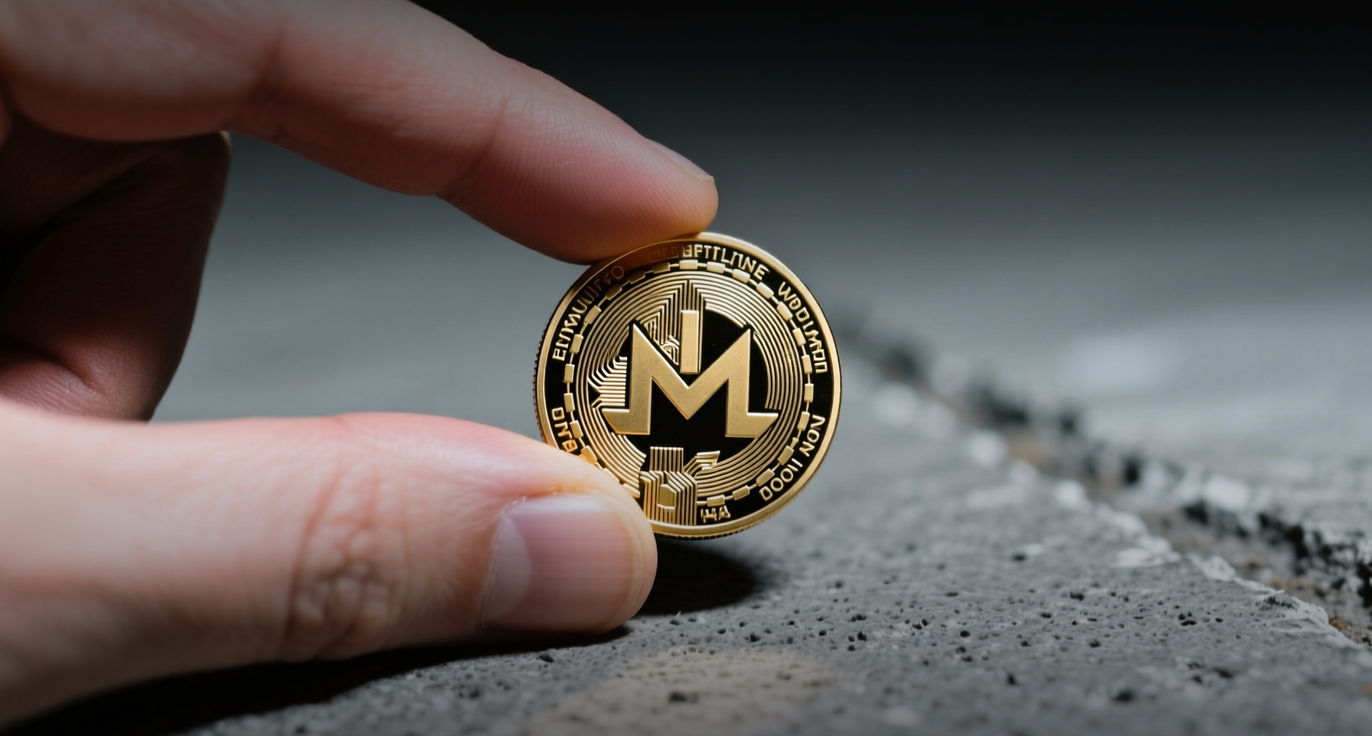
Privacy coins lost access to 73 centralized exchanges by mid-2026, but GhostSwap keeps Monero swappable without KYC.
Monero (XMR) has been delisted from 73 centralized exchanges globally by mid-2026, up from 51 in 2023, as regulators in Dubai and the European Union tighten restrictions on privacy-focused tokens.
"The regulatory pressure continues to mount, with Dubai's DIFC banning privacy coins on licensed platforms and MiCA's mandatory review clause approaching in 2027," according to the regulatory framework published by the European Commission.
Binance removed XMR trading on Feb. 20, 2024, and OKX delisted Monero, Zcash (ZEC) and Dash (DASH) the same year. Monero suffered the biggest impact, with a sixfold increase in yearly delistings. The token now trades at $308, down 61% from its all-time high of $797 reached in January 2026, with a $5.9 billion market cap, CoinGecko data shows.
GhostSwap, a non-custodial swap platform that never holds user funds, continues to support Monero, Zcash and Dash — routing liquidity across decentralized pools and exchange sources without collecting personal data. Its newly launched public swap-rate API provides live XMR pricing without an API key, enabling wallets and trading bots to integrate privacy-coin swaps directly.
On-chain transaction counts for Monero climbed 30% since the major exchange delistings began, data shows, suggesting users migrated to decentralized channels rather than abandoning the token. THORChain resumed full cross-chain trading on June 23 after a $10.7 million vault exploit forced a six-week shutdown, and native XMR swaps are now working in testing with mainnet launch described as close.
GhostSwap's Model Sidesteps Exchange Controls
GhostSwap operates as a smart liquidity router rather than a traditional exchange. Users send funds to a GhostSwap-provided address, the service finds the best route and deposits the destination coin to the user's wallet. There is no account, no login and no personal data collected. When regulators pressure a centralized exchange to delist Monero, that exchange must comply because it holds user funds and operates under specific jurisdictional licenses. GhostSwap, by contrast, simply routes users to available liquidity across multiple sources.
The platform's public API is CORS-enabled, rate-limited to 60 requests per minute and returns aggregated best rates including minimum and maximum swap sizes. A sample call returned XMR's minimum at 0.10 XMR and maximum around 2,337 XMR, removing guesswork for integrators building price-display sites and comparison dashboards.
What's at Stake for Privacy Coins
The delisting wave shows no signs of slowing. The EU's Markets in Crypto-Assets regulation, which came into full force in late 2024, requires the European Commission to report on its application by June 30, 2027, with authority to propose further legislative changes that could tighten restrictions on privacy-focused assets. Dubai's financial regulator has already banned privacy coins on licensed platforms in the Dubai International Financial Centre.
Monero's FCMP++ privacy upgrade entered beta testing in May 2026, and analysts project XMR reaching $370 to $598 by year-end, according to Changelly and CoinCodex estimates. But the token remains 61% below its January peak, and the gap between centralized exchange access and decentralized swap availability continues to widen.
For users seeking to convert Bitcoin to Monero without KYC, GhostSwap processes the swap in two to 10 minutes with Monero network fees typically below $0.01 per transaction. The process requires no sign-up or identity verification — only a Monero wallet address.
This article is for informational purposes only and does not constitute investment advice.