
India's ruling party has captured the opposition stronghold of West Bengal for the first time, a victory clouded by the disenfranchisement of 9.1 million voters that raises questions about the democratic process.
India's ruling party has captured the opposition stronghold of West Bengal for the first time, a victory clouded by the disenfranchisement of 9.1 million voters that raises questions about the democratic process.
India's ruling party has captured the opposition stronghold of West Bengal for the first time, a victory clouded by the disenfranchisement of 9.1 million voters that raises questions about the democratic process.
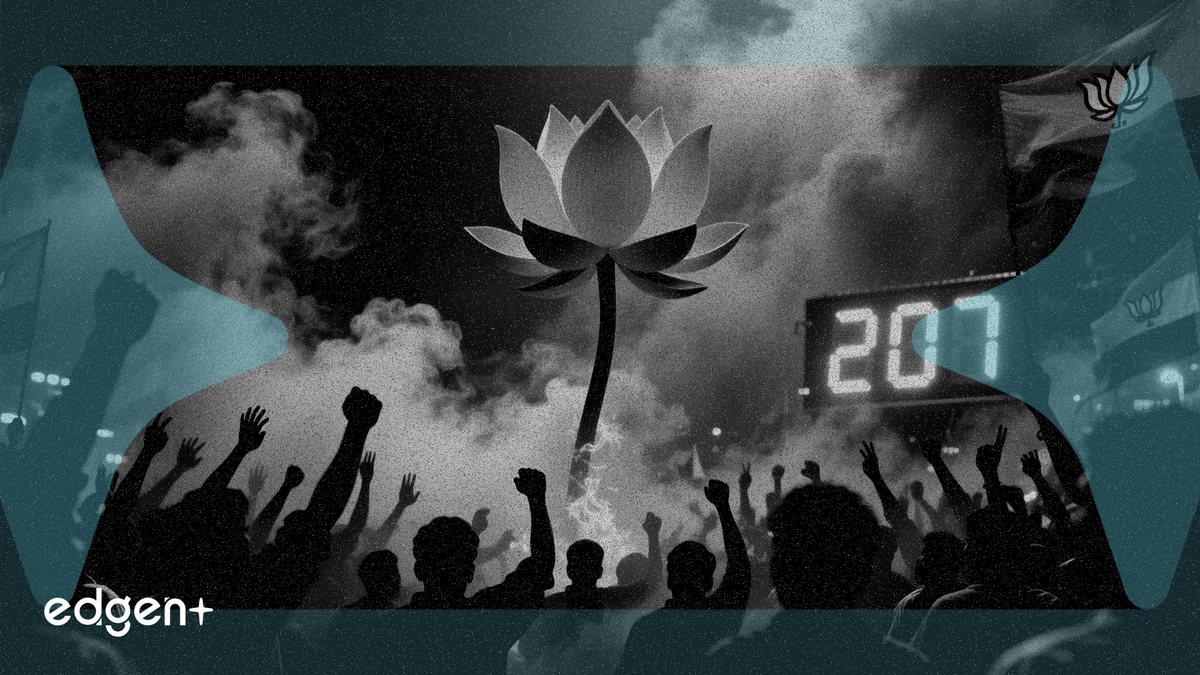
Prime Minister Narendra Modi’s Bharatiya Janata Party (BJP) won a historic victory in West Bengal's state election Monday, securing 207 of 294 assembly seats and ousting one of Modi's most formidable rivals. The win in the nation's fourth-most populous state comes after an election commission decision to strike roughly 12% of the electorate from voter rolls, a move critics say disproportionately affected opposition supporters.
"I do think we have real reason now to suspect that the quality of democracy during elections has declined considerably,” said Milan Vaishnav, an expert on Indian democracy at the Carnegie Endowment for International Peace, regarding the voter roll deletions.
The BJP's victory ends 15 years of rule by the All India Trinamool Congress (TMC) and its leader, Mamata Banerjee, who has been chief minister since 2011. The election was marred by post-poll violence that left at least four people dead, with both the BJP and TMC reporting two of their party workers killed in clashes. The Election Commission of India removed 9.1 million voters from the state's rolls, of which the status of 3.4 million who contested their exclusion remains unresolved.
The BJP's win solidifies its political dominance midway through Modi's third term and weakens a national opposition bloc that had looked to Banerjee for leadership. While markets may initially view the result as a sign of policy continuity, the controversy over voter disenfranchisement introduces long-term political risk that could temper investor confidence in India's institutional integrity ahead of the 2029 general election.
The BJP's triumph in West Bengal marks a significant milestone for the Hindu nationalist party, which had never before governed the state. For decades, Bengali voters were seen as resistant to the BJP's platform, partly due to the state's religious demographics, with a Muslim population of roughly 25%. The victory shatters the long-held perception that the BJP was a party confined to the Hindi-speaking heartland of North India.
The win adds to a series of recent successes for the BJP, which also retained power in the northeastern state of Assam. The results from other state elections held in April showed a fractured opposition. In the southern state of Tamil Nadu, a new party led by a film star defeated a key regional player, while the Indian National Congress unseated the communist government in Kerala, one of its last strongholds.
The West Bengal result has been overshadowed by the actions of the Election Commission. According to political scientist Gilles Verniers, of the more than 3.4 million people who contested their removal from the voter rolls, tribunals adjudicated less than 0.05% of cases on time. Data suggests that Muslims, a core constituency for the ousted TMC party, were disproportionately affected by the deletions.
Ms. Banerjee and the TMC have rejected the results, accusing the federal government of rigging the election. While the BJP celebrates its expansion, the methods behind the victory are drawing scrutiny from observers of Indian democracy, who worry about the precedent set by the mass voter removals in a key opposition-held state.
This article is for informational purposes only and does not constitute investment advice.

