

Key Takeaways: Micron is spending $250 million on four AI areas it expects to drive memory demand beyond today's high-bandwidth memory boom.
Key Takeaways: Micron is spending $250 million on four AI areas it expects to drive memory demand beyond today's high-bandwidth memory boom.
Micron Technology is betting $250 million on four AI areas it expects to drive memory demand beyond today's high-bandwidth memory boom, even as analysts trim price targets on pricing concerns.
"Data center customers are currently requesting roughly 50 percent more volume than we can commit to," Sanjay Mehrotra, chief executive officer at Micron, said.
Fiscal third-quarter revenue hit a record $41.5 billion, up 74 percent sequentially and 346 percent year over year, the fifth consecutive record quarter. The data center segment alone contributed more than $25 billion. Sixteen strategic customer contracts lock in about one-fifth of DRAM and up to one-third of NAND volume. For the current quarter, Micron guides to a gross margin around 86 percent and non-GAAP earnings per share of $31.
The $250 million investment sits alongside a $10 billion, ten-year research program at a new Boise, Idaho campus and a $250 billion U.S. manufacturing plan through 2035. The question for investors is whether the long-term bet justifies a stock that has climbed 671 percent over the past year but sits 27 percent below its June peak.
Four Bets Beyond the HBM Cycle
The four investment areas target memory-intensive applications that could emerge as AI moves beyond training large models. Micron has not detailed the specific technologies, but the direction points to edge inference, autonomous systems, and other workloads that demand high bandwidth at lower power than today's accelerators.
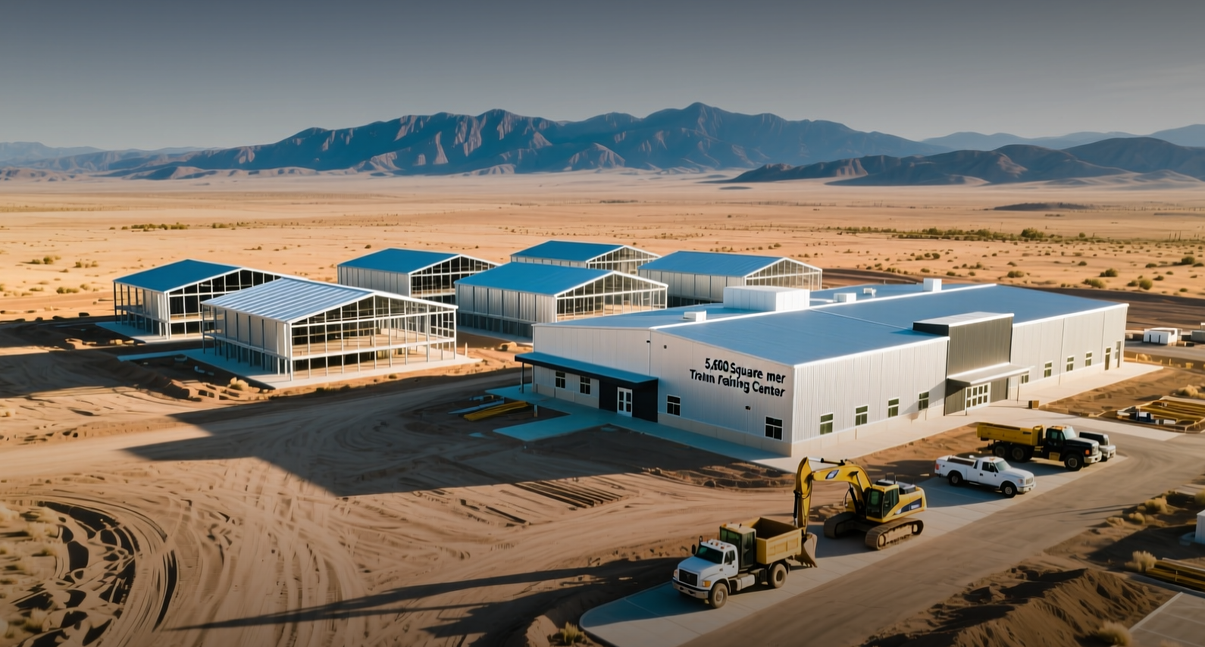
The research push is structural. The Micron Research Labs campus in Boise, which breaks ground in 2027, carries a planned $10 billion investment spread across a decade and is expected to house hundreds of researchers. The company also opened a 5,600-square-meter training center in Boise on Aug. 24, co-funded with $3 million from the U.S. Department of Commerce. Semiconductor manufacturing has become industrial policy again, and Micron is establishing itself as a visible American champion of that shift.
The competitive stakes are clear. SK Hynix holds 58 percent of the global HBM market by revenue in the first quarter of 2026, according to Counterpoint Research, versus 21 percent each for Samsung Electronics and Micron. SK Hynix's chief executive, Kwak Noh-Jung, said Thursday he expects the memory shortage to persist through the end of 2030, and the company plans to begin volume production of its HBM4E chips at its Indiana facility in the third quarter of 2029. Nvidia forecast a 70 percent revenue increase for the next fiscal year, reinforcing expectations that AI data-center spending will stay elevated.
Wall Street Splits on Pricing Outlook
The market's response has been more measured than the operational momentum suggests. Citi cut its price target from $1,400 to $1,150 in early August, citing a more cautious outlook for DRAM and NAND pricing heading into 2027. Mizuho followed in late August with a reduction from $1,375 to $1,300 while maintaining its Outperform rating. New Street Research upgraded the stock from Neutral to Buy on Aug. 17 with a $1,250 price target.
The concern is not weakening fundamentals but technical questions about potential de-specification of memory requirements in future GPU and ASIC generations from AI chip makers. The stock closed Friday at €805.10, 27 percent below the 52-week high of €1,103.80 reached on June 25, with a 30-day volatility reading of 91 percent, a sign of how nervous the market is about holding the valuation. The distance from the 200-day moving average of €514.64 — roughly 56 percent — suggests the underlying uptrend remains intact.
For investors, the calculus comes down to whether Micron can convert its research bets into products that sustain the current pricing power. The stock trades at a premium that assumes the AI memory cycle is structurally different from the boom-and-bust pattern that has defined the industry for decades. The September 30 earnings call will be the first test of whether that assumption holds.
This article is for informational purposes only and does not constitute investment advice.
