

The trial could expose internal documents revealing what Meta executives knew about child safety risks — and the financial stakes are existential.
The trial could expose internal documents revealing what Meta executives knew about child safety risks — and the financial stakes are existential.
Meta faces a potential $1.4 trillion liability as a landmark child-safety trial opened Tuesday, with four US states alleging the company deliberately designed Facebook and Instagram to addict minors while concealing the risks. California, Colorado, Kentucky and New Jersey are among 29 states that sued the tech giant in 2023 over child safety and privacy violations; the remaining 25 states will go to trial later.
"Hook the users, hold them for as long as they can, harvest their data, and then hide the truth from the public," Megan O'Neill, a deputy California attorney general, said in her opening statement. "It worked especially well for kids."
Meta shares closed down 4.4 percent at $543.67 on Tuesday as the trial got underway. The states are seeking roughly $200 billion in fines, though the theoretical maximum under consumer protection statutes could reach $1.4 trillion — nearly matching Meta's $1.5 trillion market capitalization. The company has already been ordered to pay $942 million in a separate New Mexico lawsuit, including $375 million in civil penalties from a March jury verdict and $567 million ordered by a judge earlier this month.
The case, which Judge Yvonne Gonzalez Rogers will decide with an advisory jury, is expected to last six weeks and will feature testimony from CEO Mark Zuckerberg and Instagram chief Adam Mosseri. Legal experts have drawn comparisons to tobacco litigation, where internal documents revealing what executives knew about health risks proved decisive. The first witness, former Meta safety engineer Arturo Bejar, testified that "move fast and break things" was a mantra at the company and that safety was not a consideration when products like Reels were initially deployed.
The states' case rests heavily on millions of pages of internal Meta research, employee emails and chat logs. One internal study on Instagram stated that "teens have an addict's narrative about use," while another found that "product features designed to increase time spent are inherently at odds with well-being." O'Neill told the jury that Meta found "millions" of 11- and 12-year-olds on Instagram and did little to remove them, despite federal law prohibiting data collection on children under 13 without parental consent.
Meta's attorney Paul Schmidt countered that the company's own research showed a more nuanced picture. The same internal document that found one in five teens said Instagram makes them feel worse also showed 41 percent said it made them feel better and another 41 percent reported no effect. Schmidt argued that social media addiction does not exist and that Meta has invested heavily in safety tools, including Instagram Teen Accounts launched in 2024, which limit who can contact underage users and allow parents to set time limits.
The trial is part of an avalanche of lawsuits against social media companies. In March, a jury held Meta and YouTube legally liable for creating products that led to harmful and addictive behavior by young users, awarding $6 million to the lead plaintiff. Meta and Google face combined verdicts of $4.2 million and $1.8 million respectively from that case. Thousands of individual personal injury cases are consolidated in California state court, with bellwether trials scheduled for October.
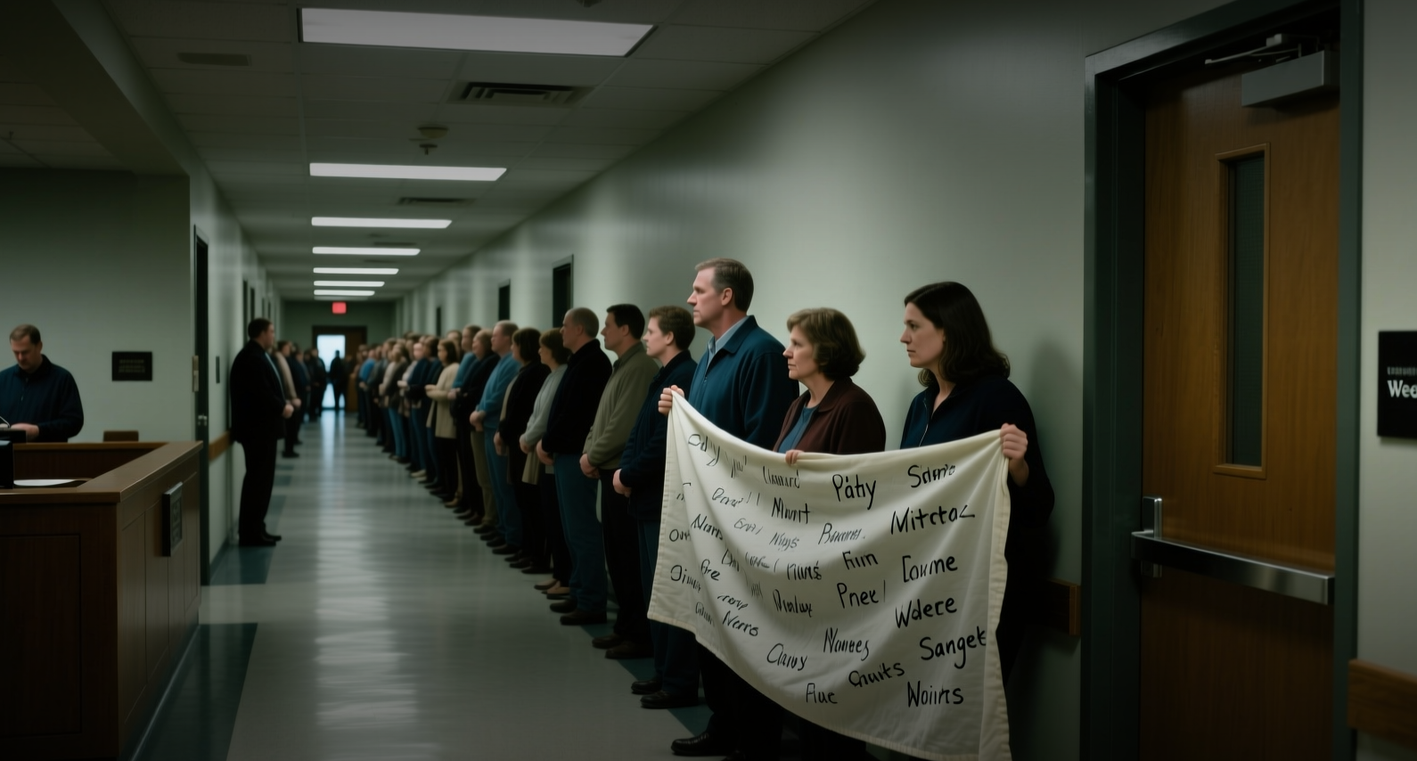
Outside the courthouse Tuesday, parents held a banner listing the names and ages of children who died from social media-related harms. Mary Rodee, whose 15-year-old son Riley Basford died by suicide in 2021 after being sextorted on Facebook Messenger, said 39 new names had been added to the banner since March. "Every name that I wrote on there is a promise that these children will never be forgotten," she said.
Kentucky Attorney General Russell Coleman called the case "the largest consumer protection lawsuit in American history." If Judge Rogers finds Meta liable, she could impose civil penalties and order fundamental changes to how Facebook and Instagram operate, including potentially ending "like" counts and infinite scroll. The trial's outcome could reshape the regulatory environment for the entire social media sector, with Google, TikTok and Snap facing similar claims.
This article is for informational purposes only and does not constitute investment advice.
