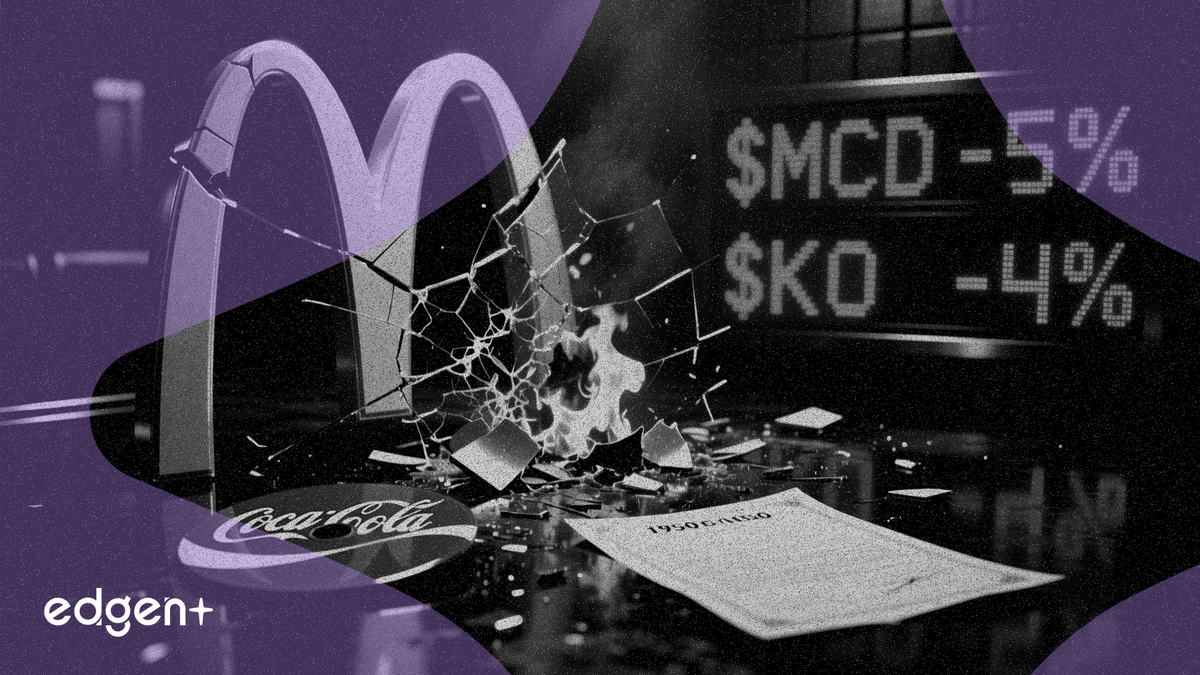
McDonald's and Coca-Cola's roughly 70-year partnership is facing pressure from shifting consumer preferences and intensifying competition, according to a report published June 12.
"The relationship that defined fast-food beverage sales for decades is encountering structural headwinds," the report said, citing evolving consumer tastes and a more competitive beverage landscape.
McDonald's has been exploring alternative beverage options as consumers move toward water, teas and functional drinks, while Coca-Cola's dominance in the food-service channel faces challenges from newer entrants such as Fever-Tree and Spindrift. The partnership, one of the longest-running corporate alliances in the US, has been a cornerstone of both companies' strategies since the 1950s. Coca-Cola, which is also the official soft drink sponsor of the FIFA World Cup 2026, has relied on its McDonald's relationship for mass-market visibility across more than 40,000 locations globally.
For McDonald's, any shift in beverage strategy could affect its more than $40 billion in annual US systemwide sales, where fountain drinks contribute high-margin revenue. Coca-Cola generates roughly a quarter of its revenue from food-service channels, according to company filings, making the McDonald's account a critical piece of its distribution network. McDonald's, which has raised its dividend for 48 consecutive years, has been investing in menu innovation to attract younger consumers who increasingly favor non-carbonated options.
The pressure on the partnership comes as both companies navigate a fast-food market reshaped by value wars and health-conscious eating trends. Rival chains including Wendy's and Burger King have expanded their beverage menus with premium lemonades and cold-brew coffees, intensifying the competitive dynamic. PepsiCo, Coca-Cola's primary rival, has also gained food-service share through partnerships with Yum! Brands, which operates KFC, Taco Bell and Pizza Hut.
For investors, the partnership's evolution carries implications for both companies' growth trajectories. Coca-Cola's food-service channel, which accounts for roughly $11 billion in annual revenue, could face erosion if McDonald's diversifies its pour. McDonald's, meanwhile, risks losing the operational simplicity of a single beverage supplier if it moves to a multi-vendor model. Both companies are expected to address the partnership's trajectory in upcoming earnings calls, with McDonald's scheduled to report second-quarter results in late July.
This article is for informational purposes only and does not constitute investment advice.