
Key Takeaways:
- Economists expect May CPI at 4.2% annually, the highest since May 2023
- Oil-price passthrough into core goods and services is broadening inflation pressures
- A hot print could shift the Fed debate from rate cuts to a potential hike
Key Takeaways:
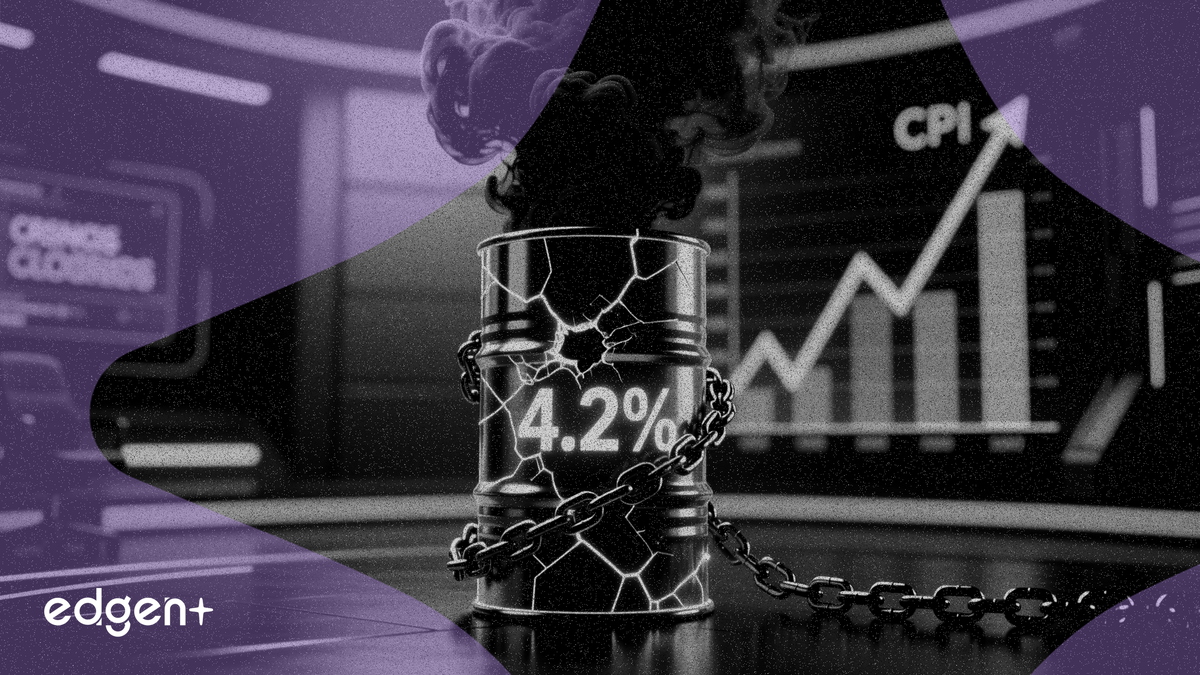
Wall Street expects May CPI to hit 4.2%, a level that would test the Fed's resolve and deepen the risk-off mood across markets.
Economists expect May CPI to show inflation running at a 4.2% annual rate Wednesday, a level that would mark the highest reading since May 2023 and reinforce fears that oil-price passthrough is broadening price pressures beyond energy.
"April's 3.8% reading was already uncomfortable, but the passthrough from higher gasoline prices into core goods and services is the real concern," said Sarah Miller, chief U.S. economist at TS Lombard. "A 4.2% print would effectively close the door on rate cuts for the remainder of 2026."
The consensus call for a 0.5% monthly gain in headline CPI follows April's 0.6% advance, which pushed the annual rate to 3.8% from 3.3%. Core inflation, which strips out food and energy, is expected to rise 0.3% month over month to 2.9% annually, according to a Bloomberg survey. The 10-year Treasury yield has already climbed 35 basis points since the April report, settling near 4.85% Friday, while the S&P 500 shed 2.3% over the same period. The Bloomberg Dollar Spot Index gained 1.8% as traders repriced the Fed's path.
A reading at or above 4.2% would reinforce the hawkish shift that has taken hold since the April data. Interest-rate futures now price 17 basis points of tightening by December and a full 25-basis-point hike by March 2027 — a dramatic reversal from January, when markets expected three quarter-point cuts. The Fed held its benchmark rate at 3.50% to 3.75% in April in its most divided vote since 1992, and Chair Jerome Powell has signaled no urgency to ease. If Wednesday's data surprises to the upside, the debate could shift from when the Fed will cut to whether the Fed will hike.
The broadening of inflation pressures is the key concern. Gasoline prices have risen for 12 consecutive weeks, with the national average topping $4.20 a gallon, according to AAA data. That passthrough is now showing up in airline fares, freight costs, and some categories of core goods. Shelter costs, which account for roughly one-third of the CPI basket, rose 0.4% in April and are expected to post a similar gain in May, keeping the services side of inflation sticky.
The last time headline CPI exceeded 4% was in May 2023, when it registered 4.0% before beginning a gradual descent. That cycle saw the S&P 500 fall 5.6% over the subsequent two months as the Fed delivered its final quarter-point hike in July 2023. The current setup differs in one critical respect: the labor market remains resilient, with nonfarm payrolls averaging 178,000 over the past three months, above the 100,000 breakeven rate estimated by the Atlanta Fed. A strong jobs market gives the Fed more runway to hold rates higher without triggering a recession — but it also means inflation has less room to cool on its own.
For risk assets, the stakes are high. Bitcoin has already shed 12% since the April CPI print, with spot bitcoin ETFs recording $5.4 billion in net redemptions, according to 10x Research. Founder Markus Thielen forecasts May CPI at 4.3%, above consensus, and has warned that a reading above 4% could deepen the selloff. "Institutional ETF flows are driving price," Thielen wrote Monday. "Follow the money, not the narrative."
The European Central Bank faces its own inflation test Thursday, when it is widely expected to raise its deposit rate by 25 basis points to 2.25% — a reminder that the global inflation cycle remains far from resolved. Euro-area headline inflation climbed to 3.2% in May, a significant jump from the 1.7% low struck in January.
This article is for informational purposes only and does not constitute investment advice.
